On June 18, I published the book Lost Identity: The Search for Well-Being. Since doing so, everyone and their grandmother has been lining up to tell me how to promote the book. Apparently, I require a cinematic trailer. Apparently, I need a social media manager. Apparently, I need to be more ruthless- put profiteering first. They say.
I fundamentally disagree. I wrote the book in the hope that it will empower others. I wrote it because I wanted to empower communities. I believe it is having that impact. People whom I have known for years are saying to me:
I did not know that was how your brain worked. That link with ADHD is so interesting
My book. On my desk at home
I have been living with the side effects of a childhood Medulloblastoma for thirthy-seven year, I have a unique view. However, I have to ask how did you think the brain was going to develop? Apart of it was cut out. Radiation was fired at at it. Chemotheropy resulted in Chemo-brain.
There is no objective evidence to say I have ADHD or ADHD like symptoms. However, a little common sense suggests my brain is not neurotypical. Perhaps that is why I put people and the planet before profit. Don’t get me wrong, I would love to make a living from writing books, telling my story, doing podcasts, radio, and TV interviews. Not though to make a profit. Just to live, just to enjoy what I do.
I hear you. Why should I get to enjoy what I do to generate an income? Not many people are happy in their jobs. Perhaps for the first time in my life, I am thinking of myself. I was dealt a S### hand. I turned it around. Why shouldn’t I make a little money from it?
Yes. It is okay if I profit a little from the book. It is okay if I enjoy making social media content to support the book. I am allowed to write blogs to promote the book. I worked hard to get my MSc. I should use it to financially support myself. Shouldn’t I? At least if I make a small profit, I am doing so by empowering others.
Empowerment via storytelling
That is what I want to do. I wish to tell you my story. If you don’t like my story, fine. If you think I am ungrateful, I don’t really care. If you think I should get on with my life. IT has been over thirty-seven years. I can tell you that is precisely what I am doing. Every post, every TikTok, every blog. I am moving forward. I am getting up and I am showing up.
Do I use social marketing? Do I write and talk like I have a chip on my shoulder? Of course I do. The NHS didn’t rehabilitate me back in 1987. Why should they? They almost let me die. Then they gave me five years to live. After twenty years, they showed me the door. They gave me a phone number and told me to call if I ever need anything.
I need to know why they did not tell me about the long-term side effects. I need to understand why they did not tell me that I would be required to pay a personal trainer for rehabilitation, because the NHS doesn’t have the resources or the capacity.
I need to know why the NHS didn’t tell me that I would never belong. That my life would become a constant search to find myself. They did not KNOW! That is no excuse. Society talks about a cancer journey. When does that journey end? At the end of formal education? When I buy a house? When I say I do? I know it’s not when I buy a car, have children, or walk in a straight line. So when is it?
The truth is the journey never ends. “We exist here”, is a line from Star Trek: Deep Space Nine. Medulloblastoma don’t “exist here”. We exist wherever in time, the brain tumour and cancer injured the mind. The mind of a Medulloblastoma is not neurotypical. That is why, when organisations tell me that I should be profiting from a book written to empower others (and myself), I am hesitant to comply.
Lost Identity: The Search for Well-Being is my story. It’s raw, it is emotional, it is empowering, it’s me. I am so glad I got to write it. I am so happy that I get to tell my story to the world. My number one hope is that when you read it, you are empowered.
Life is not easy. Anything worthwhile having in life is worth working hard for.
What is next
I wish I knew. What I do know is I need a holiday. Has anyone got any suggestions?
Disclaimer. This blog post you are about to read is subjectively motivated. However, the intent is not to criticise the integration of the United Unitions Convention into Scottish Law. The blog intends to empower the reader with the knowledge required to understand why I believe the Human Rights Integration (Scotland) Act 2026 will be dead on arrival.
For clarity, I have no desire to see the Human Rights Integration (Scotland) Act 2026 fail. Upon completing my master’s in social Innovation, I attempted to set up a social enterprise to empower local communities and citizens by supporting and recommending improvements to the Scottish government’s social policy. I joined the Scottish government’s Human Rights Integration Lived Experience board to achieve my social enterprise’s outcome. The objective was to learn from citizens how best to empower citizens in local communities. On reflection, that objective was achieved. Why do I believe the Human Rights Integration (Scotland) Act 2026 will be dead on arrival? Firstly, I think the framework I designed to achieve A-LEAF’s outcome supports the Scottish government’s Human Rights Agenda. To be denied funding by the Scottish government’s social enterprise funders indicates departments are not communicating on a Human Rights agenda. To successfully implement the Human Rights Integration (Scotland) Act 2026, the Scottish government departments require a Human Rights inclusive communication policy; this policy must recognise the Scottish government lacks the capacity and resources to empower every citizen in Scotland with dignity. To provide dignity to every citizen in Scotland, there is a requirement to shift the Human Rights agenda from top-down to bottom-up- There is a requirement to support social enterprises that aim to be commercially sustainable whilst supporting the United Nations’ Sustainable Development Goals and the Scottish National Performance Framework.
The National Performance Framework states:
We [Scotland] have a thriving and innovative business, with quality jobs and fair work for everyone.
Scotland’s Natonal Perforance Framwork
As a Social Innovation graduate, I strongly suggest to the Scottish government that extensive work is required to achieve the standards for said performance.
The Second reason I believe the Human Rights Integration (Scotland) Act 2026 will be dead on arrival is basic economics. Before completing my MSc in Social Innovation, I completed my second undergraduate degree in Politics, Philosophy, and economics. Therefore, I believe I have some legitimacy regarding my economic claims. The backlash to Scotland’s First Minsters Humza Yousaf’s announcement that council tax in Scotland will be frozen in Scotland in 2024 has been intensive. However, by applying a Human Rights approach, the question becomes, can Scotland afford not to have a council tax freeze? Not can Scotland’s councils afford a council tax freeze.
The limitations of Devolution, as it relates to short-run capitalism, dictate that a freeze in council tax results in a cut in public services. While this holds in the short term, it is my opinion that moving towards a well-being/circular economy which supports the principles of a shared economy could mitigate the cost-of-living crisis. In the long run, this could result in lower council tax as social enterprises could provide crucial services.
For example, instead of charging Glasgow city residents £50 to pick up garden waste. Social Enterprises could pick up the waste for free and sell the biomass to companies looking into sustainable and renewable energy sources.
Sustainability is a goal for the national performance framework:
We [Scotland] have a globally competitive, entrepreneurial, inclusive, and sustainable economy.
SNPF
While the national performance framework provides keywords, it offers no hope. Scotland’s economy is not inclusive. Only 49.6 per cent of disabled people living in Scotland are in work. I am willing to bet it is not full-time work, which allows for the highest attainable standard of living. Scotland’s economy is not sustainable. Paying £50 for garden waste pick up when there is a cost-of-living crisis is anything but sustainable.
Scotland’s economy may be entrepreneurial. Scotland’s economy is not social entrepreneurial-friendly. If it was, the cost-of-living crises could be mitigated. Furthermore, because business tax is reserved for Westminster, the benefits from tax from any profit before people and planet business goes down south and does not stay in Scotland.
Given that Scotland’s economy is not social entrepreneurial-friendly, inclusive, or sustainable, can Scotland’s economy be competitive?
The third reason why the Human Rights Integration (Scotland) Act 2026 will be dead on arrival is Scotland’s social enterprises are charities, not social enterprises. At least not the academic definition of a social enterprise. That is a significant issue that cannot be underestimated. I have volunteered in Scotland’s third sector since 2010. I fully support Scotland’s third sector. I am on record saying parts of Scotland’s third sector act as a second chamber to the Scottish government. Scotland has a strong third sector. Scotland does not need a more extensive state supporting more third-sector organisations. Scotland needs a robust social enterprise sector that reports to, answers and monitors the Scottish parliament. That is how we achieve a Human Rights Integration (Scotland) Act 2026 that is fit for purpose.
This brings me to the second part of the blog post. The social enterprise I tried to set up challenges the top-down social norm that exists in Scotland. There is too much of what the state can do for me and not enough of what I can do for my state. Or to put it another way.
Ask not what your country can do for you- ask what you can do for your country.
JFK, 1961
Scotland is not the USA. Scotland is, however, part of the UK, for worse or for better. In implementing the Human Rights Integration (Scotland) Act 2026, the Scottish government should remember the teachings of John Loke and Thomas Hobbes. Yes, citizens may need a government to run the state. Society in Scotland has come a long way since the English Civil War. Scotland requires a new social contract. Scotland requires a social contract that empowers social entrepreneurship. And social entrepreneurs must empower local communities.
Watch the attached video to learn more about A-LEAF and stay updated on my views on Scottish and UK politics.
A-LEAF: should it say or go?
This video is not public on YouTube. If you do like this content, let me know, and I’ll see about updating my video and recording equipment.
Sunshine and rainbows, life is not. I was diagnosed with medulloblastoma at age four and live with the long-term condition resulting from the brain tumour- sight and hearing limitations, balance problems, and dyslexia-like issues as a child. Sunshine and rainbows are more challenging to find. Difficulties multiplied by the medical model, which said I had five years to live. The medical model said I was dead at ten. As of May 7th, I am forty years old. According to the medical model, I should not have attended high school. I have two undergraduate degrees and a master’s in social innovation and have worked since I was seventeen. I have volunteered in the Scottish third sector for ten years and have been a member of a UK political party since 2007—the relevance of my lived experience.
Health is a state of complete physical, mental, and social well-being and not merely the absence of disease or infirmity.
(World Health Organisation Constitution)
The absence of disease or infirmity does not necessarily result in complete physical, mental, and social well-being. Replacing the medical model with the social model of disability via Human Rights (integration) (Scotland) Act 2026 would go some way toward achieving the World Health Organisation’s constitution in Scotland.
The Scottish National Action Plan for Advancing Human Rights II (SANP2) is the most recent publication available in the public domain. This article is a loose response to SNAP2 and recommendations for advancing human rights in Scotland.
The article is structured as follows. In the subjectivity section, I provided my opinion on SNAP2’s timeliness. In 2022 The Scottish Government had three boards- lived experience- advisory- executive providing evidence on human rights issues in Scotland. The board(s) evidence was not included in the SANP2 document. In the objectivity section, I take a more evidence-based approach to evaluate SNAP2- the evidence I use was sourced from online accessible websites and open-source research where possible. In the discussion section, I discuss human rights in Scotland, attempting to bring the subjective and objective areas together. Finally, in the recommendations section, I provide three recommendations which I see as a priority for advancing human rights in Scotland.
Subjectively, SNAP2 needs work.
Subjectively, the Scottish National Action Plan for Advancing Human Rights II (SANP2) is a missed opportunity. Equivalent to a tick-box bureaucratic institutional framework. Far from the radical reform, its pre-publication hype advocated. Disclosure. As a Social Innovation MSc graduate with over ten years of knowledge of the third sector and fifteen years of knowledge of political institutions in Scotland, I subjectively claim, after a second reading of SANP2, that SANP2 is a significant missed opportunity. I swear two things by subjectively applying lived experience to my initial review. One SANP2 is a bureaucratic document designed to give people with lived experience a perceived voice. Two SANP2 is the Scottish Government box ticking to confirm which previous records have been previously established.
Subjectively SANP2 needs to live up to the expectation of the pedestal on which it was placed. It is not easy to be objective when lived experience requires subjectivity. However, the next section will objectively cross-examine my subjectivity for this review’s legitimacy. What, though, are the bases of my subjectivity?
Webster (2022, p. 3) accurately points out.
“The 2021 report of the National Taskforce for Human Rights Leadership recommended a new legal framework that will bring into [Scots Law] a range of internationally recognised Human Rights.”
We know that the Scottish Government plans to incorporate the UN Human Rights conventions into Scots Law by the end of the parliamentary session. Therefore, an objective revaluation of my subjective conclusion shall be on that cornerstone. Subjectivity based on lived experience, however, is not void of objectivity. Objectivity is subjectivity with a past dependency and place matters lens- see conversation section.
Dr Elaine Webster’s research paper’s theory/research is that communication around Human Rights can be given legitimacy by the bottom-up- rights holders when communication focuses on Human Dignity, not human rights.
To test Dr Elaine Webster’s theory, it is critical to identify the number of times the word ‘dignity’ is used in the SNAP2 document. And in which contents.
Three. Three times. The word “DIGNITY” was directly used three times in the SNAP2 document.
One direct reference to dignity is a quote from acritical 1 of the UN conventions “All Human beings are born free and equal in dignity and rights” (SANP, p.16).
All Human beings are free and equal in dignity and rights? Debatable. What is not debatable is that not all human beings remain free and equal in dignity and rights.
“In France, 57% of [woman’s] work is unpaid compared to 38% of men’s… all this extra work is affecting women’s health” (Perez, loc. 1461).
Where is dignity for women?
The fact is that the Universal Declaration of Human Rights dates to 1948. It is outdated. Article 16.1 reads.
Men and Women of full age, without any limitation due to race, nationality or religion, have the right to marry and have a family. They are entitled to equal rights as to marriage, during and at its dissolution”.
As Caroline Perez points out in the book Invisible Women. Women and men do not have the same right in marriage. The fact is that women and men do not have the same rights in society.
Not only is incorporating the Universal Declaration of Human Rights into Scots law, without a contemporary analysis of the wording, a direct violation of human dignity and added cost to the NHS. It is a violation of ethics.
Since graduating with an MSc in Social Innovation from Glasgow Caledonian University, I have been in the process of setting up a community empowerment-action research network- A-LEAF Community Empowerment LTD. Figure 1 is my subjective interpretation of an objective fact.
Figure 1: Societal Triangle.
In project management, time, cost, and quality directly affect the project’s scope. My subjective view is that societal institutions can manage the health/well-being of individuals/ communities.
SNAP2 focuses on legislation exclusively, failing to consider how the perception of ones standing in society can affect health, well-being, and mental health. Moreover, as Perez points out, social norms-past dependency can hurt individuals and communities.
SNAP2 an objective view
The section on subjectivity shows how lived experience can influence an outcome. This section looks objectively at what SANP2 looks to achieve. Moreover, is the desired result attainable?
SNAP2: Scotland’s Second National Human Rights Action Plan. The key word is National. If the Human Rights Integration (Scotland) Act 2026 is to be implemented within all thirty-two local authority areas, with a minimum standard, then there should be an act of parliament. Moreover, the unofficial second chamber, the third sector interface, should support parliament. Given that SNAP2 was written by employees working in the third sector and supported by the general public. I can see no objective argument against SNAP2 as the most efficient, timely option for producing an open-source document to inform the people on the developments of their rights as rights holders.
Furthermore, SANP2’s principles, advancing human dignity, comply with Article 1 of the UN Convention on Human Rights. It also follows the Scottish Government’s communication about Health, Social Care, and other areas where duty-bearers have a particular obligation or responsibility to respect, promote and realise human rights. Moreover, SANP2 also interlinks with academic thinking. Therefore, there are no grounds for an objective point of reference.
Integration of the UN Convention on Human Rights comes in two parts. Part one: International Covenant on Civil and Political Rights (ICCPR). Part two: International Covenant on Economic, Social and Cultural Rights (ICESCR).
This review shall focus predominantly on ICESCR. World Health Organisation (WHO) Constitution states
“Health is a state of complete physical, mental, and social well-being and not merely the absence of disease or infirmity.”
As ICESCR covers conditions at work, poverty, housing, social care, access to healthcare, and cultural life, the infringement of one or multiple of these areas would result in the mitigation of WHO’s constitution and border on a breach of Human Rights.
SNAP2’s purpose is in three parts:
Carry out coordinated human rights activity by public bodies, civil society and rights holders.
Promote greater awareness of human rights.
Advance the realisation of human rights.
Objectively does SNAP2 do enough to identify and develop human rights in Scotland? Let us first consider what ICESCR requires—starting with work—decent work [is paramount] in realising the 17 Sustainable Development Goals. (Yunus Centre, 2023)
Workers’ rights are reserved for Westminster. Therefore, it would make little sense for public bodies or civil society to carry out coordinated human rights activity into workers’ rights.
In the discussion section, I discuss promoting and advancing human rights around worker rights.
24 per cent of children in Scotland are living in poverty.
69 per cent of children living in poverty in Scotland are in households where someone works.
38 per cent of children in lone-parent households live in poverty.
29 per cent of children with a disabled family member are in poverty.
(Child poverty action group, 2023)
Public bodies, civil society and rights holders must collaborate to identify where a child is living in poverty, identify the cause, and, where possible, mitigate the causes. Worker’s rights and gender pay gaps are reserved matters. However, evidence would support the need to push for human rights intervention regarding poverty.
Work and poverty (somewhat) are reserved for Westminster. As such, any attempt by the devolved public bodies or civil society to introduce a human rights approach could be limited. See the discussion section.
Housing, social care, access to healthcare, and cultural life are all devolved matters. Financial capital is the only obstacle to achieving a human rights-based approach in these four areas.
The Scottish budget is constrained via the devolved settlement. On this ground, SNAP2 can be objectively criticised as being a missed opportunity.
The Homelessness in Scotland 2021-2022 report highlights that 27,571 families were homeless; these households contained 42,149 people, 30,345 adults and 11,804 children. (Scot Gov, 2021). Additionally, the BBC puts the number of displaced people cases in Scotland at 28,944 in September 2022 (Clements, 2023).
These figures are alarming. What is more problematic, though, is that in 2022, the cost estimation for a house is anywhere between £1,750 and £3,000 per m2 (Bahar, 2023). The average new three-bedroom home in the UK is 88 m2 (Joyce, 2011). The Scottish government must therefore find £7,641,216,000; £3000 x 88m2 x 28,944 cases. Supposing it aims to avoid legal issues. See the discussion section.
Quantifying a reasonable estimate of the cost required to build 28,944 homes in Scotland is possible. Quantifying the cost of raising social care to a human rights standard is more complex. Care Information Scotland (2022) states that councils will pay £832.10 per nursing per resident in respect—or £719.50 for residents in residential care. Public Health Scotland (2022) says there are estimated to be 33,352 Scots over 18 living in care homes. Based on the lower £719.50 figure, the Scottish Government is paying a minimum of £23,996,764 per year in social care costs.
Pause. The figures quoted above are an estimate. They are intended to provide an objective validation to the argument that SNAP2 could have offered additional recommendations on how a human rights-based approach to housing and social care could be achieved.
The Public Bodies (joint working) (Scotland) Act 2014 was intended to integrate the NHS and Social Care nationally. Colleagues at the Alliance shall remember a year of work which provided the people-powered health and well-being reference group on objective reflection- all of whom had long-term conditions or were unpaid carers with a little well-being/ confidence boost. However, as Millar et al. (2020) point out:
“…for those participants with conditions that require consistency and stability. The short-term and transitory nature of the project also creates difficulties in assessing [lived experienced programmes] effectiveness over time – a challenge shared by those working on music and well-being projects in non-formal settings more generally.”
The people-powered health and well-being reference group was not a music well-being project. The point I am arguing is the short-term and transitory nature of lived experience boards. As Millar et al. (2020) say.
“We question, therefore, what happens with project participants, including beneficiaries and those running a project, when ‘the light goes off’, and the task terminates.”
Burnout is not only a problem for project participants, including beneficiaries and those running a project. Burnout is a significant issue for the NHS. As Nicholson (2023) states, the current state of the HNS is a ‘Ticking Time Bomb’. Stress, anxiety and burnout are pushing employees out of the health service. The media blames COVID-19 for this. The fact is that this is a gender data gap problem.
“A 2011 analysis of the data collected on British civil servants between 1997 and 2004 found that working more than fifty-five hours per week significantly increased women’s risk of developing depression and anxiety- but did not have a statistically significant impact on men”.
(Perez, 2019, loc. 8961)
As Caroline Criado Perez says in her book invisible women, “A husband creates an extra seven hours of housework a week for women… regardless of their employment status” (Perez, 2019, loc. 8961)
Any Scottish Government budget after 2026 must have a gendered lens to achieve a human rights-based approach.
This section has provided objective-quantitative evidence that supports the initial argument- SNAP2 is a missed opportunity. However, as said in the subjective segment, objectivity is not straightforward when lived experience enforces subjectivity.
As a member of the Alliance, Inclusion Scotland, and Glasgow Disability Alliance- a holder of an undergraduate degree in politics, philosophy, and economics- and an MSc in Social Innovation, SNAP2 is a subjective missed opportunity- the objective evidence confirms why I am frustrated with the SANP2 document. However, rights holders all have personal viewpoints- If SANP2 archives the objective of a human rights social marketing campaign, then I will accept that my original argument was too harsh.
Discussion
Article 27 of the UN Universal decoration of human rights says.
Everyone has the right to freely participate in the community’s cultural life, enjoy the arts and share in scientific advancement and its benefits.
Everyone has the right to protect the moral and material interests resulting from any scientific, literary or artistic production of which he is the author.
Cultural rights should have been included in the objective evidence section- I, however, needed more objective and subjective knowledge in this area. SNAP2 asks for the realisation of a human rights culture. What, though, does that imply?
Point 2 is not relevant; intellectual property rights are covered in UK law.
The key word in point one is “community”. More research into the diversity, inclusion, and belonging model is required to achieve the desired outcome. Scottish communities are diverse. However, is there a sense of inclusion and belonging? More academic and action research is needed in this area.
Focusing research on poverty and employment rights as it relates to cultural rights could enhance the sense of belonging for citizens living in Scotland.
The working of people-powered health and well-being reference groups could be used as a framework for civil society to carry out action research.
The overall question could be: Does working locally benefit people, the planet and the community? While at the same time contributing to a subjective well-being premium?
Academically that question could be adapted to fit numerous social science studies. Looking back on Article 27, a collaborative action research project supports scientific advancement and its benefits for the community. Scotland, in this case.
Past dependency and place matters. An academic phrase meaning contemporary life today is shaped by past policy decisions. Integration of the UN conventions on human rights is about the culture and legacy this generation passes to the next. A heritage that is constrained by the devolution settlement. The Human Rights (integration) (Scotland) Act 2026 is possible with devolution. However, poverty could be mitigated more effectively with the full powers of an independent state. Montgomery and Baglioni published the report The Gig Economy and its Implications for Social Dialogue and Workers’ Protection in 2020. This report targets the UK, as employment law is a reserved matter. Reserved, devolved issues will impact the wording of The Human Rights (integration) (Scotland) Act 2026. The reason for including accumulated devolved problems in a review of SNAP2 is that it is misleading not to address this issue before The Human Rights (integration) (Scotland) goes to the public conversation stage.
SNAP2 is not The Human Rights (integration) (Scotland) bill; perhaps the criticism is too harsh. SNAP2 is the last document before the public conversation, highlighting the problems of devolution and human rights that are paramount, dissevering more than a footnote.
The topic of Housing and Social Care is devolved. Furthermore, they are topical. Moreover, therefore, likely to dominate the public conversation on human rights. My calculations estimate that the Scottish government will be required to find £7,641,216,000 to build 28,944 new homes between now and 2026. 28,944 are the number of cases of homelessness in Scotland (Clements, 2023). However, it is not as simple as building 28,944 new homes at the cost of £7,641,216,00. Remember, WHO’s constitution states.
Health is a state of complete physical, mental, and social well-being and not merely the absence of disease or infirmity.
Therefore, building 28,944 new homes would require other community actors, schools/nurseries, sports clubs, shops, accessible transport, pubs/ social activities—and work. Forty-two thousand one hundred forty-nine people, 30,345 adults and 11,804 children (Scot Gov, 2021), are homeless in Scotland. To prevent repeating the mistakes of the past- housing estates. Integration of the UN Convention on Human Rights must consider the discourse of equal opportunities. The argument for consideration to the Human Rights (integration) (Scotland) bill writing team is that a gender budgeting approach would go some way to addressing barriers to opportunities for other groups in society too.
The purpose of the discussion section was to engage the reader in a thought-provoking extension of the subjective and objective areas. My conclusion was that SNAP2 was a missed opportunity. I base that premise on lived experience- as pointed out in the subjective section. My premise in the objective section is that the objective quantitative data confirms the subjective belief.
Conclusion- premise. The bases of a philosophical argument.
Socrates has two legs.
The man has two legs.
Socrates, therefore, is a man.
My political philosophy is that society needs a large enough state to provide citizens with a quality of life that is equal to WHO’s constitution. That said, with the limited powers of the Scottish parliament, Scotland needs an intelligent state, not just a large state.
Recommendations
Inspiration for this paper is the lack of actionable items that can be actioned now to advance human rights in Scotland. In this section, I provide three things that could be written into Scots law today. The first should come as no surprise. Insert into the Human Rights (integration) (Scotland) Act 2026:
The social model of disability should replace the medical model.
the social model of disability is required to achieve human dignity for all citizens.
Human dignity is required to achieve a human rights-based approach. Furthermore, dignity is required to align the Scottish NHS with the World Health Organisation’s constitution.
The second recommendation should come as no surprise either. In 2019 male drivers in England outnumbered female drivers by 9 per cent (Statista, n/d). However, 82.2% of employees [in the care sector] were women, and only 17.8% were men [2018] (Shepherd, 2018).
Transport in Scotland should be designed with a gendered lens.
2.1 the lack of timely, accessible transport prevents care workers from promptly coming to clients’ homes.
2.2 Further research is required to identify if the lack of timely accessible transport prevents care paid or unpaid from timely transport, adding additional working hours to their day, which adds to health issues.
The last recommendation focuses on the role of social enterprises in Scotland. Human rights are for all citizens living in Scotland (and internationally). To achieve a human rights-based approach in Scotland, a top-down approach to human rights is required. However, a bottom-up approach can identify and mitigate local issues quicker than a top-down approach. Therefore, the Human Rights (integration) (Scotland) Act 2026 should insert.
The role of social enterprise is essential in securing a human rights approach in Scotland.
3.1 The Scottish Parliament will oversee the setting up a Scottish Social Enterprise mark.
3.2 Social Enterprises in Scotland will report directly via a Scottish Parliamentary committee.
3.2.1 Reports to the parliamentary committee will include business growth indicators and key performance indicators- directly linked to UN Sustainable Development Goals.
3.3 The role of the national and regional social enterprise networks shall continue to provide support to social enterprises.
Social Enterprise (SE) is a new concept for most- as SE has no set definition, it isn’t easy to understand. In Scotland, the Scottish Government has set the framework for SE to mirror the charitable- third sector- this framework is too limited and reinforces the top-down governmental approach. Nor is SE the fourth sector- the third sector plus is the best way I would frame a definition of SE in Scotland. As Ehrlichman (2021, p. 18) states
“Society can[not] let networks form according to existing social, political, and economic patterns, which will likely leave us with more of the same inequities and destructive behaviours”.
SE offers an opportunity to deliberately and strategically catalyse new networks to transform the systems we live and work in. What does SNAP2 ask the Scottish Government to do?
Carry out coordinated human rights activity by public bodies, civil society and rights holders.
Promote greater awareness of human rights.
Advance the realisation of human rights.
A system change via active action networks (research) provides that opportunity.
Conclusion
The Human Rights (integration) (Scotland) Act 2026 and the support documents available to the public as of summer 2023 provide an opportunity for a national conversation on human rights in Scotland and internationally. The purpose of this article is threefold. This article indirectly addresses the Sottish National Action Plan on Human Rights document. However, this article does more than address SNAP2. This article provides a personal evaluation of why SNAP2 is a missed opportunity. However, subjectivity is not absent from objectivity—every unique viewpoint this article claims is supported with objective evidence.
SNAP2 is a missed opportunity. My subjective lived experience is the ground for that thinking. However, I have never, to this date, let my childhood medulloblastoma or long-term conditions define me. I have no intention of starting now. As I said in the objective section, the SANP2 document provides a timely transition towards the upcoming Human Rights (integration) (Scotland) Bill.
The second reason for writing this paper, my time on the Scottish Government’s lived experience human rights board was insightful. I have taken many of the points to heart and shall embed them into A-LEAF moving forward. However, this article is the written evidence I could not say to fellow board members.
The final reason for writing this paper is to use my lived experience, my academic experience and my human capital experience of the third sector in Scotland to add additional information to the human rights conversation in Scotland. I hope I have achieved that outcome. My last thought is that many social enterprises are doing exciting things in Scotland. The Scottish Government and third-sector interfaces should include social enterprise experience moving forward.
Millar, SR, Steiner, A, Caló, F & Teasdale, S 2020, ‘COOL Music: a ‘bottom-up’ music intervention for hard-to-reach young people in Scotland’, British Journal of Music Education, vol. 37, no. 1, pp. 87-98. https://doi.org/10.1017/S0265051719000226
The human rights lived-experience board meeting, taking place on Monday 21 November, shall focus on what key performance indicators to measure, to inform that the human rights act is achieving the desired outcome. This blog post will ask the readers three questions, question one will ask the reader how well you feel human rights are protected in Scotland right now. Question two will ask the reader what you think is the most important human rights issue in Scotland today. Question three will ask the reader how hopeful they are feeling that the new human rights bill will be successful in realising human rights for people in Scotland. After each question, there shall be a short discussion about the contemporary issues directly impacting the question.
What is the Human Rights (Scotland) act?
For international readers and national readers that do keep up to date with politics or the third sector, Human Rights (Scotland) Bill/Act is an act of the Scottish Parliament that will incorporate the UN Human Rights conventions into Scots law. Wait, it gets more interesting, the Scottish Government only has responsibility for devolved matters. Reserved matters are still the responsibility of the UK Government. What then does the devolved/reserved conflict as it relates to the power of Governments/Parliaments mean for the human rights of people living in Scotland? that is the question this blog will look to answer.
How well do you feel human rights are protected in Scotland right now?
For international readers, this question and the two questions that follow will be hard or impossible to answer. While you- the international readers may have difficulties answering the questions, I would suggest that you continue reading. From an international relations lens, the Human Rights (Scotland) Bill/Act speaks volumes about the character of the Scottish Government/Parliament.
Turning attention to the question of how well you feel human rights are protected in Scotland right now. As a citizen of Scotland, I would conclude there is room for improvement. Poverty in Scotland 2021: Towards 2030 without poverty, tells you all you need to know about human rights violations in Scotland. While the case of Awaab Ishak, see here, is in England. Scotland’s housing situation is not much better. In Scotland today (2018)
2 per cent (51,000) of all households are overcrowded
19 per cent of homes have some level of urgent disrepair to a critical element and just 1 per cent had extensive disrepair
2 per cent (40,000) of homes (at the time of writing) do not meet the ‘Tolerable Standard
0.7 per cent (18,000) have both condensation and some level of penetrating or rising dampness
(Cain, 2021, p. 212)
As the data above shows Scotland has to do much more to improve housing if the goal of the Scottish Government is to protect people living in Scotland from human rights violations.
What do you think is the most important human rights issue in Scotland today?
These questions that am putting to the readers are the questions the human rights lived experience board will answer on Monday. Therefore it is only fair to the reader, that the choices are made clear. Which options from the list are the most important human rights issue(s) in Scotland today?
Access to justice
Poverty
Disabled people’s rights
Women’s rights
Refugee and asylum seekers’ rights
Environmental rights
Older people’s rights
Children and young people’s rights
Something else
They’re all important- I can’t separate them all!
Readers may think, that because I referenced Poverty in Scotland 2021: towards 2030 without poverty. That I would say poverty is the most important human rights issue in Scotland today. If this is your thinking, I can inform you, you are completely incorrect. All choices above are equally important. To try to focus on one or two of the choices above without seeing the holistic picture is, hazardous to health.
I have a seat on the Human Rights (Scotland) Bill lived-experience board because I am a member of the Health and Social Care Alliance Scotland. The third-sector organisations in Scotland know that a holistic co-produced model is required to achieve human rights in Scotland for all citizens.
What would human rights for all citizens look like? Given the political structure of Scottish society, only the Scottish Government and parliament can answer that question. In the decision section, I try and help the Scottish Government make the correct choice.
How hopeful are you feeling that the new human rights bill will be successful in realising human rights for people in Scotland?
I recognise that this blog has not provided the reader with enough information to come to a balanced conclusion. I can, however, inform the reader that I am not hopeful, am probably more sceptical. Why sceptical you may ask. I said above that from an international relations lens, the human rights bill makes Scotland compliant with international policy. Therefore Scotland becomes viewed as open and outward-looking. Scotland should be viewed in this light. Scotland is a fantastic country with vast potential. With that said, If Scotland continues with the top-down approach to government, in which human rights are focused on access to justice and not on well-being and dignity then I see no outcome where the new human rights bill will be successful in realising human rights for people in Scotland.
Discussion
Readers may or may not know of my background. If you do not, I was diagnosed with a brain tumour at the age of four. see the home page for more information. I have over ten years of experience in the third sector, I also have two undergraduate and one MSc degree. The reader must understand I conclude that the human rights (Scotland) bill will not have the outcome desired, based on 34 years of living with the side effects of a childhood brain tumour, 13 years as a member of the political party that governs Scotland, 10 years volunteering in the third sector- which includes Scottish government boards, and, three trimesters completing a masters degree in Social Innovation.
I would like to think my opinion carries some legitimacy. Yes am cynical, however, I hope am proven incorrect. I shall not hold my breath. The reason I am so pessimistic about the outcome is I believe the funding model for the third sector is unsustainable. Once the Human Rights (Scotland) Bill becomes the Human Rights (Scotland) Act [2026?] a lot of the burden is going to land on the table, not of civil servants but on the table of third-sector organisations. I have said this before the third sector in Scotland, at least third-sector organisations that are directly funded by the Scottish Government are civil servants by proxy. I believe these proxy civil servants act as a second chamber to the Scottish Parliament, and I would not change this framework. For the Human Rights (Scotland) Act [2026?] to have the desired outcome, there is a requirement to think outside the box. Bring forward the fourth sector.
So there is no ambiguity, In Scottish policy farmwork and academia, there is no fourth sector. Social Enterprise in practice and theory is defined as the third sector. Nicholls (2010) makes two observations about Social enterprises. (1) there is no definitive consensus about what the term means (2) the research agenda for the field is not yet clearly defined. Two points I want to make. The first point is academia and Scottish policy are wrong, Social enterprises are not operating in the third sector. The second point is Nicholls is also completely incorrect. Angela Constance when Cabinet Secretary for Communities, Social Security and Equalities has a foreword in Scotland’s Social Enterprise Strategy which makes direct reference to Robert Owen and New Lanark. My argument is simple New Lanark is the definitive consensus of what a social enterprise is. And, research agenda was set between 1785-1968. For readers that do not know the history of New Lanark click on the link here.
I can hear the angry neo-liberal supporters, that’s in past. That is not how we do things in the contemporary UK, we like capitalism. Am sure Robert Owen would have considered himself a capitalist. It is said The Wealth Of Nations is simply the best book on political economy ever written (Butler, 2010, p.viii). The contemporary UK could have looked so different if Robert Owen had written The Wealth Of Citizens.
If readers require a more contemporary view of what a social enterprise is read The Social Entrepreneur: Making Communities work by Andrew Mawson. I’ll go on record and say Mawson is the only lord I would consider supporting based solely on the book. What though do Owen and Mawson have in common? They both understand the importance of stakeholdership. Ever since completing my MSc dissertation on the question: ‘why is there a subjective well-being premium in voluntary sector employment?’ I have become convinced that a stakeholdership model must Incorporate Rosabeth Moss Kanter’s thinking on power and powerlessness in the workplace. Figures 1 and 2 summaries Kanter’s thinking.
Figures 1 and 2 copied from my dissertation
Kanter’s argument is that when the factor is high employees have power or subjective well-being. My argument is when that when power is in the hand of employees that work for social enterprises. That power can be extended into the communities the social enterprise operates.
Conclusion
The purpose of this blog is to inform the reader of the process of the Human Rights Bill/Act. This bill has not yet reached the parliamentary stage. Therefore it is impossible to know how members of the Scottish Parliament (MSPs) will react to the bill at the first reading. If MSPs react in the same way as me, then expect a lively debate and a lot of amendments. Note debate and a lot of amendments are not to be discouraged. Debate and amendments are a sign of power. As I said above we cannot afford the Human rights bill to be empowered from the top down. Yes, we have the human rights lived experience board. My concern is what happens to the people on the lived experience board after the Scottish government decides it no longer needs the board. I say to the reader, the Scottish Government, and, The Human Rights Consortium Scotland I effusively welcome lived experienced boards. I add, however, lived experienced boards must be more than short-term talking shops.
I said above that my dissertation answered the question ‘why is there a subjective well-being premium in third-sector employment?’. My conclusion to that question is important for how social policy transitions from the third sector to the fourth sector. My conclusion to my dissertation question was; yes, there is a subjective well-being premium in third-sector employment but only when employment is sustainable and achieves an external improvement. For example, employees of the Scottish Human Rights Consortium have a well-being premium/power because their employment provides citizens of Scotland with human rights. Here is the catch well-being premium/power is provided by the Scottish Government or the city council, as it is these institutions which enable change via innovative policy change. I fundamentally believe there is a need for third-sector organisations that act as the second chamber of the Scottish Parliament. Perhaps a sounding board for the Scottish Government is a better way to look at it. I take the view though that the third sector is not sustainable. Therefore society must move toward the social enterprise fourth sector model. The Fourth Sector model is the only model that will provide subjective well-being to every employee in the sector while providing business growth indicators (BGI’s) and Key performance indicators (KIPs) that will monitor human rights from a well-being dignity lens and not access to justice lens.
Recommendations
I was planning to go into some detail on my social enterprise’s business model. How it focuses on the well-being economy while encapsulating the well-being economy in side the circular economy. My social enterprise will use BGI’s that are focused on corporate social responsibility and use KIPs that are directly linked to The UN Sustainable Development Goals. I feel, however, that splitting the more technical aspects into another blog or support document may be more useful to the reader.
I am hoping to have a zoom meeting in February/March regarding my social enterprise. I do recommend reader join that meeting. Details to follow.
International Brain Tumour Awareness Week will run from Saturday 29 October 2022 to Saturday 5 November. I want to thank Flora Csizmadia for bringing this to my attention.
Flora is a Glasgow Caledonian University Journalism student. Flora contacted me yesterday, asking for a few comments after reading about my childhood Medulloblastoma diagnosis (which was 34 years ago). As a Glasgow Caledonian University colleague, I helped Flora by providing a few inspirational words of wisdom.
Talking to Flora this morning got me thinking. I concluded in another blog: what makes me the same person I am today, as the four-year-old child I once was, is the long-term side effects caused by the brain tumour.
On reflection, I do not believe that provides the reader with the full picture. In this blog and others between now and 5 November, I will attempt to complete the canvas.
1988, the year I was diagnosed with a brain tumour. I was four. Just a child, without a care in the world, then like a lightning bolt. bang. My world is turned upside down. Hold on, I was four. My world was, whatever, a four-year-old’s world is. The truth is I cannot tell the reader what it is like to grow up with the side effects of a Medulloblastoma diagnosis. I faked it, till I was Thirty-nine. At Thirty-Nine, am now required to reflect on my life and what I do from this point on.
As I told Flora. I cannot really reflect on my life. I don’t remember much of it. That legacy, of childhood Medulloblastoma diagnosis, is one day you are four next you are Thirty-nine. It is not the time loss that is the problem. It is not even knowing that you see the world from different lenses than most people, that is the problem. The problem is society expects, that after trying to exclude you, for most of your childhood. that in adulthood you are expected to say thank you. Comply with social norms, become a mindless group-think zombie, and, say yes sir to neo-liberal free-market capitalism.
Before any reader gets the wrong idea, I am not suggesting childhood Medulloblastoma survivors don’t have to contribute to society. Like most disabled people I want to contribute to society. What I am saying to the reader is, due to the childhood Medulloblastoma diagnosis I am more altruistic than most people.
Am a Frontal lobe entrepreneur. Yes. that is a real thing. This is where I stop, reflect, and, ask why. Why am I a Frontal lobe entrepreneur? Here is my conclusion. I am a Frontal lobe entrepreneur because of the position of the Medulloblastoma brain tumour. The Cerebellum (part of the brain) is damaged beyond repair. Am not a neuro scientist. Am a social scientist. I could be completely wrong as to why I am a Frontal lobe entrepreneur. Perhaps I just am. Anyone that knows me, will know I don’t jump to conclusions without deeply thinking about the premise(s). I have thirty-five years of lived experience with the side effects of a childhood Medulloblastoma diagnosis. I have studied the philosophy of “The Self”. I have also had the opportunity to read the “Synaptic Self” by Joseph LeDoux. I conclude am a Frontal lobe entrepreneur because my Cerebellum is damaged. Any neuroscientist that wishes to provide additional data for or against my conclusion I’II hear you out.
This week
This week is International Brain Tumour Awareness Week, running from 29 October- 5 November. My plan, if I get the time, is to publish a number of blog posts on the subject. This is the first of at least three posts. The one that follows will focus on why setting up a social enterprise is the correct choice for me. that is not to say setting up a social enterprise is correct for every brain tumour survivor.
The Scottish Government take a very interesting view on social enterprise and disability. In the publication A Fairer Scotland For Disabled People. In the 2016 publication, it is said
[The Scottish Government] will publish a 10-year social enterprise strategy…stimulate per-start activity, increasing the number of disabled social entrepreneurs.
A Fairer Scotland For Disabled People
If am correct and I want a career as a social entrepreneur because of injury to my Cerebellum, is there any real evidence to suggest disabled people want to be social entrepreneurs?
Thank you for reading. To find out more about International Brain Tumour Awareness Week click here. Flora Csizmad can be found on Linkedin.
please comment. Are my views correct? Do you have different views?
Humanitarian interventions are a state practice: only the state (or a group of states) can conduct legitimate humanitarian interventions (Bell, 2014, p.297). I argue in this blog post, that Scotland’s poverty levels are a humanitarian issue. I call on the UK Government as the legitimate leader of the state, to take the steps necessary to reduce the poverty levels in Scotland.
Unlike preceding blog posts, this blog post takes a more academic style. The reason for the academic tone is to give the argument legitimacy. I am not suggesting non-academic posts lack legitimacy. I am suggesting the UK state has forgotten the role of the state in the social contract. A simple definition of the social contract is the relationship between the state and the citizens of the state. I claim herein if the UK state desires to be seen as legitimate then the UK state must focus social policy on merit goods.
Merit Goods are goods that society believes should be widely consumed or universally accessible (Mackintosh and Meads, 2010 .p393). I claim in this blog post the Merit Goods that society supports are Human Rights. I strongly recommend to the UK state that failure to protect citizens’ human rights will result in the removal of any legitimacy the government still has.
The JRF poverty in Scotland report (Cebula et al…, 2022) found
There was an overwhelming consensus among people in Scotland that organisations and governments were not doing enough to tackle the cost-of-living crises… with 92% of respondents thinking the UK government is NOT doing enough.
I note the sample size of 4,196 is not a complete census. However, I argue that 92% of 4,196 is significant ground to suggest the UK state has lost the legitimacy to govern the people of Scotland.
The blame is not isolated at the door of the UK State, however, 85 % of the 4,196 people interviewed for the JRF report think the Scottish Government is not doing enough.
Two things the reader should note: 1. The Scottish government has a fixed budget. 2. The humanitarian crisis in Scotland was the making of the UK state. As a state, only the UK state has the power of Humanitarian intervention.
The Quantitative data
The quantitative data provided by Poverty In Scotland 2022 and Poverty in Scotland 2021 casts questions over The Scottish Governments ability to drive home the outcomes which the Human rights (Scotland) Bill/Act are mandated to achieve. H Mckendrick and C Treanor (2021, p.105) highlight only 35 % of households from Scotland’s 10 % most deprived areas report they are ‘managing well financially.
According to Cebula et al (2022), p,21 82% of adults living in 10 % of the most deprived areas in Scotland report the cost of living crisis is having a negative effect on their mental health.
Note this is my reading of the data.
The findings from JRF Poverty in Scotland (Cebula et al, 2022, p, 13) show one in four 26% of families with children have cut back on things their child needs, such as food or childcare.
I draw from the data presented in poverty in Scotland 2021 and 2022, that the situation citizens of Scotland find themselves in directly affects mental well-being. Which I argue is directly linked to the right to health.
Given the data, I have a hand I would like the reader to consider three things.
There is a direct negative to public health caused by UK government policy. As a result, the government is not fit to lead.
Because of the UK Government’s miss management of Merit Goods/social policy. The Scottish Government finds itself in a position where incorporating, getting it right for every child (GRFEC) and the UN conventions on Human Rights onto Scots law has become more challenging.
Under international law, only the UK Government as a state governor can declare the need for humanitarian intervention to tackle the cost of living crisis.
A lack of financial security is anxiety-inducing at the best of times but in a time of dramatically rising costs, it makes it nigh-on impossible for families to cope.
The Qualitative Data
If you know me, you will know I am not a fan of quantitative data. I believe quantitative data is important for identifying trends. However, I also believe quantitative data cannot provide the same background as qualitative data as to where the data comes from. Therefore, having qualitative data included in Poverty in Scotland 2022 gives the data a human story to support the data. In this section, I will reproduce quotes from Poverty in Scotland 2022 whilst providing some wider content.
Grace from Glasgow says:
I’ve had to reduce food intake, we make one meal for everyone. You take what you need and no more. We cannot waste one drop. I check the bin, and plates to make sure no one is leaving any food.
JRF Poverty In Scotland
Under Article 11 of the International Covenant on Economic, Social and Cultural Rights-ICESCR, the right to an adequate standard of living includes the provision of adequate housing, food and water. I have no direct understanding of Grace’s living standards. However, if they are below ICESCR standards then the UK is in breach of Human Rights. I put it to the reader that the UK Government has no legitimacy if this is indeed the case.
Concerning the Human Rights (Scotland ) bill. Once incorporated into Scots law via an Act of the Scottish parliament. The Scottish Government becomes directly responsible for overseeing Grace’s Human Rights. However, the Scottish Parliament may lack the fiscal and policy power to do so.
Laura also from Glasgow Says:
My 14-year-old is growing and hungry all the time. We cannot afford the extra food so we have to bulk up his portions so my other children get less.
JRF Poverty In Scotland
Not only is this in breach of the ICESCR it is a failure of GIRFEC. I would recommend that a Scottish Government minister contact JRF regarding these quotes at the earliest convenience.
The above two quotes have called on both governments UK and Scottish to take action. Alex from Fife takes a different view. Alex’s intervention points out:
I feel like the support is completely unsustainable, how are these random handouts going to help in the long term?
International Covenant on Civil and Political Rights (ICCPR)
Above I looked at how social and cultural rights have become infringed upon as a direct result of the cost of living crisis. We can see this from JRF findings:
We have seen that the isolation caused by the covid-19 pandemic has affected families and this cost of living crisis is having a similar impact. Families are cutting back on things that isolate both adults and children.
JRF Poverty In Scotland 2022
Angela O’Haggan said in the introduction to Poverty in Scotland 2021
Covid-19 has meant that 2020 delivered thousands of additional deaths…intensified social isolation and mental ill health, personal and community poverty, and economic and social instability and insecurity.
O’Hagan, 2021
The UK is on an alarming downwards slope. I shall not go into what this means for GDP and inequality. I would recommend readers, read ‘The Spirit Level’ and ‘The Inner Level’ by Richard Wilkinson & Kate Pickett and watch what Mervyn King had to say here.
On the International Covenant on Economic, Social and Cultural Rights-ICESCR the UK is failing. There is no debate the UK is failing in Social and Cultural rights. It is a Humanitarian issue, which requires Humanitarian interventions from the UK state. The Scottish Government is powerless under international law to act.
Professor Alan Miller the Scottish Government’s advisor on Human Rights suggests the UK is doing better on International Covenant on Civil and Political Rights (ICCPR). Is the UK doing better on ICCPR? ICCPR gives citizens the right:
Freedom from torture and other cruel, inhuman or degrading treatment or punishment.
Fair trial rights.
Freedom of thought, religion and expression.
Privacy, home and family life.
Equality and non-discrimination.
I do not know about the reader but it seems to me that from the qualitative evidence, provided by JRF’s Poverty In Scotland 2021 that families across Scotland are facing cruel, inhuman or degrading treatment or punishment.
I remind the reader of what Grace from Glasgow said:
I’ve had to reduce food intake, we make one meal for everyone. You take what you need and no more. We cannot waste one drop. I check the bin, and plates to make sure no one is leaving any food.
Grace: JRF, 2021.
To me, this sounds like inhuman treatment. I once again call on the UK Government to see this cost of living crisis as a Humanitarian crisis and ask once again for Humanitarian interventions.
Discussion
I have identified in this blog post, that the Scottish Government is almost powerless to act under international law. Yes, JRF’s report did recommend the Scottish Government do more with the powers available. Where the Scottish Government do not have the power to act. the UK Government does. However, The UK Government will not. Instead, the Government will use political ideology to try and reduce debt.
Mervyn King says it live on BBC politics. The citizens of the UK who are going to pay higher taxes to reduce UK debt are the citizens that are already living on borderline poverty. This is a Humanitarian crisis. What is required is Humanitarian interventions. Citizens of the UK don’t care about the borrowing rate at which the UK borrows money. What citizens of the UK care about is their Human Rights.
Human Rights. Can the Scottish Government afford to push on with a Human Rights bill at a time of crisis?
One of my colleagues from The Scottish Government’s lived experience Human Rights Board pointed out that a generation of young people has only ever known “CRISIS”. For me, it is not a case if the Scottish Government can afford a Human Rights (Scotland) Act. It is a case of can the Scottish Government afford NOT to have a Human Rights (Scotland) Act. Scotland is not a State under International Law. Scotland is a proud nation. Despite the failures of the UK Government, Scotland will remain a proud nation. A nation that stands up for Human Rights.
Conclusion
I wrote this blog for numerous reasons. The main one, I wanted to reflect on what I have achieved over 2022. A little cliffhanger, I never got my Social Enterprise registered before writing this blog. This is why I did not include a section on social enterprise. And, what role Social enterprises could/should play in the Human Rights (Scotland) Act.
The second is I am making changes to my website. The main one the A-LEAF page will be removed once the A-LEAF website goes live. That will give me more time to focus on Human Rights and UN SDG goals pages.
Poverty In Scotland 2021: towards 2030 without poverty and the JRF Poverty in Scotland 2022 provided the opportunity to write a blog focused the reader’s attention on the poverty situation in Scotland. Poverty In Scotland 2021: towards 2030 without poverty and the JRF Poverty in Scotland 2022 also provided the opportunity to show that the Scottish Government has one hand tied behind her back.
Humanitarian interventions are a state practice: only the state (or a group of states) can conduct legitimate humanitarian interventions. The hard reality is Scotland is not a state. Scotland lacks the policy and financial levers to do what needs to be done to tackle poverty in Scotland. The Scottish Government/Parliament do not have the powers to have a Human Rights (Scotland) Act. That is why it is delayed. For all the good it will do, I ask the UK Government one more time. Get off the political ideology trainwreck. See the cost of living crisis for what it is, a Humanitarian crisis. Bring forward Humanitarian interventions and give the Scottish Government the power it requires to make the Human Rights (Scotland) Act work.
I joined the SNP in 2007. I joined for the same reason most people join a political party, the party’s vision, values, and, principles. To this date I still believe Scotland could and should be an independent country.
For years I pounded the streets, delivered leaflets, chapped doors, stood at polling stations, and, even became an unpaid call centre worker (only for campaigns). Today, however, I have given up my activism. Activism is for the young and the committed. Am nether.
I remember my first SNP conference in 2007/08 Alex Salmond, said something like “I heard a rumour. I think we win the election”. I grinned, like a child in a toy shop. I worked hard to win that election. I worked just as hard for years after that. I attended annual conferences, councils and branch meetings. I even joined a community council and community reference group, in the hope of becoming an SNP councillor.
By 2011 though the highlight of the national conference, was the fringe events. Talking to my third-sector colleagues. And, finding out more about the wider sector. From 2011, forward, keynote speeches had become like a pantomime to see who could do the best impression of Bill Murray, in the movie groundhog day. I could have given most of the speeches myself. All that would have been required was to plagiarise last year’s speech. I was done. Burnout is real.
I decided to focus on my third-sector work (voluntary). While returning to university to do my second undergraduate degree. I returned briefly to activism for cameos in the Scottish Independence referendum-2014. And the Referendum to leave the European Union-2016. Cameos’ is all they were. By 2017 I had- note, the choice of the word had- given up on party politics. I wanted no part of the civil war. A civil war that takes place on my Facebook feed daily. Things could be so different if either the 2014 or 2016 vote had gone differently.
I was out of party politics (though still hold membership). I was on the people-powered health and well-being reference group. Health and Social Care Alliance Scotland’s interface to The Public Bodies (Joint Working) (Scotland) Act and Inclusion Scotland’s sub-board on policy. By 2018 I was one module away from completing my Politics, Philosophy and Economics undergraduate degree at the Open University. When the opportunity to work on a community development programme in South Africa came up, I jumped at the chance. The jigsaw was almost complete all I had to do was pass DD309 Doing Economics. When it comes to Doing Economics Truss me not Liz.
Doing Economics book 1.
I just opened book one. Can you guess what the first topic is of DD309: Doing Economics? You really cannot make this up. The first topic in book one of DD309: Doing Economics, is Market liberalisation, inequality and financial crisis. If Liz Truss wants my copy of DD309: Doing Economics she can have it. though she no longer requires it, does she?
Upon completing my BA (Hons) in Politics, Philosophy and Economics at the Open University I had a strange desire to do a Masters’s degree. The MSc in Social Innovation looked to be a perfect choice. Glasgow Caledonian University was my first University back in 2001. Returning in 2019 was like a homecoming for me. And on completion of my MSc in 2021, I became a real alumnus. With all the powers and responsibilities that go with being an alumnus. There is one very small problem though. It is 2022, almost 2023 and I have still not used any of my knowledge and experience to achieve meaningful work. Yes, my colleague and I are working on setting up a social enterprise. A-LEAF is still nothing more than a detailed plan. And that brings me to the conundrum I face on Thursday 20 October 2022.
By definition, companies limited by guarantee must be apolitical. The funny thing is when I woke up this morning. This thought never entered my head. I have the shambolic state affairs at Westminster for planting this seed of thought in my head. At 14:25 on 20 October 2022, I received an email from my SNP branch organiser, the email was a call for activists As I said above I gave up on activism, and am burned out. Additionally, A-LEAF’s principles, values and, vision is to empower the most marginalised citizens in Scottish communities.
Can I be considering putting my black a yellow rosette back on after everything I said in this blog? I think I am. However, as a co-founding member of A-LEAF, an apolitical social enterprise. There must be a conflict of interest. Yes, there is. A large conflict of interest. Here is the thing though, if I am to come off the political party bench. It will be to fight for a first-team place. What does that mean for A-LEAF? The wider question is: are my principles comparable with party politics anymore?
I caught a bit of BBC question time. The impression I got from the panel, is not one person is willing to take any leadership responsibility . As I said to a friend in the gym today. Yes, I have studied DD209-Running the Economy and DD309- Doing Economics, I still consider my knowledge, basic.
[T]he inadequacy of policy is something that should bother economists greatly … For times of crisis are when economists are most needed. If they cannot get their advice accepted in the clinch – or, worse yet, if they have no useful advice to offer – the whole enterprise of economic scholarship has failed in its most essential duty
And that is, of course, what has just happened [with the crisis starting in 2008]
Krugman, 2012 cited in Santos & Wuyts 2013, p.5
It looks to me. Someone with a basic understanding of economics. That what we should do- when I say “we”, I mean the shambolic Tory Government. Is to appoint a PM with a basic understanding of economics. If you cannot find someone in the House of Commons. Find someone in the House of Lords. At least one Lord will work for their £300 a day pay.
DD209-Running the Economy
On reflection on today’s events, the question I need to ask myself is. What is the most important thing to me, having the ability to influence Government policy from the outside- as part of the third sector. Or from the inside as an SNP activist and a paid member of the Government? I guess the final question I should ask the UK and Scottish Government ministers, is this. Are the third and fourth sectors sustainable?
If the economic answer is no, the Third and Fourth sectors are not sustainable. Then surely the apolitical is political policy.
This month shall be paramount in developing A-LEAF going forward. It all starts today with Scottish Business Week 2022. Business, What Business? What am I in Business to do? Well, it is not to build up the funds in my bank account. If increasing my account balance was the goal. I could have continued my hunt for employment with the Scottish Government or Glasgow City Council. No. am in business to build a better me. And, to build resistance in Scottish Communities.
Earlier this morning I found out Rule_ette_out (Darren) win the Alliance Scotland self-management award. Darren offers peer-to-peer support for people struggling with gambling addictions. Darren’s story got me thinking about A-LEAF’s Purpose, Values, and, Vision. Not only A-LEAF’s Purpose, Values, and, Vision but also my own. What makes me the person I am today. What makes me have the Purpose, Values, and, Vision I have today? In another blog post, I concluded that my childhood Medulloblastoma was the reason I am the same person today as the child I once was. Nigel Warburton- writing the textbook ‘The Self for the Open University module A222 Exploring Philosophy, would be so proud of me. I have to amend that conclusion. You see the Entrepreneur genius test says am a Dynamo Genius. What is a Dynamo Genius? It’s me, I just told you that. Dynamo Genius, such as myself, use your Frontal lobe more than other parts of the brain. When the location of the Medulloblastoma in the brain. Being a Dynamo Genius completely makes sense.
Am a dreamer, I have my head in the clouds. I want to save the world one community at a time. Yes, that sounds about right. When Ben Freedman & Craig Carey- authors of 4th Sector Entrepreneurship say fourth sector organisations take on the Purpose, Values, and, Vision of their owners. That is also true. I have still to define A-LEAf’s PVVs. They will be up on the A-LEAF page of the website later today. With the A-LEAF website up ASAP.
On Wednesday I have a meeting with the Scottish Government’s Human rights lived experience board. What I am about to suggest is that Human Rights are the writings of Dynamo Genius. Or you could look at it another way. After World War Two the Frontal lobe of world leaders took over their brains- all world leaders became Dynamo Geniuses.
The fact that everyone can think with their Frontal lobe after a major life-changing event. Opens up the question. Why as societies as Human beings, can we not Upstream?
To stop the cats from drowning in the river, find out why there are so many cats in the river in the first place.
paraphrased from Upstream by Dan Heath
I started this blog off by pointing out it Is Scottish Business week. As a Business leader, to be. I want to put to my colleagues at the Scottish Business week. Should we not be in the business of adding more people to our boards that think with their Frontal lobes?
Scottish Business week portal view.
This would be a good place to end this blog post. However, am not going to do that. Am going to ask a question. Two questions. Question one of two. Given Darren’s exigency to support others. And given we all know someone like Darren. Why is it not all our Business to support the Darren’s in our Scottish communities?
Final question. Wednesday’s Scottish Government’s Human rights lived experience board meeting is on the cost of living. And, given that it is widely known that people who require access to self-directed support have the highest cost of living. Why is it not all our business to reduce the cost of living for everyone in our Scottish societies?
Who is David M Howie? A question I have asked myself on several occasions. The answer has always evaded a conclusion. I became very interested in the notion of human being vs “person” while studying philosophy at the Open University. The idea that David M Howie could be the same human being as the five-year-old diagnosed with a brain tumour. However, could be a completely different person thirty-three years after diagnosis, is an intriguing concept. So who is David M Howie? Let us address the obvious. David M Howie is a son, a brother, an uncle, an MSc graduate and a citizen of the UK. Hence the dot UK of the URL. The list above is what I am. Not who I am. IF I cannot identify who I am. By what I am. It stands to reason that no other person can identify, who they are. By what they are.
Nothing I have said above is intended to sound condescending. In philosophy when attempting to convince the reader of the legitimacy of the argument the premises which follow the conclusion must also be true. For example, Plato concluded Socrates is human. The argument went something like:
All human beings have two legs (in Plato’s time)
Socrates has two legs.
Socrates must be human.
They were simpler times. That said, however, contemporary policy development follows the same basic principles. What I am about to say may sound a little condescending. All am doing is highlighting facts. More men than women sit on executive boards. The gender pay gap is still a major issue. Per head of population, more non-disabled people than disabled people will work. Those disabled people that do work are likely underemployed (like myself). Here is the controversial statement if you are white, male, non-disabled and privately educated you are more likely to be in a position of power. Again that is not intended to be controversial. It is a demographical and geographical fact.
let me ask myself that question again. Who is David M Howie? He is a dreamer. I dream of a reduction in inequality. I dream of a society where “othering” is not a thing. And I dream of a society where my lived experience and education will be taken as legitimacy and provide an opportunity for a better tomorrow.
In previous blogs, I have quoted that inspirational speech from Rocky. In case you don’t know the one am referring to here is the link. 2 minutes and 45 seconds in rocky says
Until you start believing in yourself, you are not going to have a life.
Rocky Balloa 2006
My problem could be believing in myself a little too much. Perhaps in a society, that favours white, male, non-disabled and privately educated citizens people who are experts by experience and have the academic background to support their argument still are not supposed to dream. Perhaps my life is a struggle for equality. Perhaps that is who David M Howie is.
Have you stumbled on my website or blog for the first time? Have you found my landing page by mistake? If so, you presently could be a little bewildered. You could and should be asking questions. The foremost question on your mind should be why? Not necessary why you have never questioned your “personal identity” before. The why question you should be asking is why it is important to ask how “personal identity” is shaped via geographic locations and lived experiences.
Hello WordPress, I am David M Howie. Fasten your seatbelts. You are about to go on a rollercoaster ride. This rollercoaster will make you feel happy, sad, upset and even a little angry. Predominantly, though this rollercoaster will leave you asking what. What was society thinking? What was my role in all of this?
Mark Athinson chief executive of the disability charity Scope told the Huffington post there are almost 14 million people in the UK living with a disability. To put that in perspective the population of Scotland is 5.47 Million. The population of Wales is 3.25 Million and the population of Northern Ireland is 1.9 million. If like me you identify as disabled, you are probably hitting a downwards dip on the rollercoaster, you may even feel a little sick. If you do not identify as disabled. If this is all new to you. Tighten your seatbelt. The rollercoaster is about to go down the rabbit hole.
As a four-year-old child, I was diagnosed with a Medulloblastoma. As a result of the Medulloblastoma, I have grown up with long term conditions which include but are not limited to visual and hearing issues. Are my readers in the know about the social model of disability? If not see the definition provided by Scope here. Why is the social model of disability important to me? As I said above I have sight issues caused by the Medulloblastoma. This statement is not one hundred per cent correct. It is correct to say I have sight issues – constant double vision. Wearing glasses that prevents vision in my right eye (any eye) removes my double vision. Personally, the opportunity cost of buying glasses that limits my vision to one eye is better than not been able to see an LCD computer screen at all. I say LCD computer screen because while completing my first undergraduate degree back in 2001-2005 using Cathode-ray tube (CRT) monitors I had no issues seeing the monitors at all. My story is just one example of how society has disabled an individual. There are another 14 million stories in society. So why is it important for me to have the reader understand the social model? I have to buy glasses- not covered by the NHS- so I can be part of the community. So I can go to work. So I can go to University and so I can start my social enterprise. In a sense, I am lucky, I can pay to disable myself to fit in with the social norms of society. Go me – joking! How many of the 14 million disabled people in the UK cannot?
On the off chance, you missed my camouflaged attempt at humour, I choose to disable myself not because of my childhood Medulloblastoma but because society has made technological advances. Here is where it gets more ironic, whilst completing my MSc I used Grammarly to aid with grammar and spelling. Capitalism 101. Society disables citizens because the policy used to measure how well a society is performing is based on GDP growth, not citizen well-being. Let me untangle my thinking and prevent any confusion.
21-year-old me graduates university, ready to take on the world. One problem the world is not a nice place. To quote Rocky Balboa
“It will, beat you to your knees and keep you there if you let it…nobody will hit as hard as life”
Balboa, 2006
The rollercoaster is about to do a 360. You may virtually want to find something to break.
I have been involved in the Scottish third sector for over ten years. In these ten years, I have tried to improve my life and the lives of the other 14 million disabled people in society. Here is the problem. Society does not want citizens with high subjective well-being. If citizens are happy, citizens are not spending. Think about it. The reason you buy a product or purchase a good is to solve a problem. I have a problem in that I cannot see the new computer monitors. Therefore, I have to become a consumer of glasses that allow me to see LCD and other new computer monitors. Additionally, due to problems retaining information in early education, I am now required to use Grammarly and read aloud word functions at additional personal cost. Like the rollercoaster, my academic career is almost at the tipping point. I have my MSc and I have no plans to pursue a PhD. Therefore I need to get a paid career and make my way in society. Like the rollercoaster the final destination is clear. What is not clear is will the outcome follow incremental milestone achievements or be a steep drop off the Clift.
The end will come
Life, like the rollercoaster, will end. In life as in the ride, the final destination is unavoidable. Unlike the rollercoaster which is fixed as it is- if not replaced. In life, human well-being can be shaped by policy. A policy implemented that is designed to include all (as many) citizens, is in the best interest of society overall. Perhaps am been egotistical here, I do not care. I have been living with the side effects of Medulloblastoma since the age of four- I believe rather well. I have two undergraduate degrees (paid for by the Scottish government) and an MSc in social innovation. I have achieved this despite typing this with only sight in one eye- because the technology behind my laptop, prevents me from seeing the laptop screen. Additionally, I purchased private hearing aids- I don’t hear high pitched sounds. There is that “why” question again. Why did I purchase private hearing aids? Because it is simpler to receive good customer service at Specsavers than it is to receive an appointment with the NHS.
And there you have it. “What” disables citizens? Money! You are having the privilege of reading this blog post because I had savings and could pay for glasses that blind me in one eye. I had £4k+ to pay for my MSc. I had £1k to pay for private hearing aids and I had £24 a month (something like that) to pay for Grammarly. You are at the end. Not of the journey, that is just starting. You have reached the end of seeing disabled people as others but only if you take off your blinders. Unfortunately, I cannot.
In the book ‘Lost Identity: The Search for Well-Being I talk about neurodiversity. I have come to the conclusion- after watching people talk about their neurodivergent minds – that I don’t understand neurodiversity- not even a little, not even at all.
If I don’t understand neurodiversity, when I self-diagnose as neurodivergent, post-childhood medulloblastoma, how can anyone who is neurotypical? I suppose they can’t, and I suppose they never will. That is, unless society starts to have a conversation about mental health.
As I say in the book, I have decent well-being; for the most part, I am happy with life. Of course, in an ideal world, I would be working in a profession focused on social policy and research, one that encompasses every citizen and fosters community development. Earth, however, is not a utopia. Earth is the island of necessity. On the island of necessity, no one gets what they want, and even fewer get what they require to live well.
For people who are neurodivergent, the WHO organisation suggests that it could be as high as 40%. We mask in plain sight. Not hiding, but also not having the strength to be ourselves.
I must admit, I find myself in a very unsettling situation. I thought that when I published the book, one of two things would happen. One. It would be the end of the project, and a new one would begin. Two. I would have achieved enough to move on with my life, so that I could perhaps now pursue a career on the neurotypical island of necessity. Something, though, is pulling me back. There are more chapters to be written. I alone can write them. I cannot explain it. There are many better writers than I. Why then must I be the writer of the next chapter? The only explanation available is that the book/project is not yet complete.
Someone on TikTok describes 24 hours in their life as a routine that they cannot complete, a never-ending cycle that never seems to end. Groundhog Day. Or a time loop, if you are a Sci-Fi fan. Lucky for me, my mind is not stuck in a time loop or doomed to repeat the same day over and over, like Bill Murray in Groundhog Day.
I don’t know how far down the rabbit hole the far end of the neurodivergent mind goes. From what I understand- from watching TikTok videos- it is disabling. What I do know is that I feel compelled to follow the white rabbit. Compelled. Yes. But in my own time. I am not free yet to leave the island of necessity and join the island of utopia.
I am not that far down the rabbit hole to qualify for free money from the state to do whatever I like all day. Not that that is what neurodivergent citizens at the dark end of the spectrum are doing. Remember, neurodivergent citizens are not a homogeneous group; it is not logical. It is more like a prison for the mind. I have a front row seat to the prison. Or at the movie theatre, if you prefer. The difference is I can leave and return. So many citizens don’t.
Physically disabled citizens
Subjectively, physically disabled people do not see the world in the same way as a neurotypical citizen. I don’t like the word damaged. That would be a neurotypical perspective. Without the lived experiences of a neurodegenerative citizen, it is impossible to understand how the neurotypical mind works.
That is why a one-size-fits-all approach to the integration of physically and neurotypical disabled citizens will not work.
What is next?
I start working on the second book: The Search for Well-being: Never Ends. It is a working title. It has no chapters, paragraphs, or words. The shape the next book will take shall depend a lot on what happens in 2026, after the Scottish parlament election. More importantly, though, the next book will depend on my subjective understanding of where my mind lies on the neurodivergent spectrum.
This blog post serves as a brief introduction to the steps that follow. As a neurodivergent person, self-diagnosed, my steps can change daily. What would it be like to live if your daily steps just repeated?
I just what to firstly apologies for not having posted, as of late. I will not go into the details.
Am back now. I also have a new plan. As everyone in Scotland knows. Or should know. The Scottish Parliament Elections are on 7 May 2026. Which is also my birthday. After, or before you vote, drop by and wish me happy birthday.
the plan
In the run-up to the Scottish Parliament Election, I am going to review as many third sector manifestos as possible. I’ll do this in video, and go into a lot more detail via blog posts. Below you can watch the video I completed last night, for Inclusion Scotland’s manifesto.
This video is 18 minuets long. If you don’t have 18 minuets you watch the 3 minutes edited video. The 3-minute video is also available on Instagram and TikTok,
I will write a more detail blog post on Inclusion Scotland’s manifesto mid week when I have more time.
August 4. Which means it has been nearly two months since I published the book. A fantastic seven weeks it has been. I have sold 71 copies of the book across all platforms, with an additional ten copies having been given to people to read and promote. About eighty-one people so far have had the opportunity to read my book.
I want more people to have the opportunity to read the book. NOT because I want more sales, but because I believe what I have to say is essential. We live in a society which is fascinated with the flow of capital.
Ask a banker which they would rather have: flowing capital or water. Capital, I would put money on, being the response.
It’s not only bankers. Ever since I published the book, I have had a queue of beggars wanting to promote my book. Do you want to understand the term street furniture? Publish a book, and you’ll quickly understand the terminology. Have you ever walked around Glasgow and asked yourself why there are random plants everywhere? That is what I have been doing with my emails and socials for the last seven weeks.
Yes, the last seven weeks have been insane with businesses and so-called businesses trying to sell me fame. The other side of the coin is that I have had so many lovely people across my socials providing so many heart-warming messages. That’s why I wrote the book. To empower myself to empower others, not to make money. Not to see a flow of capital on a spreadsheet.
Why do I tell you this? For several reasons. Firstly, the personal brand I aim to build must be grounded in my values, vision, and principles. Secondly, it is a jungle out there. Your principles must be your map. When you lose your map, you can lose yourself. Finally, I share this with you about the vultures that will want a piece of you when you publish a book, because I want to be as authentic as possible. The authenticity I applied when writing the book was to establish legitimacy. There is nothing legitimate about chasing large book sales. That is not me. I almost forgot that.
Now I know who I am again, and readers have a better understanding of who I am. What is next? First of all, I have agreed with two local Glasgow bookstores to stock my books. More details to follow. Secondly, I will be cycling from Glasgow to Loch Lomond to raise funds for Men Matter Scotland, a mental health charity, in Drumchapel. For every copy of my book that I sell in August, I shall donate £1 to the charity Men Matter Scotland.
If you want to purchase the book from Amazon, click the link > Lost Identity.
Lost Identity: The Search for Well-being. Why did I write it?
There is no singular reason. Multiple videos on TikTok and Instagram have suggested the book is my equivalent to a PhD. It is. The publication of the book marks a milestone in my life, allowing me to move forward.
The book is told in the first person. Yes, however, I don’t get to tell my story without the interactions I have had with others. A significant part of why I wrote the book was to express my gratitude. As Dave Hume said, knowledge is images imprinted on the mind. Without others, I cannot build my knowledge bank.
The third reason I wanted to write was to help society. By society, I mean any citizen who requires a hand up. I also wanted to say to governmental institutions that they have to do better.
Lost Identity; available on Amazon
Me at four/five
Hopefully, I can achieve that goal. However, to reach my goal, I require your help. I kindly request that you purchase a copy of my book. Not for you, for your MP or MSP. I want to get this book into the hands of the people who can change policy.
While you are handing your MP/SMP my book, perhaps you could also ask them to watch the YouTube video embedded in the blog.
I have come a long way in 37 years. I have two undergraduate degrees, a postgraduate degree, and I have written a book (equivalent to my PhD)
That’s why I wanted to write the book. I’ll cover in more detail what I want to achieve with this book.
My book shall be out soon. Available on Amazon and 44 other platforms. I will write a full blog post about the book next week. For now, thank you for watching/reading
Society is structured to grow the gross domestic product (GDP). However, allocating available resources to grow GPD results in the most vulnerable citizens becoming an afterthought. The social enterprise/ framework Iain and I designed after completing our MSc in social innovation empowers citizens and communities by focusing on the diversity, inclusion, and belonging model.
It is of utmost urgency that we address the critical issue of empowering disadvantaged citizens in Scotland. The evidence is stark: Disabled individuals confront substantial inequalities and are at a higher risk of living in poverty. This is a policy concern and a societal crisis that demands immediate action. I am deeply concerned that the Scottish Government may lack the capacity and resources to enact the required changes. The time for action is now.
While I acknowledge that the A-LEAF framework may not be a panacea for all the Scottish government’s challenges, I am confident it could be a significant step towards a more inclusive and equitable society for disabled people. This is not just a proposal. It’s a beacon of hope, a potential catalyst for positive change. Given the opportunity, this framework could not only enhance the well-being of countless disabled citizens in Scotland, but it could also transform their lives, offering them a brighter future. Let’s unite to envision this potential, understanding the profound impact it could have on the lives of our fellow citizens.
The A-LEAF framework I propose is more than just an abstract idea. It is a practical solution rooted in my personal experiences and the expertise of my graduate colleague, Iain. With over thirty years of collective experience, A-LEAF is based on the belief that citizens’ well-being is enhanced when they have a personal and professional identity, when social policy supports their right to live in the community, and when social norms allow them to do so. This is not just a theoretical concept but a tangible framework that can be implemented to bring about real change, instilling confidence in its practicality and effectiveness.
The A-LEAF framework is essentially the Iron Triangle on Sustainable Steroids. It aligns seamlessly with the Scottish Government’s well-being/ circular economy policy and advocates for a new fourth social enterprise sector. This framework is designed to bolster green growth and foster co-production in the three existing sectors – third, private, and public. Its implementation could significantly enhance the Scottish Government’s initiatives and policies, leading to a more inclusive and equitable society.
Network theory is the idea that organisations within society collaborate to make society function. Each node does its job or the job it has a competitive advantage in—it can complete the job better and generate more profit than any other node/organisation. The A-LEAF framework enhances the network for the common good by placing it in a strategic action field. Every action field network node works towards the well-being/circular economy.
In academic social enterprise theory, there are three typologies of social entrepreneurship. Schumpeter inspires social engineering thinkers to believe that a newer, more effective social system is designed to replace existing systems when systems are ill-suited to address significant social needs. As a social innovation graduate, a citizen of Scotland and someone disabled by the medical model, I have sympathy for this thought pattern. However, such political philosophy/ social enterprise typology needs to be revised. Such philosophy has no place in contemporary society.
The typology operating in society presently is social bricoleur. Social bricoleurs perceive and act upon opportunities to address local social needs. They are motivated by lived experiences and know how to address social problems. However, while Social bricoleurs have the lived experiences and knowledge to address social issues, the barriers consist of capacity and resources. Social bricoleurs are typically charities requiring financial capital and rely on top-down government support. Providing resources and capacity exists in the state. I have zero quarrels about this social policy/typology. Fundamentally, the resources and capacity do not exist. Levels of poverty and SCOPE’s call to action show evidence enough. Additionally, I would suggest two things. One. The current political framework of the Scottish political system is based on the Social bricoleur typology. Therefore, funding is allocated to charities/social enterprises that can mitigate social problems over the short term—providing the Scottish government with outcomes that support the national performance framework. Two. Social bricoleur thinking resulted in A-LEAF not receiving funding from the Scottish government’s social enterprise funding body. The Scottish Government’s refusal to fund A-LEAF lowers my subjective well-being as funding refusal has resulted in my continuing quest for a professional identity.
For readers unaware, the Scottish national performance framework is effectively the United Nations sustainable development goals (UN SDGs) as applied to Scotland. The nugatory differentials between the UN SDGs and the Scottish national performance framework are significant enough to propel A-LEAF into the typology of social constructionists – social constructionists build and operate alternative structures to provide goods and services addressing social needs that governments, agencies, and businesses cannot.
Iain and I had not advocated for a dramatic system change with the A-LEAF framework. Our request was merely to empower citizens and support the Scottish government’s social policy. The chapter has attempted to inform the readers of my subjective understanding of the operation of the Scottish political system, how the political system results in disabled people facing vast inequalities, and how Social bricoleur thinking provides possible barriers to necessary required system changes. The remainder of the chapter will spotlight the A-LEAF framework.
The fundamental theory of the A-LEAF framework is that a community’s collective well-being is empowered when citizens have a personal and professional identity that provides subjective well-being and simultaneously provides the person/self with good mental health. However, there is a direct correlation between personal and professional identity, social policy, and social norms. The workplace, the community, and government policy act as a tripod that supports citizens’ subjective well-being and provides good mental health. Absences of employment, paid or unpaid, reduces subjective well-being. Prohibition of the right to live in the community lowers subjective well-being. The perception that the government is not listening reduces citizens’ hope. As a society, we must ensure that citizens in our communities are provided opportunities to live well.
In the third sector, there is a focus on ‘self-management’. Self-management is an elongation that prolongs the required change. It is a mitigation method used to mitigate the effects of an ill-run society. I recognise that communities within communities can also empower citizens and foster the idea of citizenship. The problem, however, is that “a rising tide lifts all the boats” only when the focus is on the little boats.
Part one of the A-LEAF framework shows that citizens’ well-being correlates with each side of the tripod. The second part discusses what unites every citizen: waste. Rich, poor, disabled, and non-disabled, every citizen, every household, every institution, and every state produces waste. How do you turn waste into a monetisation opportunity which empowers citizens? Run the four Rs of the circular economy in reverse. Instead of reducing, reuse, recycle, and remove. Society should focus on recycling, reusing, reducing, and removing. Waste has a value that can be monetised. Plastic, glass, metals, and fabrics can all be recycled. The fantastic part of recycling is that a community recycling project has the potential to unite and empower every citizen. Within every action field/network within a society, an organisation will have a competitive advantage in recycling. Providing people and the planet are prioritised over profits. The organisation offers the strategic action field/community with a common good.
Part one: step two envisioned the possible collaboration opportunities that could empower citizens with subjective well-being. To prevent repetition, I will forgo the literary details. The graphic is provided in the chapter notes.
The final framework Iain and I designed before dropping the idea of A-LEAF as a social enterprise in 2023 was the House of Well-being. The House of Well-being is based on the Health and Social Care Alliance Scotland’s House of Care. The graphic I used, however, looks more like the US House of Representatives. That was either due to studying American-Russian international relations or watching too many American political TV shows. The House of Well-being/ A-LEAF framework for the well-being circular economy is as follows: The stairs metaphorically represent the circular economy but in reverse. The framework focuses on recycling as a monetary policy for community wealth building. From left to right, the four pillars are: (1) Build an online platform for keeping goods in the community longer, preventing goods within their life cycle from ending in landfills. (2) Within the community, there should be a focus on reducing polyester clothing for gym wear. Polyester, when washed, produces microplastics. The effects microplastics have on the environment are well known. The impact of microplastics on human life requires further investigation. (3) The action field/network should prioritise action research with all stakeholders in the field/community. This would reduce the requirement for lived experience boards, which, from my experience, reduces well-being. (4) Network for the UN SDGs goals. Every node/organisation with a network operating within the field should focus on achieving one or more of the seventeen sustainable development goals. The field the framework proposes is more robust than anything currently in place in Scotland. The nodes within the fields work towards the same strategy on a page (SOAP). Each field, of which there could be numerous in a geographical location, could adapt its SOAP to achieve the outcome of the field while working towards meeting the UN SDGs. The SOAP’s key performance and business growth indicators, designed to achieve the SDGs, can then be linked to the National Performance Framework. Directly connecting the strategic action fields back to the Scottish Government’s social policy agenda and simultaneously creating a database of community assets. Implementing the A-LEAF framework would create a person-centred well-being economy.
societal triangle
A-LEAF started with the idea that citizenship well-being is dependent on three areas. 1. Professional identity—without a sense of belonging and meaningful employment, well-being will remain low. 2. legislation. Government policy must support citizens in working on their own well-being. 3. Social norms of the community must support collaboration between citizens to develop a strong community.
Well-being circular economy.
To achieve the societal triangle, it was clear that the projects’ funding must be commercial. Removing community waste, upscaling, reusing, or recycling the community would generate a community wealth fund. Other commercial social enterprises could use the funds to develop projects that would empower citizen in their local community.
The circular image of well-being represents what Ian and I thought provided the best opportunities. Other projects are encouraged.
House of well-being
The House of Well-being was our last attempt to convince the funding bodies that A-LEAF, along with our Scottish government colleagues, had a solid plan for developing a well-being circular economy.
The definition of employment I am applying in this chapter is any work-related activity requested on behalf of an organisation. For example, I am including paid employment – Woolworths PLC and Sainsbury’s PLC. I also include unpaid employment – Macmillan Cancer Support, support worker, People Powered Health and Wellbeing reference group member and board, Scottish Government community eye care review, and the Scottish Government Human Rights lived experience board.
I commenced employment at seventeen while still attending Whitehill Secondary School. I have a confession: I initially worked for Big W – a retail chain owned by King Fisher Group. Multiple years after King-Fisher was liquidated, I wrote a paper on how dysfunctional King-Fisher’s board was. The paper was written for ‘Ethics, Governance, and Responsible Leadership – a module required for my MSc. Knowing in 2024 what I know about the King Fisher board, my only surprise is that my employment lasted nine years, not nine days.
For readers unaware, Big W retail stores were the idea that customers could purchase products ranging from pick-n-mix to alcohol and from DVDs/ CDs to 40-inch LCD TVs. As a concept, Big W was an exciting idea. In the early 2000s, before video on demand – Amazon Prime, Netflix, and others- the idea of purchasing your weekend movie entertainment, alcoholic beverages, and perhaps even an LCD TV, even today, sounded convenient. The business idea for Big W, even today, sounds viable. Tesco, Sainsbury’s, and Walmart-Asda still apply framework variations in 2024. Big W’s problem was not that it was ahead of its time. Big W’s problem was that no one had ever completed a risk assessment. Or perhaps the risk assessment completed by Big W’s board put profit before people and the planet. In this case, liquidation should have been foreseen.
The locality of the Big W store I had paid employment in was Glasgow Forge Retail Park. Glasgow Forge Retail Park and my birth area of Haghill have something in common. They both have public and private transport access routes. However, more worrying, according to the Scottish Index of Multiple Deprivation, Camlachie – an area of Glasgow in Scotland located in the East End of the city, between Dennistoun to the north and Bridgeton to the south – and Haghill are deprived of health, education, employment, and housing. Readers should not be surprised that Multiple Deprivation equals high crime. Here is why I believe no risk assessment was ever completed- the geographical size of Big W was too large, and the security personnel too slim to prevent mass shrinkage. For unaware readers, shrinkage is the loss of units/products via shoplifting internally or by the general public. The second reason I believe there was never a risk assessment completed was that most employees – at least weekends and evenings were directly hired from Whitehill and Bannerman High Schools. The UK army cannot recruit in Schools. Why could the Kingfisher Group? Even the recruitment process sounds unethical. My point, however, is this. School, college, and university students are not the correct employees to prevent mass shrinkage. Even a UK army regiment could not have prevented shrinkage in Big W.
The collapse of Big W and, eventually, Woolworths was, in hindsight, foreseen. From an egotistical – selfish viewpoint, I am glad the store remained operating until I completed my BSc in Multimedia. This chapter is titled employment: paid and unpaid. Therefore, the remainder of the chapter focuses on how employment affects my professional identity. Professional identity, or the lack of one, affects my well-being. If the reader thinks about it, I am sure it is the same for every reader. However, before getting to professional identity, I have to say something about personal identity. After completing my BSc in multimedia, two colleagues from Woolworths asked if I could help promote their band promotion company, GnG Promotions.
GnG Promotion was shorthand for Grant and Garry Promotions – much thought went into the name. Garry dropped from the promotion early on. Grant and I did go on to promote some successful nights in the Soundhaus, 13th Note, and Classic Grand in Glasgow. As part of GnG promotions, I worked alongside bands such as the Black Arrows, The Toi, and Day Break, to name a few. A memorable time was had thanks to Woolworths. Thank you for that. The good times did roll in those short three years. I want to thank all the bands and venues I had the opportunity to work with. Band promoting for me was a hobby – an expensive one at that. My personal identity and social capital were increased due to it. However, I never saw it as anything more. Therefore, I could let it go without any loss of well-being.
I was employed with Big W – Woolworths between 28 September 2000 and 9 Jan 2009. I received the equivalent of a year’s wages when Woolworths closed. Therefore, I was happy to be sent from position to position by the job centre-plus, as I was using my existing skills and learning new skills.
Subjectively, the UK HM Revenue and Customs (HMRC) has its priorities discombobulated. Twelve months after no paid employment, I had two unpaid employments, one with Macmillan Cancer Support and another as an administrative assistant at Cross-Reach. Despite my economic contributions – travelling and saving Cross-Reach capital, I worked for free. Remploy, in 2010, partnered with Job Centre Plus, took the decision that I was required to contribute to the gross domestic product by paying taxes. Objectively, I understand – what gets measured gets done. Despite having a BSc in multimedia and working as an events coordinator for three years. Paid employment with Sainsbury’s loomed. In 2010, I had no intention of remaining in paid employment with Sainsbury’s longer than necessary. Somehow, the necessity has developed into thirteen years.
I have the same employment in 2024 as in 2000—twenty-four years serving the public, replenishing shelves, and operating hot food counters. The repetitiveness itself lowers well-being.
Removing myself from the shackles of the repetitiveness after four years, without a doubt, prevented a mental breakdown. In 2014, returning to higher education to study politics, philosophy, and economics was my best move and simultaneously the worst. As the reader knows, I received my BA (Hons) PPE in 2019. My lack of personal and professional identity has nothing and everything to do with that degree. All be it, indirectly.
What has transpired between 2014 and 2024 has my well-being swinging on a pendulum. 2014, I joined The Health and Social Care Alliance Scotland (The Alliance). Knowing that I required lived experience – work experience and academic experience – to find paid work after completing my BA (Hons) membership at The Alliance was the logical choice. Membership of The Alliance as someone with long-term conditions costs me nothing but opportunity cost – time. Could my time have been better spent? Today, would my well-being be greater without The Alliance membership?
If you work hard, you will become successful, and once you become successful, you’ll be happy – Says Shawn Achor in The Happiness Advantage. I have worked hard for ten years but have not felt successful. I feel unpropitious. Unpropitious or perhaps Inauspicious: I believe society prevents my happiness/well-being by refusing to accept the system change required for a well-being/ circular economy. The social norms of society are not designed with childhood medulloblastoma survivors with a BA (Hons) and MSc in mind.
Childhood medulloblastoma survivors with a BA (Hons) and MSc are not supposed to have an interest in social policy. Challenging the top-down approach to governance is forbidding. Ironically, without membership in The Alliance, I wouldn’t feel so strongly that a system change is required.
I interviewed numerous Alliance staff members for my MSc dissertation. A staff member who now works for the Scottish Government told me The Alliance’s remit is to strengthen the Scottish Government’s social policy, not contest the social policy. What is ironic is that by default, The Alliance is part of the system of governance, and The Alliance staff are civil servants by proxy.
My first unpaid role with The Alliance was on the People Power Health and Well-being reference group. The Alliance set up the reference group. However, the reference group was funded directly by the Scottish Government. The remit of the reference group was to advise on the framework for the Public Bodies (Joint Working) (Scotland) Act 2014. My role as a person with lived experience or a person with long-term conditions was to attend meetings and provide professionals with insight into the daily lives of someone with lived experience.
As part of The People Powered Health and Well-being reference group, I did my first non-academic research, asking: Does engagement and inclusion promote well-being and recovery, and if so, how? The rousing thing was that that research was not part of the original plan. The original plan was for professionals to observe the reference group members and produce a subjective qualitative report. I could not be prouder that The People Powered Health and Well-being reference group members rejected that idea outright.
People with long-term conditions can do research, too. The reference group showed it. Now, society needs to acknowledge it.
Thank you to Lisa Curtice, the project lead on the People Power Health and Well-being project. I am not sure that without Lisa’s contacts at Strathclyde University, I would have had the opportunity to complete my first non-academic research. Readers can still watch the People Power Health and Well-being project’s Vimeo videos. Vimeo.com/pphw.
Interestingly, while I was in the process of being guided in research methodology by Dr Ailsa Stewart, a lecturer in social work and social policy at Strathclyde University, my Open University tutor worked in the same department. I cannot remember the name of the tutor I had for ‘Introducing the Social Sciences’. I cross-referenced Dr Ailsa Stewart’s published papers to see if I recognised any co-authors. The name of the tutor still evades me. However, I recognised one name. Gillian Macintyre – Gillian also added to guide my knowledge of research methodology. It is fitting Gillian also receives a mention.
I only mention my Open University tutor because, by the time I was given the opportunity to collaborate with the Scottish Government again, I was either studying DD203 Power, Dissent, and Equality or A222 Exploring Philosophy. The project I had the opportunity to be part of was the Scottish Government’s community eye care review. I have a mention in the Annex A of the community eye service review report. To date, that mention is my claim to fame.
As for my role, my fellow stakeholders and I met monthly to discuss current services and hear from various partners on potential developments in the community eye care services.
In 2017, my well-being was at a high point. I studied topics I enjoyed and collaborated with fellow stakeholders on social policy. However, I have not replicated the feelings of personal and professional identity that I had in 2017. I was a PPE student working in collaboration with fellow stakeholders. A career in research and policy is still my preferred area of employment today. Given that my job in 2024 is so divergent from my personal and professional life in 2017, my well-being is low.
My final Open University module was DD313, International Relations: Continuity and Change in Global Politics. The module is not so important; what is essential is the date—2019. I did not mention my four weeks volunteering with Global Vision International in Cape Town, South Africa when I commenced this chapter. South Africa was a personal development, not a professional development. Also, I don’t see my time in Cape Town as unpaid employment in the same way as I view the People Powered Health and Well-being reference group or the community eye care review. My time in Cape Town shaped me and profoundly affected my vision, values, and principles; more on that in the next chapter – Social Enterprises: A-LEAF.
To finish this chapter, I must finish at a low point. As of March 2024, my well-being is low; I am frustrated and annoyed that I spent a year between 2022 and 2023 doing unpaid work on the Scottish Government’s Human Rights lived experience board. My well-being is at the time of writing low because I don’t have the professional identity I had in 2017. The launch of the social enterprise – A-LEAF and a grounded understanding of Human Rights issues in Scotland was intended to recreate the subjective well-being that my perceived personal and professional identity provided me in 2017.
2014, I gave up my full-time position with Sainsbury’s because my well-being was low. I needed something more than a job in retail. Everything I did between 2014 and 2024 was designed to improve myself and the community. The outcome was not what I envisioned. Despite my frustration and annoyance, I don’t regret the past ten years. However, I am low on hope for a better tomorrow for myself and the wider community.
Given that Nature and Nurture are equal components of the Scottish government’s curriculum for excellence, it is essential not to forget my pre-medulloblastoma diagnosis years. Of which there were four. I was born on Saturday, May 7, 1983, at 23:00 in Glasgow Royal Maternity Hospital. Unknowing to me then, I would spend the majority of my childhood and most of my teen/early adulthood in a hospital, mainly as a day patient. By now, the reader should understand my medical history from reading chapter two. I did not say I buy from third parties regarding contemporary sensory issues in Chapter Two. That is, I purchase hearing aids and glasses from retail stores. My contact with the NHS is an annual phone call.
My parents and I lived on Walter Street in Glasgow. Walter Street is located in Glasgow’s East end in Haghill. The Scottish Index for Multiple Deprivation (SIMD) shows that Haghill is deprived of health, education, income, employment, and housing and is a high-crime area. What Haghill has got is access to public transport. At least citizens of Haghill have public transport to Merchant City East – known to locals as Dennistoun. My parents and I did not stay in Haghill long; we moved to Ballindalloch Drive, just off Alexandra Parade, when the local housing association offered to buy my parents and my first home.
Despite what the SIMD show about Haghill. It cannot remove the nurture of the community. My parents’ nature and the community’s nurture created the confident, outgoing child I was. The new flat at 28 Ballindalloch Drive was a top flat. It had a kitchen, bathroom, and separate bedrooms, unlike Walter Street at the time. However, there was no lift. I propose a motion. Every newly built multi-story flat above two floors must have an elevator (for my USA readers). The lack of a lift was why the family moved to 22 Ballindalloch Drive some years later. I’ll discuss that in chapter seven. The story about that can be found in the UK Parliament Library.
Despite resistance from the local school headteacher, I attended Alexandra Parade Primary School only months after the removal of the medulloblastoma, chemotherapy, radiotherapy, and stroke. Even as a four/five-year-old, I refused to take NO for an answer. From TikTok, I’ve learned that is a characteristic of people with Brain Tumours. No does not mean no—no means YES, but in my way. As expressed above, I was a bright child. The academic curriculum of primary 1 to 3 was not challenging. I strolled into primary four without difficulty. Well, there was one issue, not academic but physical. I could not tie my laces. I don’t know when I learned to tie my laces, but it was later than most of my classmates. In hindsight, this was when my primary school education was about to take a few bumps in the road.
Chapter six is titled “Do I consider myself disabled today?” I provide details on the nature of my physical limitations in that chapter. Those physical limitations contributed to my learning disabilities problems. At the time of writing, my education issues are not defined as learning disabilities. Hopefully, the learning disabilities, autism, and neurodiversity (Scotland) Act 2026 will correct a wrong and help support citizens with brain tumours.
As I reminisce back to my primary 4-7 years equipped with a BA (Hons) and an MSc as of 2024, blaming Chemo brain – as discussed in chapter two, would be too convenient to explain my poor academic performance. I propose that the educational system between 1992-95 was unequipped to educate a child recovering from a medulloblastoma. Is the educational system equipped to deal with an equivalent conundrum in 2024? I am not too sure in which primary I was tested for Dyslexia – difficulty reading due to problems identifying speech sounds and learning how they relate to letters and words. The outcome of the Dyslexia test was negative, as I could verbally spell the word. However, I could not write the word on paper.
Primary school is a blur. I have no vivid memory of those years. I remember silly things like finding a hedgehog while construction of the M8 Junction at Alexandra Park Street was in place. Or I was getting attacked by random cats for wearing a shell suit. It was the late 80s and early 90s. I still believed the World Wrestling Federation (WWF/WWE) was a combat sport. Apparently, I also let Sharon and Searha let me believe stray cats should be cradled like newborn babies. No judgments. That was the Nurture of my childhood.
I commenced secondary school in 1995 – Whitehill Secondary. Even then, I preferred my company to that of my classmates. It would not be inappropriate to say I prefer the company of animals over humans—even hedgehogs and cats.
Whitehill was more equipped to attend to my educational needs. I was provided with a laptop to help with spelling and grammar. I achieved acceptable standard grade results—grades 3 and 4 in all classes except French. I struggled with English. What chance did I have with French?
Above, I said I was tested for Dyslexia at primary school. There must have been a misconception from Whitehill’s English department that the results of the Dyslexia test were positive. I was discouraged from reading long books when writing a book review. Even at Whitehill, I was written off. I was written off not because teachers wanted me to fail but because there was no framework for teaching childhood medulloblastoma survivors. In 2024, I am not convinced Getting it Right for Every Child – the Scottish Government’s approach to supporting children and young people would have provided the support I required.
At Whitehill’s awards ceremony in 1998, I was awarded the leaps and bounds prize – for the student who had made the most progress. Take a second to process the date. I was diagnosed with a medulloblastoma in 1987. Either It took ten years for the brain to develop after the removal of the brain tumour, or the introduction of the internet into Scottish society provided the opportunity to learn in a way my brain required, i.e. for words to be verbally repeated back to me and corrected in real-time. Possibly both.
The following year, I had an attendance rate of 97 per cent. Perhaps there is something in peer-to-peer support and social capital, after all.
The 2000/01 year was a wasted year. I was accepted into Glasgow College of Building and Printing for my HND in March of 2001. I did not want to be a Whitehill in the last few months. Graduation on June 14, 2001, could not come quickly enough.
I enjoyed my time at the Glasgow building and printing. It is a shame to see that in 2024, the building is a shell of its former self. Hopefully, by the time this book is published, the building will operate as new flats and office space. I was in the building on September 11, 2001 – for Dugs Data Analysis and Database Design class. I remember Grant- a fellow student. Grant was one of the older guys, a grungy rocker who should have been studying music technology, not information and media technology. He must have been watching a news stream. Grant’s words evade me; I remember Dug running to the monitor to view images of the Twin Towers being hit.
I was in New York, attending Hole in the Wall Gang Camp – a children’s camp for seriously ill children and their families when I was 14 years old in 1997. I was only in Manhattan for three days. However, I must have walked past the Twin Towers. I am also sure our party of four or five seriously ill children and two adult social workers were admitted to Hard Rock café – in New York, with the only other customers being Michael Lee Aday, his wife, and their daughter.
Years later, in 2018, I was in South Africa, volunteering with Global Vision International. On one weekend off, I visited the District Six Museum. On the wall is this quote
“It struck me that our history is contained in the homes we live in, that we are shaped by the ability of these simple structures to resist being defiled.”
Achmat Dangor
Our history is not only contained in the homes we live in. It is also contained in the educational establishments we attend. That is why I get chills every time I walk past the Building and Printing structure where I once bought my first zip drive. Yes, I am that old.
After completing my HND, I attended Glasgow Caledonian University for a BSc in Multimedia Technology. I dropped out after one year, gaining a BSc in Multimedia Technology. At the time, I was more interested in hardware, or so I thought. Looking back, I was just a bad coder. I graduated in 2005 and did not return to higher education until 2014.
The return to higher education in 2014 was strategic. I joined the SNP in 2007, and as of 2014, I was still an active member. More about that in Chapter 3 – employment. The Open University (OU) allowed me to work and learn simultaneously. Politics, Philosophy, and Economics. What else would I have chosen to study? Reminiscing the OU provides students with the foundation to proceed in the higher educational journey. Each level and each course is designed to enable students to develop the skills required for incremental progression. For example, “Making Social Lives” and “Exploring Social Lives” were simplistic content for a ten-year experienced political campaigner and not academically challenging. With hindsight, the point of those modules was to instruct students in the academic writing process—a skill I was required to learn years later. The lesson learned was to learn to walk before you run.
I graduated from the OU in 2019 with a BA (Hons) PPE. Back to GCU, this time to study Social Innovation. Remember I said I had not learned to write academically in 2014? In 2021, I still had much to learn about academic writing. On reflection, I was accepted into the class because of my unpaid experience in Scotland’s third sector, not my academic achievements. After a resit or two, I was allowed to complete my dissertation. My dissertation question answered, “Why is there a subjective well-being premium in voluntary sector employment?”
I completed my dissertation thanks to my supervisor, Dr Tom Montgomery. I graduated from GCU in 2021 with an MSc in Social Innovation.
Social Innovation is business ethics. At least, that is how I view it.
Note that this is NOT a blog post. Like the other writings, it is a rough draft of the book I want to write.


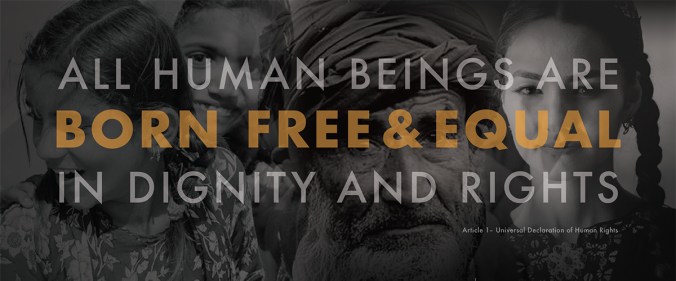
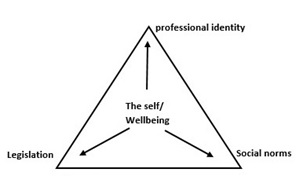
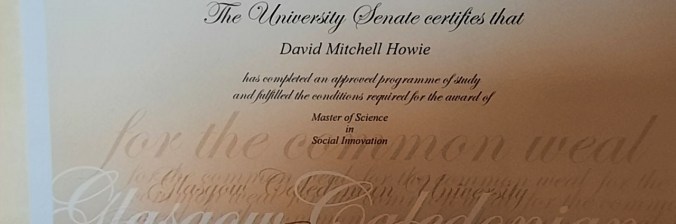
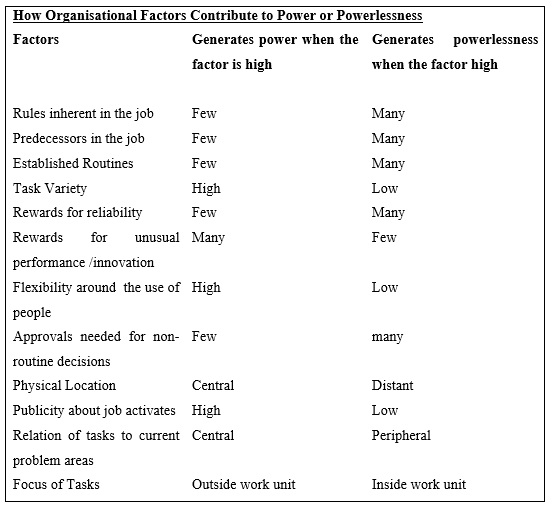
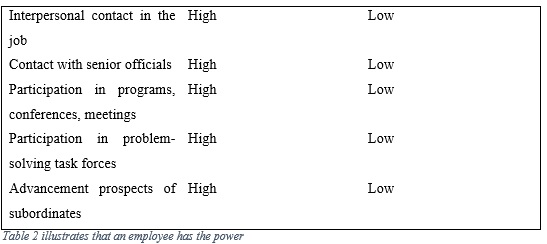
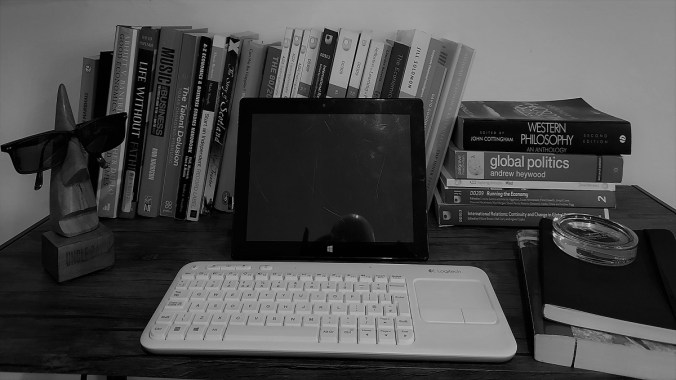
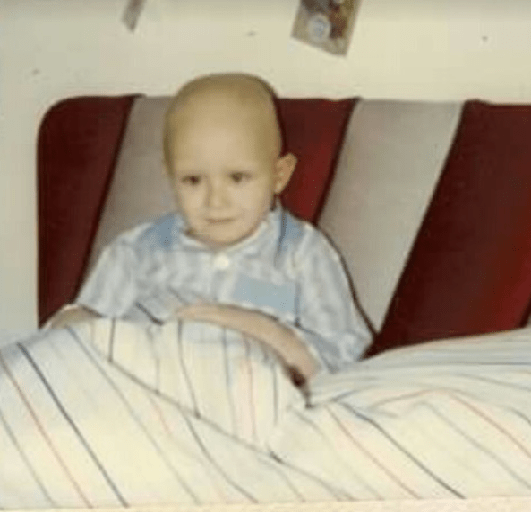
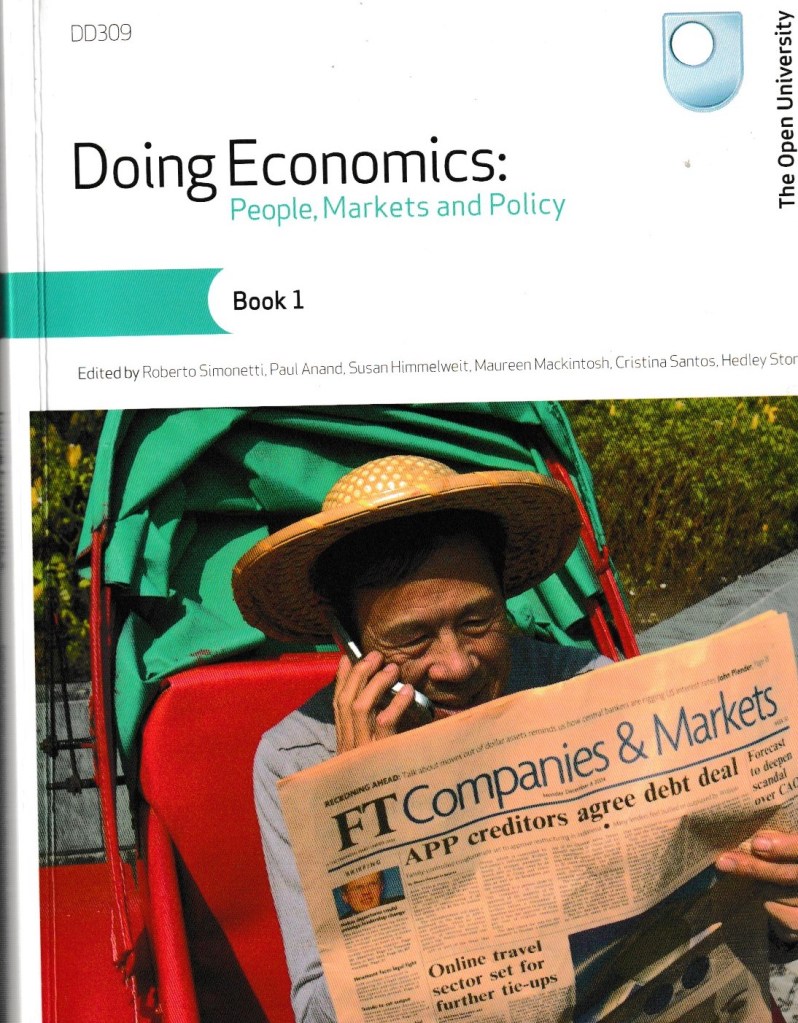
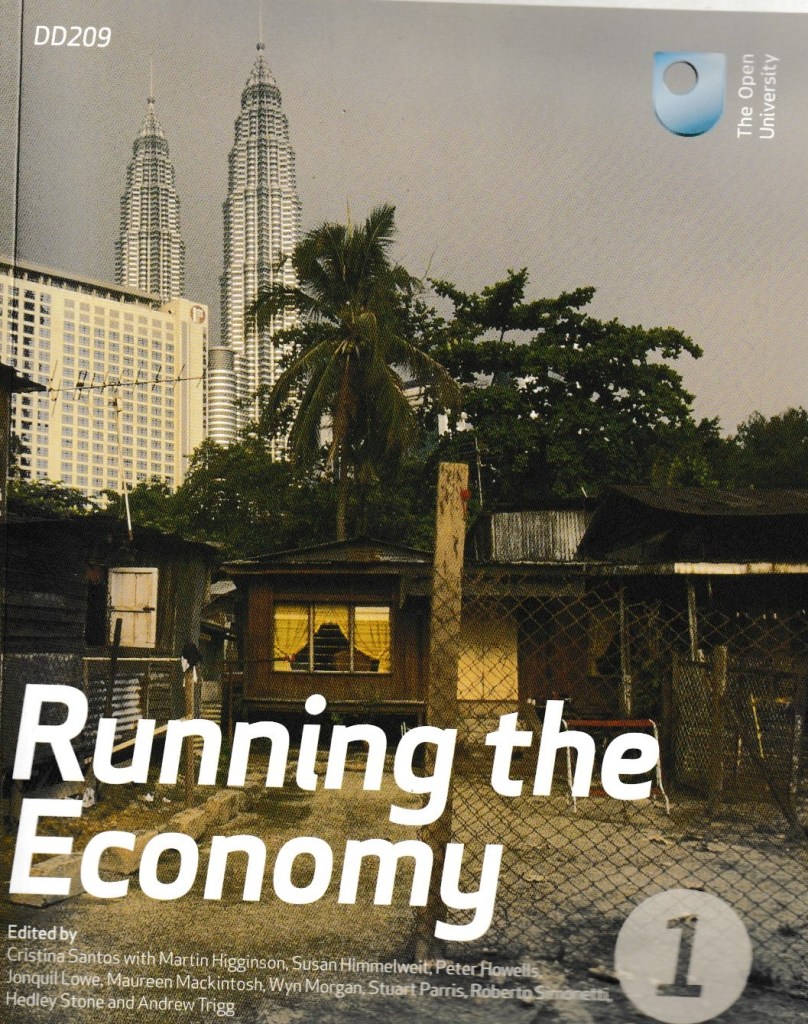
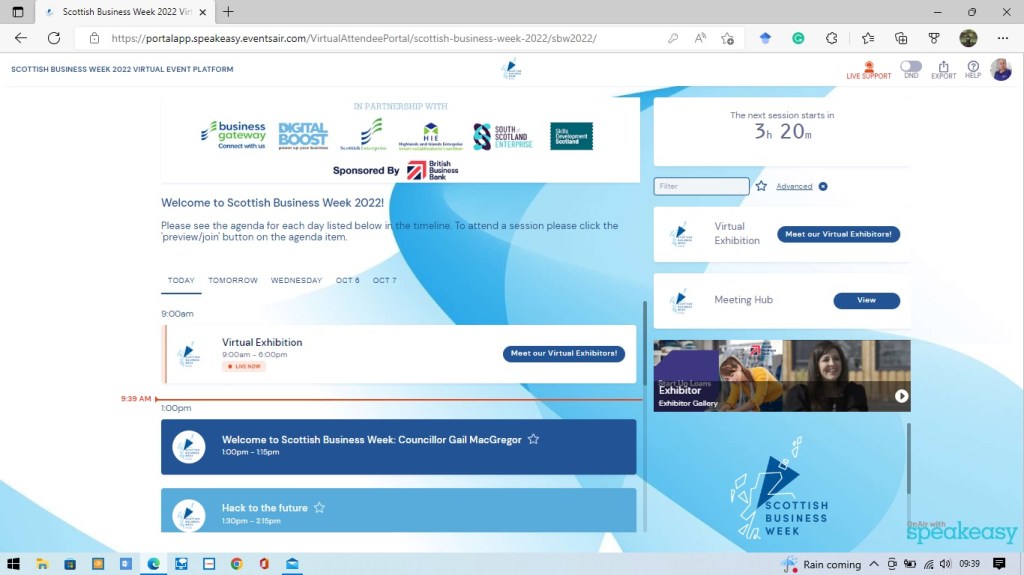


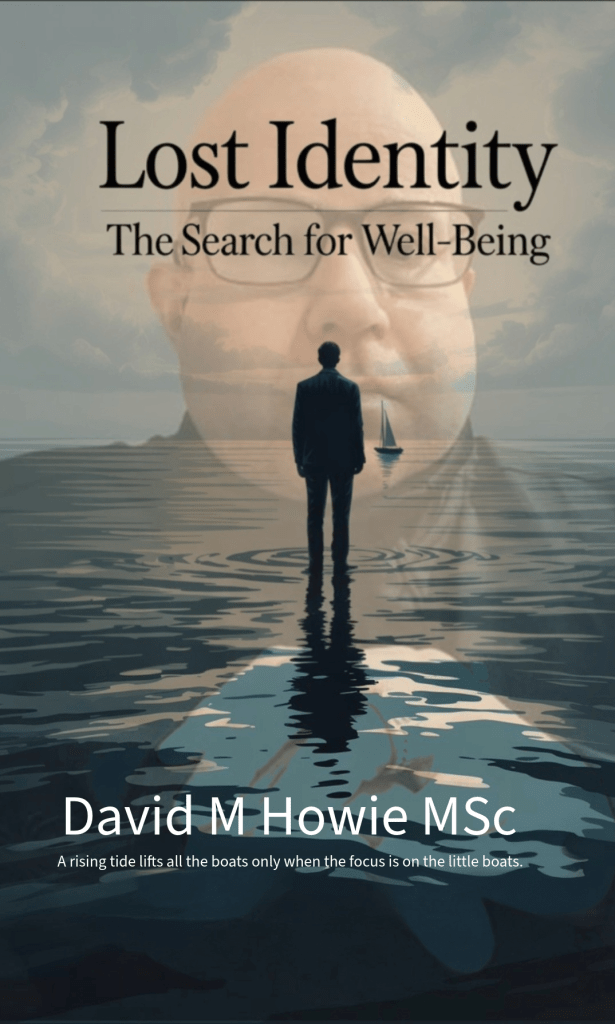


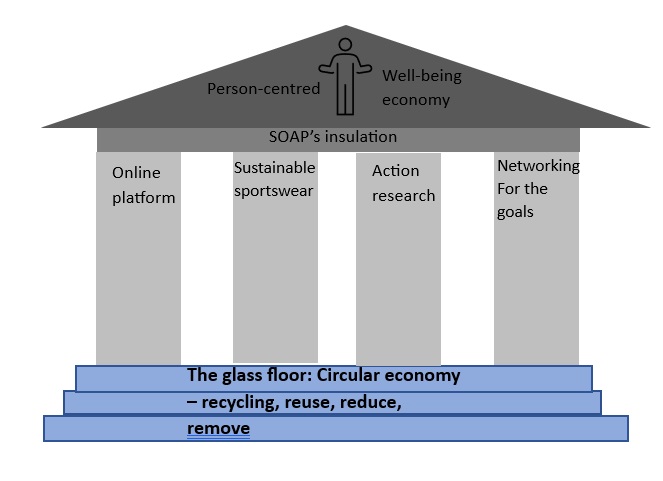
 David M Howie