What makes a person the same person over time? A British philosopher, Nigel Warburton, introduced me to personal identity via the “Ship of Theseus” thought experiment.
Now, let’s embark on a journey of contemplation. Imagine Theseus’s ship, lost at sea; its hull is the only remnant. A new vessel is painstakingly crafted from the salvaged wood, bearing the same name as the original. But is this new ship truly the same as the old one? I invite you to delve into this question, explore how you perceive personal identity in this context, and consider whether you can draw any parallels to your life experiences.
As we grapple with the ship’s enigma, let’s delve into a more profound question: Can a person remain the same over time? This is not just an abstract philosophical puzzle; it’s a question that each of us, in our unique ways, has to confront. Reflecting on my journey, I arrive at a resolute conclusion: I am the same person today as the four-year-old child who courageously faced a Medulloblastoma, a brain tumour. This personal insight, born from the depths of my experiences, underscores the profound depth and complexity of individual identity.
In philosophy, ‘personal identity’ refers to what makes a person the same person over time. It’s important to note that ‘personal identity’ is distinct from political ‘identity’ (which encompasses cultural and ethnic origins, sexual preferences, and so on). In my writing, I use ‘personal identity’ and ‘professional identity’ interchangeably in chapter five-Social Enterprise. Both these aspects, my personal and professional identity, contribute to defining the person I am, including the child diagnosed with Medulloblastoma in 1987.
I cannot say with certainty. Medical records were received after the time of writing. However, a small percentage of medulloblastomas related to gene changes can be passed down through families (Cancer.gov). I am 90 per cent sure my medulloblastoma was genetic. The person I am today was preconditioned before birth.
Philosophy, however, is not written with childhood medulloblastoma survivors in mind. Therefore, when philosophers argue their conclusions supported by true premises, they do so based on undeniably correct objectivity. My argument here is subjective, remaining so until the completion of chapter six: Do I consider myself disabled today? In philosophical terminology, my conclusion, my subjective conclusion, is that I am the same person through time because of a traumatic event—a childhood medulloblastoma diagnosis.
Hopefully, the reader is beginning to grasp who I am. Ponder this question: Can the person I am today with, 36 years of navigating a society, a society based on institutional objectivity, have subjective happiness/ well-being? Shawn Achor, writing in The Happiness Advantage, points out that ‘the most enjoyable part of an activity is the anticipation’. What if the anticipation of a career change, system change, or recognition never comes? How is happiness/well-being affected?
The remainder of this chapter focuses on my childhood medulloblastoma diagnosis and the side effects of chemotherapy, radiotherapy, and stroke. As mentioned above, I have not received my medical records at the time of writing. I write this chapter from memory using published documentation to provide legitimacy to my degrading memory.
In the UK, 52 children are diagnosed with medulloblastoma each year. In 1987, I was unlucky enough to be one of the 52. Medulloblastoma is the most common childhood malignant (high-grade) children’s brain tumour. Malignant means the tumour is cancerous. A high-grade malignant medulloblastoma means it is a miracle I am here to write this book 36 years after the diagnosis.
On social media, I was asked what type and sub-type of medulloblastoma I had. Honestly, that information evades me. Once I receive my medical history, I shall insert that information into the chapter notes.
As a child, my favourite cartoon was ‘He-Man and the Masters of the Universe’. I had all of the figures, including Orko. Orko is the comedic character who comes across as a clumsy oaf. The silly little sorcerer provided many laugh-out-loud moments for the three-year-old I was. On reflection, when my parents started to call me Orko. Alarm bells should have gone off. No parent wants to call their child a clumsy oaf. No parent wants to find out their child has a medulloblastoma. The reality is that children who become clumsy oafs over a short period could have a brain tumour. If you see this change in your child, I urge readers to go to the doctor and demand a referral for a scan.
Cancer Research UK lists the following as symptoms of a medulloblastoma: headaches, sickness, double vision, standing or sitting unsupported, loss of appetite, and behavioural changes.
Double vision and standing or sitting unsupported. I dub this Orko syndrome. If your child has Orko Syndrome, get to the doctor for a referral for a scan, and don’t take no for an answer. I don’t think I ever lost my appetite. My issue was that I could not keep any food down concerning the behavioural changes. I spent most of my pre-diagnosis days in a dark room to stop the headaches. That is a massive behavioural change for a child who just turned four.
Above, I mentioned that only 52 children in the UK will be diagnosed with a medulloblastoma each year. Therefore, at least today, I hold no animosity towards the general practitioners (GPs) who misdiagnosed my condition as jealousy of my younger brother and play-acting. Fiercely, I condemn the GPs, who in their right mind think a four-year-old is voluntarily making himself vomit to the point of death out of jealousy of a younger sibling? The thought alone is outrageous. Outrageous, disgraceful, bordering on eccentric.
Eccentricity is supported by objectivity. Society supports institutional objectivity, and social norms reinforce it. Therefore, I cannot condemn GPs because they are part of a system of governance built on institutional objectivity. As a social science graduate, I am tasked with understanding society, not asking for a system change. Sorry, I cannot do that. At this point, the readers should understand I am the same person today, not because of the medulloblastoma. I am the same person today because of society’s inability to support adults who had brain tumours as children.
Cognitive awareness of the months/years directly following my medulloblastoma diagnosis is absent. Perhaps it is for the best, as it allowed me to move past that experience quickly. By the time I was eighteen, I wanted nothing to do with my medulloblastoma diagnosis. That is getting ahead of the story. Not having my medical records on hand prevents me from providing you, the reader, with the technical details of my brain tumour. A friend on social media had a non-malignant brain tumour the size of a cream egg. Sorry, @Tumourkilller, my malignant brain tumour dwarfed your non-malignant brain tumour. I am a survivor. I have bragging rights. I am attempting to tell the reader that not having my medical records on hand is a blessing, making writing this chapter more authentic. I hope the authenticity I give the reader will be returned with legitimacy.
Objectively, surviving a high-grade malignant medulloblastoma is more impressive than surviving a non-malignant brain tumour the size of a cream egg. That’s how an institutional system with objective evidence would view it. However, I am too altruistic and understand the importance of viewing the situation holistically to take that view. @Tumourkiller is authentically telling his story to empower himself and inform his viewers. Tumour killer (Ryan) deserves legitimacy. Legitimacy, I argue, provides the speaker with dignity. What the GPs did, what society did, removed my parent’s dignity. Only 52 children are diagnosed with high-grade malignant medulloblastoma each year in the UK. I understand the objective view of the GP. I also understand that place and past dependency matter. The GP would have lacked the knowledge and understanding to diagnose a child with high-grade malignant medulloblastoma. Understand, yes; forgive, no. What the GP did was remove any legitimacy my parents had. Therefore removing their dignity. That objectively is a breach of human rights. My views on human rights in Scotland were covered in chapter one.
In 1987, I was diagnosed with high-grade malignant medulloblastoma—a childhood brain tumour.
“Medulloblastoma is likely to grow quickly and can spread to other areas of the brain and spinal cord. Around 30 out of 100 children (around 30%) have medulloblastoma that has spread when they are first diagnosed.”
(Cancer Research UK, n/a)
I was one of the 70 per cent of diagnoses where the cancer had not spread to other parts of my body—no secondary cancer – the name given to cancer that spreads. Additionally, to date no recurrence. I do not know the type of chemotherapy or dosages I received. I also don’t know anything about the radiotherapy I was given. I remember having to be held still in a mask attached to a table—readers who have watched The Man in the Iron Mask, like that, only shackled to a table with radiation being fired at me. Today, my spinal cord is shunted due to the radiotherapy. Though better to be a few inches shorter than biologically expected than dead.
I cannot be too sure about the side effects of the chemotherapy. Today, from what I know about neurodivergent individuals, I think my brain works similarly. However, that could be due to removing the tumour damaging surrounding parts of the brain, not the chemotherapy. I believe I had some form of learning disability in primary school caused by the chemotherapy. More realistically, however, is a sensory loss – hearing and sight were an issue as far back as the late 80s. I refused to acknowledge it. The education system, NHS, social workers, and even my parents failed to see it.
As far as the stroke is concerned, I have a slight speech impediment, cannot walk in a straight line, and have constant double vision. Today, I am considering asking for a symbol cane. To stop the double vision, I have to blind my left eye, and as I am sure you can imagine, walking with only one eye while not being able to walk in a straight line has its difficulties. A symbol cane would inform the public that I have sight issues.
In the fictional case of Howie vs. Scotland, the judge had no choice but to find in my favour. Scotland failed Howie by not delivering on getting it right for every child (GIRFEC). Scotland could not protect my human rights—mainly rehabilitation and the right to live in the community. Scotland failed to transition Howie from GIRFEC to Getting It Right for Everyone (GIRFE).
Chapter One: Why I don’t have a personal and professional identity.
The video above explains why I am re-writing my book. However, before doing so, I wanted to allow you to read what was written as a first draft of the chapters. See below for Chapter One.
Politics engulfs the life of every citizen on planet Earth. However, most Scottish citizens need to learn the difference between social policies devolved to the Scottish Parliament and those reserved for Westminster. Furthermore, most citizens have yet to care or have given up hope in both parliaments.
17 April 2007—the year the journey started. I don’t regret joining the SNP in 2007. My second undergraduate degree, MSc, volunteering with Globel Vision International, and numerous memberships with third-sector organisations are directly inherent to my SNP membership. However, SNP membership is the primary reason I lack a professional identity. I joined the SNP because I believed in 2007, which I think is true now. Scotland should be an independent country. However, over the past seventeen years, I have realised that independence is for nothing if citizens are not empowered. If citizens lack hope, communities become nothing more than industrial, capitalist ghost towns with the sole purpose of serving only shareholders, with no regard for stakeholders. Then why rock the boat?
2014 was the year I decided to return to education and find employment in social policy (see chapters three and four, respectively). I have ten years of experience in social policy, but I need help finding paid employment, which lowers my professional identity. In any other field of employment, ten years would demand legitimacy and respect. However, citizens who are experts by experience, including myself, are provided legitimacy only when the Scottish government wants to bring forward a new act of parliament or strengthen an act that has become outdated. This process is unacceptable, unsustainable, and intolerable. The process of lived experience boards is a two-tier system—citizens who contribute to growth in society and citizens who are supported by growth in society. Note the oxymoron. Growth in the UK/Scottish economy has stalled. Cuts to vital services give that perception. Objectively, GDP growth has been steady. Steady growth results in budget cuts. Illogical? Undebatable, budget cuts lower capacity and resources. I argue, therefore, that citizens cannot be supported in improving their well-being because the state lacks the capacity and resources (see Chapter Seven).
Chapter four, Employment, outlines my contributions to lived experience boards since 2014. The pivot here is on two expected acts of the Scottish Government. The Human Rights Integration (Scotland) Act 2026 and the Learning Disability, Autism, Neurodiversity (LDAN) (Scotland) Act 2026. The latter I have little experience. However, the LDAN bill is essential on a personal level for two reasons. Reason one: I am altruistic, more so than most citizens. I care greatly about the well-being of all citizens and how social policy correlates with citizenship well-being. The essential point is that evidence highlights that autistic citizens are more caring than neurotypical citizens. Additionally, autistic citizens talk more in statements. I am not suggesting I am autistic. However, I was diagnosed with a medulloblastoma – a cancerous brain tumour – at the age of four. A reasonable conclusion is that my brain is not neurotypical. Take this book for example. I am conveying my reasons for lacking a subjective well-being premium – I feel underemployed, undervalued, and not given the legitimacy I deserve. I have, however, chosen to convey a personal grievance through societal content, social policy, and the well-being of others. Furthermore, Chapters one to six are written in statements. I write in statements – as if my subjective opinion is a fact.
My opinions are not facts. What is a point other than an opinion that has been given legitimacy via an act of parliament or agreed upon as a social norm? My second reason for having a vested interest in the LDAN Bill/Act is that the Scottish Government will legitimise both the Human Rights and LDAN Act by 2026. But is legitimacy not subjective? What if both Acts fail to secure dignity for rights holders? What then? Because rights holders in question are some of the most vulnerable citizens in society. I strongly suggest that despite the legal guarantees set out in the Human Rights Integration (Scotland) Act 2026, the most vulnerable citizens don’t have civil liberties or the resources or capacity to set up a civil disobedience movement to gain their civil rights, better known as dignity.
Article 1 of the Universal Declaration of Human Rights says:
“All human beings are born free and equal in dignity and rights. They are endowed with reason and conscience and should act towards one another in a spirit of brotherhood.”
Admirable sentiment but a work of fiction. In 2024, human beings are not born free and equal in dignity or rights. The Universal Declaration of Human Rights is a work of fictional political philosophy. In philosophy terminology, the premise of Article 1 is false. Philosophical essays start with a conclusion and attempt to prove the conclusion by demonstrating that each premise is correct. For example:
Socrates has two eyes.
Humans have two eyes.
Socrates has two feet.
Humans have two feet.
Socrates has two hands.
Humans have two hands.
Socrates must be human.
There is no evidence to prove Socrates was anything more than writings in Plato’s journals. Perhaps that is why the Open University teaches it to undergraduates. The maxim, however, is a matter of place and path dependency. In Socrates’ time, the premises may have held. In contemporary Scotland, the assumption is as false as Article 1.
Despite my lack of enthusiasm for lived experience boards, I contribute to them for three reasons: 1. It keeps my skills ticking over. 2. I am networking for a purpose. 3. Peer-to-peer knowledge exchange can be a source of empowerment. When provided with the opportunity of sitting on the Scottish government’s human rights Lived experience board in 2022/23, I had to accept. However, I accepted because I wanted to listen and learn. If COVID-19 provided any valuable insight, the state failed the vulnerable rights holders not because of COVID-19 but because of an institutional design flaw. Chapter Five on the Social Enterprise/framework, Chapter Seven, discourse: What Society Missed, discusses possible mitigation methods.
Lived experience boards are designed to promote and develop acts of parliament or improve learning outcomes/frameworks. There is no debate. They achieve their desired outcome. Citizens/rights holders will have a subjective well-being premium for the board’s life cycle. The main reason for this subjective well-being premium is a sense of diversity, inclusion and belonging within the board. Rightsholders are placed on a pedestal, empowered by the belief of contributing to the government’s social policy. Concluding the board’s life cycle, however, the sense of belonging and empowerment has evaporated. Hope is replaced with anxiety. Altruism is replaced with egotistical thoughts. Thoughts like, was board membership the best opportunity cost? Can the board experience be used to find paid employment? The feeling of being back at the day job. The sense of being under-employed, under-valued, and unable to find a professional identity to satisfy a subjective void – the feeling of having zero legacies.
I dislike and admire lived experience boards equally, perhaps because I have too many expectations regarding my possible career prospects. Possibly, lived experience boards are a tool for achieving an outcome. Furthermore, citizens who are experts by experience are probably discarded as an afterthought on completion of the board, as citizens with lived experience were never endogenous to a system designed to produce an outcome. What gets measured gets done – that’s what they say in business schools. Well, I guess the well-being of rights holders is not measured.
Readers, please don’t get the wrong idea. This chapter is not about any objective grievance relating to lived experience boards. What I have said is entirely subjective. However, a colleague who sat on the People Powered Health and Well-being reference group echoes my opinions (see chapter four). There is also academic evidence provided by ‘Cool Music: A Bottom-up ‘Music Intervention for Hard-to-reach Young People in Scotland’, which shows short-term projects can result in well-being issues for staff and clients. To prevent misreading, I believe lived experience boards must be phased out and replaced by community councils and reference groups taking a more active role in community and citizen empowerment. My view that lived experience boards should be phased out is not a grievance. It is an opinion. It is far from a social norm. And my views were dismissed by the Scottish government’s social enterprise funding body.
What I write now will split readers’ opinions. However, it is too important an issue for it to go undocumented. Like rights holders—citizens of Scotland—who don’t have the resources and capacity to challenge the inequalities that prohibit dignity, the Scottish Government doesn’t have the resources or capacity to provide every citizen in Scotland with human rights/dignity. The objective evidence is clear and covered in detail in chapter seven. Subjectively, since 2014, I have worked directly and indirectly with the Scottish Government in some capacity. For the seven years before 2014, I was an active foot soldier for the SNP. I even went to vetting for candidacy for MSP. I am an idle supporter today because I became burnt out attempting to challenge/change the top-down institutional system from within a political system, a cornerstone of the institutional system itself. The focus of any society is on GDP growth. Goal eight of the UN SDGs is Decent Work and Economic Growth. GDP growth is an international aspiration. So economic growth should be. However, as Chapter Four shows, my paid employment lowers my subjective well-being/ dignity because I am unhappy with my professional identity. Membership of the SNP provided false hope. I believed my SNP colleagues and I could bring about a fairer, healthier Scotland. Perhaps evidence exists to show inequality has reduced in Scotland since 2007. However, it has not been reduced to the point where the most vulnerable rights holders feel empowered and have dignity. Do I think the Human Rights Integration (Scotland) Act 2026 will enable rights holders and provide dignity for every Scottish citizen? NO. No, I do not.
Thank you for reading and watching the video. If you have any questions, ask them in the comments box.
Disclaimer. This blog post you are about to read is subjectively motivated. However, the intent is not to criticise the integration of the United Unitions Convention into Scottish Law. The blog intends to empower the reader with the knowledge required to understand why I believe the Human Rights Integration (Scotland) Act 2026 will be dead on arrival.
For clarity, I have no desire to see the Human Rights Integration (Scotland) Act 2026 fail. Upon completing my master’s in social Innovation, I attempted to set up a social enterprise to empower local communities and citizens by supporting and recommending improvements to the Scottish government’s social policy. I joined the Scottish government’s Human Rights Integration Lived Experience board to achieve my social enterprise’s outcome. The objective was to learn from citizens how best to empower citizens in local communities. On reflection, that objective was achieved. Why do I believe the Human Rights Integration (Scotland) Act 2026 will be dead on arrival? Firstly, I think the framework I designed to achieve A-LEAF’s outcome supports the Scottish government’s Human Rights Agenda. To be denied funding by the Scottish government’s social enterprise funders indicates departments are not communicating on a Human Rights agenda. To successfully implement the Human Rights Integration (Scotland) Act 2026, the Scottish government departments require a Human Rights inclusive communication policy; this policy must recognise the Scottish government lacks the capacity and resources to empower every citizen in Scotland with dignity. To provide dignity to every citizen in Scotland, there is a requirement to shift the Human Rights agenda from top-down to bottom-up- There is a requirement to support social enterprises that aim to be commercially sustainable whilst supporting the United Nations’ Sustainable Development Goals and the Scottish National Performance Framework.
The National Performance Framework states:
We [Scotland] have a thriving and innovative business, with quality jobs and fair work for everyone.
Scotland’s Natonal Perforance Framwork
As a Social Innovation graduate, I strongly suggest to the Scottish government that extensive work is required to achieve the standards for said performance.
The Second reason I believe the Human Rights Integration (Scotland) Act 2026 will be dead on arrival is basic economics. Before completing my MSc in Social Innovation, I completed my second undergraduate degree in Politics, Philosophy, and economics. Therefore, I believe I have some legitimacy regarding my economic claims. The backlash to Scotland’s First Minsters Humza Yousaf’s announcement that council tax in Scotland will be frozen in Scotland in 2024 has been intensive. However, by applying a Human Rights approach, the question becomes, can Scotland afford not to have a council tax freeze? Not can Scotland’s councils afford a council tax freeze.
The limitations of Devolution, as it relates to short-run capitalism, dictate that a freeze in council tax results in a cut in public services. While this holds in the short term, it is my opinion that moving towards a well-being/circular economy which supports the principles of a shared economy could mitigate the cost-of-living crisis. In the long run, this could result in lower council tax as social enterprises could provide crucial services.
For example, instead of charging Glasgow city residents £50 to pick up garden waste. Social Enterprises could pick up the waste for free and sell the biomass to companies looking into sustainable and renewable energy sources.
Sustainability is a goal for the national performance framework:
We [Scotland] have a globally competitive, entrepreneurial, inclusive, and sustainable economy.
SNPF
While the national performance framework provides keywords, it offers no hope. Scotland’s economy is not inclusive. Only 49.6 per cent of disabled people living in Scotland are in work. I am willing to bet it is not full-time work, which allows for the highest attainable standard of living. Scotland’s economy is not sustainable. Paying £50 for garden waste pick up when there is a cost-of-living crisis is anything but sustainable.
Scotland’s economy may be entrepreneurial. Scotland’s economy is not social entrepreneurial-friendly. If it was, the cost-of-living crises could be mitigated. Furthermore, because business tax is reserved for Westminster, the benefits from tax from any profit before people and planet business goes down south and does not stay in Scotland.
Given that Scotland’s economy is not social entrepreneurial-friendly, inclusive, or sustainable, can Scotland’s economy be competitive?
The third reason why the Human Rights Integration (Scotland) Act 2026 will be dead on arrival is Scotland’s social enterprises are charities, not social enterprises. At least not the academic definition of a social enterprise. That is a significant issue that cannot be underestimated. I have volunteered in Scotland’s third sector since 2010. I fully support Scotland’s third sector. I am on record saying parts of Scotland’s third sector act as a second chamber to the Scottish government. Scotland has a strong third sector. Scotland does not need a more extensive state supporting more third-sector organisations. Scotland needs a robust social enterprise sector that reports to, answers and monitors the Scottish parliament. That is how we achieve a Human Rights Integration (Scotland) Act 2026 that is fit for purpose.
This brings me to the second part of the blog post. The social enterprise I tried to set up challenges the top-down social norm that exists in Scotland. There is too much of what the state can do for me and not enough of what I can do for my state. Or to put it another way.
Ask not what your country can do for you- ask what you can do for your country.
JFK, 1961
Scotland is not the USA. Scotland is, however, part of the UK, for worse or for better. In implementing the Human Rights Integration (Scotland) Act 2026, the Scottish government should remember the teachings of John Loke and Thomas Hobbes. Yes, citizens may need a government to run the state. Society in Scotland has come a long way since the English Civil War. Scotland requires a new social contract. Scotland requires a social contract that empowers social entrepreneurship. And social entrepreneurs must empower local communities.
Watch the attached video to learn more about A-LEAF and stay updated on my views on Scottish and UK politics.
A-LEAF: should it say or go?
This video is not public on YouTube. If you do like this content, let me know, and I’ll see about updating my video and recording equipment.
Sunshine and rainbows, life is not. I was diagnosed with medulloblastoma at age four and live with the long-term condition resulting from the brain tumour- sight and hearing limitations, balance problems, and dyslexia-like issues as a child. Sunshine and rainbows are more challenging to find. Difficulties multiplied by the medical model, which said I had five years to live. The medical model said I was dead at ten. As of May 7th, I am forty years old. According to the medical model, I should not have attended high school. I have two undergraduate degrees and a master’s in social innovation and have worked since I was seventeen. I have volunteered in the Scottish third sector for ten years and have been a member of a UK political party since 2007—the relevance of my lived experience.
Health is a state of complete physical, mental, and social well-being and not merely the absence of disease or infirmity.
(World Health Organisation Constitution)
The absence of disease or infirmity does not necessarily result in complete physical, mental, and social well-being. Replacing the medical model with the social model of disability via Human Rights (integration) (Scotland) Act 2026 would go some way toward achieving the World Health Organisation’s constitution in Scotland.
The Scottish National Action Plan for Advancing Human Rights II (SANP2) is the most recent publication available in the public domain. This article is a loose response to SNAP2 and recommendations for advancing human rights in Scotland.
The article is structured as follows. In the subjectivity section, I provided my opinion on SNAP2’s timeliness. In 2022 The Scottish Government had three boards- lived experience- advisory- executive providing evidence on human rights issues in Scotland. The board(s) evidence was not included in the SANP2 document. In the objectivity section, I take a more evidence-based approach to evaluate SNAP2- the evidence I use was sourced from online accessible websites and open-source research where possible. In the discussion section, I discuss human rights in Scotland, attempting to bring the subjective and objective areas together. Finally, in the recommendations section, I provide three recommendations which I see as a priority for advancing human rights in Scotland.
Subjectively, SNAP2 needs work.
Subjectively, the Scottish National Action Plan for Advancing Human Rights II (SANP2) is a missed opportunity. Equivalent to a tick-box bureaucratic institutional framework. Far from the radical reform, its pre-publication hype advocated. Disclosure. As a Social Innovation MSc graduate with over ten years of knowledge of the third sector and fifteen years of knowledge of political institutions in Scotland, I subjectively claim, after a second reading of SANP2, that SANP2 is a significant missed opportunity. I swear two things by subjectively applying lived experience to my initial review. One SANP2 is a bureaucratic document designed to give people with lived experience a perceived voice. Two SANP2 is the Scottish Government box ticking to confirm which previous records have been previously established.
Subjectively SANP2 needs to live up to the expectation of the pedestal on which it was placed. It is not easy to be objective when lived experience requires subjectivity. However, the next section will objectively cross-examine my subjectivity for this review’s legitimacy. What, though, are the bases of my subjectivity?
Webster (2022, p. 3) accurately points out.
“The 2021 report of the National Taskforce for Human Rights Leadership recommended a new legal framework that will bring into [Scots Law] a range of internationally recognised Human Rights.”
We know that the Scottish Government plans to incorporate the UN Human Rights conventions into Scots Law by the end of the parliamentary session. Therefore, an objective revaluation of my subjective conclusion shall be on that cornerstone. Subjectivity based on lived experience, however, is not void of objectivity. Objectivity is subjectivity with a past dependency and place matters lens- see conversation section.
Dr Elaine Webster’s research paper’s theory/research is that communication around Human Rights can be given legitimacy by the bottom-up- rights holders when communication focuses on Human Dignity, not human rights.
To test Dr Elaine Webster’s theory, it is critical to identify the number of times the word ‘dignity’ is used in the SNAP2 document. And in which contents.
Three. Three times. The word “DIGNITY” was directly used three times in the SNAP2 document.
One direct reference to dignity is a quote from acritical 1 of the UN conventions “All Human beings are born free and equal in dignity and rights” (SANP, p.16).
All Human beings are free and equal in dignity and rights? Debatable. What is not debatable is that not all human beings remain free and equal in dignity and rights.
“In France, 57% of [woman’s] work is unpaid compared to 38% of men’s… all this extra work is affecting women’s health” (Perez, loc. 1461).
Where is dignity for women?
The fact is that the Universal Declaration of Human Rights dates to 1948. It is outdated. Article 16.1 reads.
Men and Women of full age, without any limitation due to race, nationality or religion, have the right to marry and have a family. They are entitled to equal rights as to marriage, during and at its dissolution”.
As Caroline Perez points out in the book Invisible Women. Women and men do not have the same right in marriage. The fact is that women and men do not have the same rights in society.
Not only is incorporating the Universal Declaration of Human Rights into Scots law, without a contemporary analysis of the wording, a direct violation of human dignity and added cost to the NHS. It is a violation of ethics.
Since graduating with an MSc in Social Innovation from Glasgow Caledonian University, I have been in the process of setting up a community empowerment-action research network- A-LEAF Community Empowerment LTD. Figure 1 is my subjective interpretation of an objective fact.
Figure 1: Societal Triangle.
In project management, time, cost, and quality directly affect the project’s scope. My subjective view is that societal institutions can manage the health/well-being of individuals/ communities.
SNAP2 focuses on legislation exclusively, failing to consider how the perception of ones standing in society can affect health, well-being, and mental health. Moreover, as Perez points out, social norms-past dependency can hurt individuals and communities.
SNAP2 an objective view
The section on subjectivity shows how lived experience can influence an outcome. This section looks objectively at what SANP2 looks to achieve. Moreover, is the desired result attainable?
SNAP2: Scotland’s Second National Human Rights Action Plan. The key word is National. If the Human Rights Integration (Scotland) Act 2026 is to be implemented within all thirty-two local authority areas, with a minimum standard, then there should be an act of parliament. Moreover, the unofficial second chamber, the third sector interface, should support parliament. Given that SNAP2 was written by employees working in the third sector and supported by the general public. I can see no objective argument against SNAP2 as the most efficient, timely option for producing an open-source document to inform the people on the developments of their rights as rights holders.
Furthermore, SANP2’s principles, advancing human dignity, comply with Article 1 of the UN Convention on Human Rights. It also follows the Scottish Government’s communication about Health, Social Care, and other areas where duty-bearers have a particular obligation or responsibility to respect, promote and realise human rights. Moreover, SANP2 also interlinks with academic thinking. Therefore, there are no grounds for an objective point of reference.
Integration of the UN Convention on Human Rights comes in two parts. Part one: International Covenant on Civil and Political Rights (ICCPR). Part two: International Covenant on Economic, Social and Cultural Rights (ICESCR).
This review shall focus predominantly on ICESCR. World Health Organisation (WHO) Constitution states
“Health is a state of complete physical, mental, and social well-being and not merely the absence of disease or infirmity.”
As ICESCR covers conditions at work, poverty, housing, social care, access to healthcare, and cultural life, the infringement of one or multiple of these areas would result in the mitigation of WHO’s constitution and border on a breach of Human Rights.
SNAP2’s purpose is in three parts:
Carry out coordinated human rights activity by public bodies, civil society and rights holders.
Promote greater awareness of human rights.
Advance the realisation of human rights.
Objectively does SNAP2 do enough to identify and develop human rights in Scotland? Let us first consider what ICESCR requires—starting with work—decent work [is paramount] in realising the 17 Sustainable Development Goals. (Yunus Centre, 2023)
Workers’ rights are reserved for Westminster. Therefore, it would make little sense for public bodies or civil society to carry out coordinated human rights activity into workers’ rights.
In the discussion section, I discuss promoting and advancing human rights around worker rights.
24 per cent of children in Scotland are living in poverty.
69 per cent of children living in poverty in Scotland are in households where someone works.
38 per cent of children in lone-parent households live in poverty.
29 per cent of children with a disabled family member are in poverty.
(Child poverty action group, 2023)
Public bodies, civil society and rights holders must collaborate to identify where a child is living in poverty, identify the cause, and, where possible, mitigate the causes. Worker’s rights and gender pay gaps are reserved matters. However, evidence would support the need to push for human rights intervention regarding poverty.
Work and poverty (somewhat) are reserved for Westminster. As such, any attempt by the devolved public bodies or civil society to introduce a human rights approach could be limited. See the discussion section.
Housing, social care, access to healthcare, and cultural life are all devolved matters. Financial capital is the only obstacle to achieving a human rights-based approach in these four areas.
The Scottish budget is constrained via the devolved settlement. On this ground, SNAP2 can be objectively criticised as being a missed opportunity.
The Homelessness in Scotland 2021-2022 report highlights that 27,571 families were homeless; these households contained 42,149 people, 30,345 adults and 11,804 children. (Scot Gov, 2021). Additionally, the BBC puts the number of displaced people cases in Scotland at 28,944 in September 2022 (Clements, 2023).
These figures are alarming. What is more problematic, though, is that in 2022, the cost estimation for a house is anywhere between £1,750 and £3,000 per m2 (Bahar, 2023). The average new three-bedroom home in the UK is 88 m2 (Joyce, 2011). The Scottish government must therefore find £7,641,216,000; £3000 x 88m2 x 28,944 cases. Supposing it aims to avoid legal issues. See the discussion section.
Quantifying a reasonable estimate of the cost required to build 28,944 homes in Scotland is possible. Quantifying the cost of raising social care to a human rights standard is more complex. Care Information Scotland (2022) states that councils will pay £832.10 per nursing per resident in respect—or £719.50 for residents in residential care. Public Health Scotland (2022) says there are estimated to be 33,352 Scots over 18 living in care homes. Based on the lower £719.50 figure, the Scottish Government is paying a minimum of £23,996,764 per year in social care costs.
Pause. The figures quoted above are an estimate. They are intended to provide an objective validation to the argument that SNAP2 could have offered additional recommendations on how a human rights-based approach to housing and social care could be achieved.
The Public Bodies (joint working) (Scotland) Act 2014 was intended to integrate the NHS and Social Care nationally. Colleagues at the Alliance shall remember a year of work which provided the people-powered health and well-being reference group on objective reflection- all of whom had long-term conditions or were unpaid carers with a little well-being/ confidence boost. However, as Millar et al. (2020) point out:
“…for those participants with conditions that require consistency and stability. The short-term and transitory nature of the project also creates difficulties in assessing [lived experienced programmes] effectiveness over time – a challenge shared by those working on music and well-being projects in non-formal settings more generally.”
The people-powered health and well-being reference group was not a music well-being project. The point I am arguing is the short-term and transitory nature of lived experience boards. As Millar et al. (2020) say.
“We question, therefore, what happens with project participants, including beneficiaries and those running a project, when ‘the light goes off’, and the task terminates.”
Burnout is not only a problem for project participants, including beneficiaries and those running a project. Burnout is a significant issue for the NHS. As Nicholson (2023) states, the current state of the HNS is a ‘Ticking Time Bomb’. Stress, anxiety and burnout are pushing employees out of the health service. The media blames COVID-19 for this. The fact is that this is a gender data gap problem.
“A 2011 analysis of the data collected on British civil servants between 1997 and 2004 found that working more than fifty-five hours per week significantly increased women’s risk of developing depression and anxiety- but did not have a statistically significant impact on men”.
(Perez, 2019, loc. 8961)
As Caroline Criado Perez says in her book invisible women, “A husband creates an extra seven hours of housework a week for women… regardless of their employment status” (Perez, 2019, loc. 8961)
Any Scottish Government budget after 2026 must have a gendered lens to achieve a human rights-based approach.
This section has provided objective-quantitative evidence that supports the initial argument- SNAP2 is a missed opportunity. However, as said in the subjective segment, objectivity is not straightforward when lived experience enforces subjectivity.
As a member of the Alliance, Inclusion Scotland, and Glasgow Disability Alliance- a holder of an undergraduate degree in politics, philosophy, and economics- and an MSc in Social Innovation, SNAP2 is a subjective missed opportunity- the objective evidence confirms why I am frustrated with the SANP2 document. However, rights holders all have personal viewpoints- If SANP2 archives the objective of a human rights social marketing campaign, then I will accept that my original argument was too harsh.
Discussion
Article 27 of the UN Universal decoration of human rights says.
Everyone has the right to freely participate in the community’s cultural life, enjoy the arts and share in scientific advancement and its benefits.
Everyone has the right to protect the moral and material interests resulting from any scientific, literary or artistic production of which he is the author.
Cultural rights should have been included in the objective evidence section- I, however, needed more objective and subjective knowledge in this area. SNAP2 asks for the realisation of a human rights culture. What, though, does that imply?
Point 2 is not relevant; intellectual property rights are covered in UK law.
The key word in point one is “community”. More research into the diversity, inclusion, and belonging model is required to achieve the desired outcome. Scottish communities are diverse. However, is there a sense of inclusion and belonging? More academic and action research is needed in this area.
Focusing research on poverty and employment rights as it relates to cultural rights could enhance the sense of belonging for citizens living in Scotland.
The working of people-powered health and well-being reference groups could be used as a framework for civil society to carry out action research.
The overall question could be: Does working locally benefit people, the planet and the community? While at the same time contributing to a subjective well-being premium?
Academically that question could be adapted to fit numerous social science studies. Looking back on Article 27, a collaborative action research project supports scientific advancement and its benefits for the community. Scotland, in this case.
Past dependency and place matters. An academic phrase meaning contemporary life today is shaped by past policy decisions. Integration of the UN conventions on human rights is about the culture and legacy this generation passes to the next. A heritage that is constrained by the devolution settlement. The Human Rights (integration) (Scotland) Act 2026 is possible with devolution. However, poverty could be mitigated more effectively with the full powers of an independent state. Montgomery and Baglioni published the report The Gig Economy and its Implications for Social Dialogue and Workers’ Protection in 2020. This report targets the UK, as employment law is a reserved matter. Reserved, devolved issues will impact the wording of The Human Rights (integration) (Scotland) Act 2026. The reason for including accumulated devolved problems in a review of SNAP2 is that it is misleading not to address this issue before The Human Rights (integration) (Scotland) goes to the public conversation stage.
SNAP2 is not The Human Rights (integration) (Scotland) bill; perhaps the criticism is too harsh. SNAP2 is the last document before the public conversation, highlighting the problems of devolution and human rights that are paramount, dissevering more than a footnote.
The topic of Housing and Social Care is devolved. Furthermore, they are topical. Moreover, therefore, likely to dominate the public conversation on human rights. My calculations estimate that the Scottish government will be required to find £7,641,216,000 to build 28,944 new homes between now and 2026. 28,944 are the number of cases of homelessness in Scotland (Clements, 2023). However, it is not as simple as building 28,944 new homes at the cost of £7,641,216,00. Remember, WHO’s constitution states.
Health is a state of complete physical, mental, and social well-being and not merely the absence of disease or infirmity.
Therefore, building 28,944 new homes would require other community actors, schools/nurseries, sports clubs, shops, accessible transport, pubs/ social activities—and work. Forty-two thousand one hundred forty-nine people, 30,345 adults and 11,804 children (Scot Gov, 2021), are homeless in Scotland. To prevent repeating the mistakes of the past- housing estates. Integration of the UN Convention on Human Rights must consider the discourse of equal opportunities. The argument for consideration to the Human Rights (integration) (Scotland) bill writing team is that a gender budgeting approach would go some way to addressing barriers to opportunities for other groups in society too.
The purpose of the discussion section was to engage the reader in a thought-provoking extension of the subjective and objective areas. My conclusion was that SNAP2 was a missed opportunity. I base that premise on lived experience- as pointed out in the subjective section. My premise in the objective section is that the objective quantitative data confirms the subjective belief.
Conclusion- premise. The bases of a philosophical argument.
Socrates has two legs.
The man has two legs.
Socrates, therefore, is a man.
My political philosophy is that society needs a large enough state to provide citizens with a quality of life that is equal to WHO’s constitution. That said, with the limited powers of the Scottish parliament, Scotland needs an intelligent state, not just a large state.
Recommendations
Inspiration for this paper is the lack of actionable items that can be actioned now to advance human rights in Scotland. In this section, I provide three things that could be written into Scots law today. The first should come as no surprise. Insert into the Human Rights (integration) (Scotland) Act 2026:
The social model of disability should replace the medical model.
the social model of disability is required to achieve human dignity for all citizens.
Human dignity is required to achieve a human rights-based approach. Furthermore, dignity is required to align the Scottish NHS with the World Health Organisation’s constitution.
The second recommendation should come as no surprise either. In 2019 male drivers in England outnumbered female drivers by 9 per cent (Statista, n/d). However, 82.2% of employees [in the care sector] were women, and only 17.8% were men [2018] (Shepherd, 2018).
Transport in Scotland should be designed with a gendered lens.
2.1 the lack of timely, accessible transport prevents care workers from promptly coming to clients’ homes.
2.2 Further research is required to identify if the lack of timely accessible transport prevents care paid or unpaid from timely transport, adding additional working hours to their day, which adds to health issues.
The last recommendation focuses on the role of social enterprises in Scotland. Human rights are for all citizens living in Scotland (and internationally). To achieve a human rights-based approach in Scotland, a top-down approach to human rights is required. However, a bottom-up approach can identify and mitigate local issues quicker than a top-down approach. Therefore, the Human Rights (integration) (Scotland) Act 2026 should insert.
The role of social enterprise is essential in securing a human rights approach in Scotland.
3.1 The Scottish Parliament will oversee the setting up a Scottish Social Enterprise mark.
3.2 Social Enterprises in Scotland will report directly via a Scottish Parliamentary committee.
3.2.1 Reports to the parliamentary committee will include business growth indicators and key performance indicators- directly linked to UN Sustainable Development Goals.
3.3 The role of the national and regional social enterprise networks shall continue to provide support to social enterprises.
Social Enterprise (SE) is a new concept for most- as SE has no set definition, it isn’t easy to understand. In Scotland, the Scottish Government has set the framework for SE to mirror the charitable- third sector- this framework is too limited and reinforces the top-down governmental approach. Nor is SE the fourth sector- the third sector plus is the best way I would frame a definition of SE in Scotland. As Ehrlichman (2021, p. 18) states
“Society can[not] let networks form according to existing social, political, and economic patterns, which will likely leave us with more of the same inequities and destructive behaviours”.
SE offers an opportunity to deliberately and strategically catalyse new networks to transform the systems we live and work in. What does SNAP2 ask the Scottish Government to do?
Carry out coordinated human rights activity by public bodies, civil society and rights holders.
Promote greater awareness of human rights.
Advance the realisation of human rights.
A system change via active action networks (research) provides that opportunity.
Conclusion
The Human Rights (integration) (Scotland) Act 2026 and the support documents available to the public as of summer 2023 provide an opportunity for a national conversation on human rights in Scotland and internationally. The purpose of this article is threefold. This article indirectly addresses the Sottish National Action Plan on Human Rights document. However, this article does more than address SNAP2. This article provides a personal evaluation of why SNAP2 is a missed opportunity. However, subjectivity is not absent from objectivity—every unique viewpoint this article claims is supported with objective evidence.
SNAP2 is a missed opportunity. My subjective lived experience is the ground for that thinking. However, I have never, to this date, let my childhood medulloblastoma or long-term conditions define me. I have no intention of starting now. As I said in the objective section, the SANP2 document provides a timely transition towards the upcoming Human Rights (integration) (Scotland) Bill.
The second reason for writing this paper, my time on the Scottish Government’s lived experience human rights board was insightful. I have taken many of the points to heart and shall embed them into A-LEAF moving forward. However, this article is the written evidence I could not say to fellow board members.
The final reason for writing this paper is to use my lived experience, my academic experience and my human capital experience of the third sector in Scotland to add additional information to the human rights conversation in Scotland. I hope I have achieved that outcome. My last thought is that many social enterprises are doing exciting things in Scotland. The Scottish Government and third-sector interfaces should include social enterprise experience moving forward.
Millar, SR, Steiner, A, Caló, F & Teasdale, S 2020, ‘COOL Music: a ‘bottom-up’ music intervention for hard-to-reach young people in Scotland’, British Journal of Music Education, vol. 37, no. 1, pp. 87-98. https://doi.org/10.1017/S0265051719000226
The human rights lived-experience board meeting, taking place on Monday 21 November, shall focus on what key performance indicators to measure, to inform that the human rights act is achieving the desired outcome. This blog post will ask the readers three questions, question one will ask the reader how well you feel human rights are protected in Scotland right now. Question two will ask the reader what you think is the most important human rights issue in Scotland today. Question three will ask the reader how hopeful they are feeling that the new human rights bill will be successful in realising human rights for people in Scotland. After each question, there shall be a short discussion about the contemporary issues directly impacting the question.
What is the Human Rights (Scotland) act?
For international readers and national readers that do keep up to date with politics or the third sector, Human Rights (Scotland) Bill/Act is an act of the Scottish Parliament that will incorporate the UN Human Rights conventions into Scots law. Wait, it gets more interesting, the Scottish Government only has responsibility for devolved matters. Reserved matters are still the responsibility of the UK Government. What then does the devolved/reserved conflict as it relates to the power of Governments/Parliaments mean for the human rights of people living in Scotland? that is the question this blog will look to answer.
How well do you feel human rights are protected in Scotland right now?
For international readers, this question and the two questions that follow will be hard or impossible to answer. While you- the international readers may have difficulties answering the questions, I would suggest that you continue reading. From an international relations lens, the Human Rights (Scotland) Bill/Act speaks volumes about the character of the Scottish Government/Parliament.
Turning attention to the question of how well you feel human rights are protected in Scotland right now. As a citizen of Scotland, I would conclude there is room for improvement. Poverty in Scotland 2021: Towards 2030 without poverty, tells you all you need to know about human rights violations in Scotland. While the case of Awaab Ishak, see here, is in England. Scotland’s housing situation is not much better. In Scotland today (2018)
2 per cent (51,000) of all households are overcrowded
19 per cent of homes have some level of urgent disrepair to a critical element and just 1 per cent had extensive disrepair
2 per cent (40,000) of homes (at the time of writing) do not meet the ‘Tolerable Standard
0.7 per cent (18,000) have both condensation and some level of penetrating or rising dampness
(Cain, 2021, p. 212)
As the data above shows Scotland has to do much more to improve housing if the goal of the Scottish Government is to protect people living in Scotland from human rights violations.
What do you think is the most important human rights issue in Scotland today?
These questions that am putting to the readers are the questions the human rights lived experience board will answer on Monday. Therefore it is only fair to the reader, that the choices are made clear. Which options from the list are the most important human rights issue(s) in Scotland today?
Access to justice
Poverty
Disabled people’s rights
Women’s rights
Refugee and asylum seekers’ rights
Environmental rights
Older people’s rights
Children and young people’s rights
Something else
They’re all important- I can’t separate them all!
Readers may think, that because I referenced Poverty in Scotland 2021: towards 2030 without poverty. That I would say poverty is the most important human rights issue in Scotland today. If this is your thinking, I can inform you, you are completely incorrect. All choices above are equally important. To try to focus on one or two of the choices above without seeing the holistic picture is, hazardous to health.
I have a seat on the Human Rights (Scotland) Bill lived-experience board because I am a member of the Health and Social Care Alliance Scotland. The third-sector organisations in Scotland know that a holistic co-produced model is required to achieve human rights in Scotland for all citizens.
What would human rights for all citizens look like? Given the political structure of Scottish society, only the Scottish Government and parliament can answer that question. In the decision section, I try and help the Scottish Government make the correct choice.
How hopeful are you feeling that the new human rights bill will be successful in realising human rights for people in Scotland?
I recognise that this blog has not provided the reader with enough information to come to a balanced conclusion. I can, however, inform the reader that I am not hopeful, am probably more sceptical. Why sceptical you may ask. I said above that from an international relations lens, the human rights bill makes Scotland compliant with international policy. Therefore Scotland becomes viewed as open and outward-looking. Scotland should be viewed in this light. Scotland is a fantastic country with vast potential. With that said, If Scotland continues with the top-down approach to government, in which human rights are focused on access to justice and not on well-being and dignity then I see no outcome where the new human rights bill will be successful in realising human rights for people in Scotland.
Discussion
Readers may or may not know of my background. If you do not, I was diagnosed with a brain tumour at the age of four. see the home page for more information. I have over ten years of experience in the third sector, I also have two undergraduate and one MSc degree. The reader must understand I conclude that the human rights (Scotland) bill will not have the outcome desired, based on 34 years of living with the side effects of a childhood brain tumour, 13 years as a member of the political party that governs Scotland, 10 years volunteering in the third sector- which includes Scottish government boards, and, three trimesters completing a masters degree in Social Innovation.
I would like to think my opinion carries some legitimacy. Yes am cynical, however, I hope am proven incorrect. I shall not hold my breath. The reason I am so pessimistic about the outcome is I believe the funding model for the third sector is unsustainable. Once the Human Rights (Scotland) Bill becomes the Human Rights (Scotland) Act [2026?] a lot of the burden is going to land on the table, not of civil servants but on the table of third-sector organisations. I have said this before the third sector in Scotland, at least third-sector organisations that are directly funded by the Scottish Government are civil servants by proxy. I believe these proxy civil servants act as a second chamber to the Scottish Parliament, and I would not change this framework. For the Human Rights (Scotland) Act [2026?] to have the desired outcome, there is a requirement to think outside the box. Bring forward the fourth sector.
So there is no ambiguity, In Scottish policy farmwork and academia, there is no fourth sector. Social Enterprise in practice and theory is defined as the third sector. Nicholls (2010) makes two observations about Social enterprises. (1) there is no definitive consensus about what the term means (2) the research agenda for the field is not yet clearly defined. Two points I want to make. The first point is academia and Scottish policy are wrong, Social enterprises are not operating in the third sector. The second point is Nicholls is also completely incorrect. Angela Constance when Cabinet Secretary for Communities, Social Security and Equalities has a foreword in Scotland’s Social Enterprise Strategy which makes direct reference to Robert Owen and New Lanark. My argument is simple New Lanark is the definitive consensus of what a social enterprise is. And, research agenda was set between 1785-1968. For readers that do not know the history of New Lanark click on the link here.
I can hear the angry neo-liberal supporters, that’s in past. That is not how we do things in the contemporary UK, we like capitalism. Am sure Robert Owen would have considered himself a capitalist. It is said The Wealth Of Nations is simply the best book on political economy ever written (Butler, 2010, p.viii). The contemporary UK could have looked so different if Robert Owen had written The Wealth Of Citizens.
If readers require a more contemporary view of what a social enterprise is read The Social Entrepreneur: Making Communities work by Andrew Mawson. I’ll go on record and say Mawson is the only lord I would consider supporting based solely on the book. What though do Owen and Mawson have in common? They both understand the importance of stakeholdership. Ever since completing my MSc dissertation on the question: ‘why is there a subjective well-being premium in voluntary sector employment?’ I have become convinced that a stakeholdership model must Incorporate Rosabeth Moss Kanter’s thinking on power and powerlessness in the workplace. Figures 1 and 2 summaries Kanter’s thinking.
Figures 1 and 2 copied from my dissertation
Kanter’s argument is that when the factor is high employees have power or subjective well-being. My argument is when that when power is in the hand of employees that work for social enterprises. That power can be extended into the communities the social enterprise operates.
Conclusion
The purpose of this blog is to inform the reader of the process of the Human Rights Bill/Act. This bill has not yet reached the parliamentary stage. Therefore it is impossible to know how members of the Scottish Parliament (MSPs) will react to the bill at the first reading. If MSPs react in the same way as me, then expect a lively debate and a lot of amendments. Note debate and a lot of amendments are not to be discouraged. Debate and amendments are a sign of power. As I said above we cannot afford the Human rights bill to be empowered from the top down. Yes, we have the human rights lived experience board. My concern is what happens to the people on the lived experience board after the Scottish government decides it no longer needs the board. I say to the reader, the Scottish Government, and, The Human Rights Consortium Scotland I effusively welcome lived experienced boards. I add, however, lived experienced boards must be more than short-term talking shops.
I said above that my dissertation answered the question ‘why is there a subjective well-being premium in third-sector employment?’. My conclusion to that question is important for how social policy transitions from the third sector to the fourth sector. My conclusion to my dissertation question was; yes, there is a subjective well-being premium in third-sector employment but only when employment is sustainable and achieves an external improvement. For example, employees of the Scottish Human Rights Consortium have a well-being premium/power because their employment provides citizens of Scotland with human rights. Here is the catch well-being premium/power is provided by the Scottish Government or the city council, as it is these institutions which enable change via innovative policy change. I fundamentally believe there is a need for third-sector organisations that act as the second chamber of the Scottish Parliament. Perhaps a sounding board for the Scottish Government is a better way to look at it. I take the view though that the third sector is not sustainable. Therefore society must move toward the social enterprise fourth sector model. The Fourth Sector model is the only model that will provide subjective well-being to every employee in the sector while providing business growth indicators (BGI’s) and Key performance indicators (KIPs) that will monitor human rights from a well-being dignity lens and not access to justice lens.
Recommendations
I was planning to go into some detail on my social enterprise’s business model. How it focuses on the well-being economy while encapsulating the well-being economy in side the circular economy. My social enterprise will use BGI’s that are focused on corporate social responsibility and use KIPs that are directly linked to The UN Sustainable Development Goals. I feel, however, that splitting the more technical aspects into another blog or support document may be more useful to the reader.
I am hoping to have a zoom meeting in February/March regarding my social enterprise. I do recommend reader join that meeting. Details to follow.
International Brain Tumour Awareness Week will run from Saturday 29 October 2022 to Saturday 5 November. I want to thank Flora Csizmadia for bringing this to my attention.
Flora is a Glasgow Caledonian University Journalism student. Flora contacted me yesterday, asking for a few comments after reading about my childhood Medulloblastoma diagnosis (which was 34 years ago). As a Glasgow Caledonian University colleague, I helped Flora by providing a few inspirational words of wisdom.
Talking to Flora this morning got me thinking. I concluded in another blog: what makes me the same person I am today, as the four-year-old child I once was, is the long-term side effects caused by the brain tumour.
On reflection, I do not believe that provides the reader with the full picture. In this blog and others between now and 5 November, I will attempt to complete the canvas.
1988, the year I was diagnosed with a brain tumour. I was four. Just a child, without a care in the world, then like a lightning bolt. bang. My world is turned upside down. Hold on, I was four. My world was, whatever, a four-year-old’s world is. The truth is I cannot tell the reader what it is like to grow up with the side effects of a Medulloblastoma diagnosis. I faked it, till I was Thirty-nine. At Thirty-Nine, am now required to reflect on my life and what I do from this point on.
As I told Flora. I cannot really reflect on my life. I don’t remember much of it. That legacy, of childhood Medulloblastoma diagnosis, is one day you are four next you are Thirty-nine. It is not the time loss that is the problem. It is not even knowing that you see the world from different lenses than most people, that is the problem. The problem is society expects, that after trying to exclude you, for most of your childhood. that in adulthood you are expected to say thank you. Comply with social norms, become a mindless group-think zombie, and, say yes sir to neo-liberal free-market capitalism.
Before any reader gets the wrong idea, I am not suggesting childhood Medulloblastoma survivors don’t have to contribute to society. Like most disabled people I want to contribute to society. What I am saying to the reader is, due to the childhood Medulloblastoma diagnosis I am more altruistic than most people.
Am a Frontal lobe entrepreneur. Yes. that is a real thing. This is where I stop, reflect, and, ask why. Why am I a Frontal lobe entrepreneur? Here is my conclusion. I am a Frontal lobe entrepreneur because of the position of the Medulloblastoma brain tumour. The Cerebellum (part of the brain) is damaged beyond repair. Am not a neuro scientist. Am a social scientist. I could be completely wrong as to why I am a Frontal lobe entrepreneur. Perhaps I just am. Anyone that knows me, will know I don’t jump to conclusions without deeply thinking about the premise(s). I have thirty-five years of lived experience with the side effects of a childhood Medulloblastoma diagnosis. I have studied the philosophy of “The Self”. I have also had the opportunity to read the “Synaptic Self” by Joseph LeDoux. I conclude am a Frontal lobe entrepreneur because my Cerebellum is damaged. Any neuroscientist that wishes to provide additional data for or against my conclusion I’II hear you out.
This week
This week is International Brain Tumour Awareness Week, running from 29 October- 5 November. My plan, if I get the time, is to publish a number of blog posts on the subject. This is the first of at least three posts. The one that follows will focus on why setting up a social enterprise is the correct choice for me. that is not to say setting up a social enterprise is correct for every brain tumour survivor.
The Scottish Government take a very interesting view on social enterprise and disability. In the publication A Fairer Scotland For Disabled People. In the 2016 publication, it is said
[The Scottish Government] will publish a 10-year social enterprise strategy…stimulate per-start activity, increasing the number of disabled social entrepreneurs.
A Fairer Scotland For Disabled People
If am correct and I want a career as a social entrepreneur because of injury to my Cerebellum, is there any real evidence to suggest disabled people want to be social entrepreneurs?
Thank you for reading. To find out more about International Brain Tumour Awareness Week click here. Flora Csizmad can be found on Linkedin.
please comment. Are my views correct? Do you have different views?
Humanitarian interventions are a state practice: only the state (or a group of states) can conduct legitimate humanitarian interventions (Bell, 2014, p.297). I argue in this blog post, that Scotland’s poverty levels are a humanitarian issue. I call on the UK Government as the legitimate leader of the state, to take the steps necessary to reduce the poverty levels in Scotland.
Unlike preceding blog posts, this blog post takes a more academic style. The reason for the academic tone is to give the argument legitimacy. I am not suggesting non-academic posts lack legitimacy. I am suggesting the UK state has forgotten the role of the state in the social contract. A simple definition of the social contract is the relationship between the state and the citizens of the state. I claim herein if the UK state desires to be seen as legitimate then the UK state must focus social policy on merit goods.
Merit Goods are goods that society believes should be widely consumed or universally accessible (Mackintosh and Meads, 2010 .p393). I claim in this blog post the Merit Goods that society supports are Human Rights. I strongly recommend to the UK state that failure to protect citizens’ human rights will result in the removal of any legitimacy the government still has.
The JRF poverty in Scotland report (Cebula et al…, 2022) found
There was an overwhelming consensus among people in Scotland that organisations and governments were not doing enough to tackle the cost-of-living crises… with 92% of respondents thinking the UK government is NOT doing enough.
I note the sample size of 4,196 is not a complete census. However, I argue that 92% of 4,196 is significant ground to suggest the UK state has lost the legitimacy to govern the people of Scotland.
The blame is not isolated at the door of the UK State, however, 85 % of the 4,196 people interviewed for the JRF report think the Scottish Government is not doing enough.
Two things the reader should note: 1. The Scottish government has a fixed budget. 2. The humanitarian crisis in Scotland was the making of the UK state. As a state, only the UK state has the power of Humanitarian intervention.
The Quantitative data
The quantitative data provided by Poverty In Scotland 2022 and Poverty in Scotland 2021 casts questions over The Scottish Governments ability to drive home the outcomes which the Human rights (Scotland) Bill/Act are mandated to achieve. H Mckendrick and C Treanor (2021, p.105) highlight only 35 % of households from Scotland’s 10 % most deprived areas report they are ‘managing well financially.
According to Cebula et al (2022), p,21 82% of adults living in 10 % of the most deprived areas in Scotland report the cost of living crisis is having a negative effect on their mental health.
Note this is my reading of the data.
The findings from JRF Poverty in Scotland (Cebula et al, 2022, p, 13) show one in four 26% of families with children have cut back on things their child needs, such as food or childcare.
I draw from the data presented in poverty in Scotland 2021 and 2022, that the situation citizens of Scotland find themselves in directly affects mental well-being. Which I argue is directly linked to the right to health.
Given the data, I have a hand I would like the reader to consider three things.
There is a direct negative to public health caused by UK government policy. As a result, the government is not fit to lead.
Because of the UK Government’s miss management of Merit Goods/social policy. The Scottish Government finds itself in a position where incorporating, getting it right for every child (GRFEC) and the UN conventions on Human Rights onto Scots law has become more challenging.
Under international law, only the UK Government as a state governor can declare the need for humanitarian intervention to tackle the cost of living crisis.
A lack of financial security is anxiety-inducing at the best of times but in a time of dramatically rising costs, it makes it nigh-on impossible for families to cope.
The Qualitative Data
If you know me, you will know I am not a fan of quantitative data. I believe quantitative data is important for identifying trends. However, I also believe quantitative data cannot provide the same background as qualitative data as to where the data comes from. Therefore, having qualitative data included in Poverty in Scotland 2022 gives the data a human story to support the data. In this section, I will reproduce quotes from Poverty in Scotland 2022 whilst providing some wider content.
Grace from Glasgow says:
I’ve had to reduce food intake, we make one meal for everyone. You take what you need and no more. We cannot waste one drop. I check the bin, and plates to make sure no one is leaving any food.
JRF Poverty In Scotland
Under Article 11 of the International Covenant on Economic, Social and Cultural Rights-ICESCR, the right to an adequate standard of living includes the provision of adequate housing, food and water. I have no direct understanding of Grace’s living standards. However, if they are below ICESCR standards then the UK is in breach of Human Rights. I put it to the reader that the UK Government has no legitimacy if this is indeed the case.
Concerning the Human Rights (Scotland ) bill. Once incorporated into Scots law via an Act of the Scottish parliament. The Scottish Government becomes directly responsible for overseeing Grace’s Human Rights. However, the Scottish Parliament may lack the fiscal and policy power to do so.
Laura also from Glasgow Says:
My 14-year-old is growing and hungry all the time. We cannot afford the extra food so we have to bulk up his portions so my other children get less.
JRF Poverty In Scotland
Not only is this in breach of the ICESCR it is a failure of GIRFEC. I would recommend that a Scottish Government minister contact JRF regarding these quotes at the earliest convenience.
The above two quotes have called on both governments UK and Scottish to take action. Alex from Fife takes a different view. Alex’s intervention points out:
I feel like the support is completely unsustainable, how are these random handouts going to help in the long term?
International Covenant on Civil and Political Rights (ICCPR)
Above I looked at how social and cultural rights have become infringed upon as a direct result of the cost of living crisis. We can see this from JRF findings:
We have seen that the isolation caused by the covid-19 pandemic has affected families and this cost of living crisis is having a similar impact. Families are cutting back on things that isolate both adults and children.
JRF Poverty In Scotland 2022
Angela O’Haggan said in the introduction to Poverty in Scotland 2021
Covid-19 has meant that 2020 delivered thousands of additional deaths…intensified social isolation and mental ill health, personal and community poverty, and economic and social instability and insecurity.
O’Hagan, 2021
The UK is on an alarming downwards slope. I shall not go into what this means for GDP and inequality. I would recommend readers, read ‘The Spirit Level’ and ‘The Inner Level’ by Richard Wilkinson & Kate Pickett and watch what Mervyn King had to say here.
On the International Covenant on Economic, Social and Cultural Rights-ICESCR the UK is failing. There is no debate the UK is failing in Social and Cultural rights. It is a Humanitarian issue, which requires Humanitarian interventions from the UK state. The Scottish Government is powerless under international law to act.
Professor Alan Miller the Scottish Government’s advisor on Human Rights suggests the UK is doing better on International Covenant on Civil and Political Rights (ICCPR). Is the UK doing better on ICCPR? ICCPR gives citizens the right:
Freedom from torture and other cruel, inhuman or degrading treatment or punishment.
Fair trial rights.
Freedom of thought, religion and expression.
Privacy, home and family life.
Equality and non-discrimination.
I do not know about the reader but it seems to me that from the qualitative evidence, provided by JRF’s Poverty In Scotland 2021 that families across Scotland are facing cruel, inhuman or degrading treatment or punishment.
I remind the reader of what Grace from Glasgow said:
I’ve had to reduce food intake, we make one meal for everyone. You take what you need and no more. We cannot waste one drop. I check the bin, and plates to make sure no one is leaving any food.
Grace: JRF, 2021.
To me, this sounds like inhuman treatment. I once again call on the UK Government to see this cost of living crisis as a Humanitarian crisis and ask once again for Humanitarian interventions.
Discussion
I have identified in this blog post, that the Scottish Government is almost powerless to act under international law. Yes, JRF’s report did recommend the Scottish Government do more with the powers available. Where the Scottish Government do not have the power to act. the UK Government does. However, The UK Government will not. Instead, the Government will use political ideology to try and reduce debt.
Mervyn King says it live on BBC politics. The citizens of the UK who are going to pay higher taxes to reduce UK debt are the citizens that are already living on borderline poverty. This is a Humanitarian crisis. What is required is Humanitarian interventions. Citizens of the UK don’t care about the borrowing rate at which the UK borrows money. What citizens of the UK care about is their Human Rights.
Human Rights. Can the Scottish Government afford to push on with a Human Rights bill at a time of crisis?
One of my colleagues from The Scottish Government’s lived experience Human Rights Board pointed out that a generation of young people has only ever known “CRISIS”. For me, it is not a case if the Scottish Government can afford a Human Rights (Scotland) Act. It is a case of can the Scottish Government afford NOT to have a Human Rights (Scotland) Act. Scotland is not a State under International Law. Scotland is a proud nation. Despite the failures of the UK Government, Scotland will remain a proud nation. A nation that stands up for Human Rights.
Conclusion
I wrote this blog for numerous reasons. The main one, I wanted to reflect on what I have achieved over 2022. A little cliffhanger, I never got my Social Enterprise registered before writing this blog. This is why I did not include a section on social enterprise. And, what role Social enterprises could/should play in the Human Rights (Scotland) Act.
The second is I am making changes to my website. The main one the A-LEAF page will be removed once the A-LEAF website goes live. That will give me more time to focus on Human Rights and UN SDG goals pages.
Poverty In Scotland 2021: towards 2030 without poverty and the JRF Poverty in Scotland 2022 provided the opportunity to write a blog focused the reader’s attention on the poverty situation in Scotland. Poverty In Scotland 2021: towards 2030 without poverty and the JRF Poverty in Scotland 2022 also provided the opportunity to show that the Scottish Government has one hand tied behind her back.
Humanitarian interventions are a state practice: only the state (or a group of states) can conduct legitimate humanitarian interventions. The hard reality is Scotland is not a state. Scotland lacks the policy and financial levers to do what needs to be done to tackle poverty in Scotland. The Scottish Government/Parliament do not have the powers to have a Human Rights (Scotland) Act. That is why it is delayed. For all the good it will do, I ask the UK Government one more time. Get off the political ideology trainwreck. See the cost of living crisis for what it is, a Humanitarian crisis. Bring forward Humanitarian interventions and give the Scottish Government the power it requires to make the Human Rights (Scotland) Act work.
Why did I keep these? To tell the truth I think the shredder was broken. The Alex Nicholls paper on the left is a favourite of Iain’s my business partner.
Nicholls say the field of Social Enterprise is not yet clearly defined. Yet in Scotland you would be forgive for believing SE is the same as charities.
From a funding perspective they are. They shouldn’t be but they are. Why am I telling you the read this? Because Poverty In Scotland 2022 has a quote questioning the sustainability of the government’s response.
Am writing a post on Poverty in Scotland and Human Rights just now. I thought it would therefore be interesting to ask what the role of the SE is in the Government’s response to the cost of living crises and the Scottish Government’s Human Rights (Scotland) Bill.
Anyway I hope you are enjoying read my posts as much as I enjoy writing them
Joseph Rowntree Foundation: poverty in Scotland 2022
Once I have had the opportunity to read the poverty in Scotland 2022. I will write a blog on what poverty in Scotland means for the Human Rights (Scotland) Bill/Act.
I will up date the Human Rights page on this site so all blogs on Human Rights are in one place. Not too sure why I have not done this before now.
Also this is my first blog post/ snippet from my phone. Not sure how it will look on a desktop.
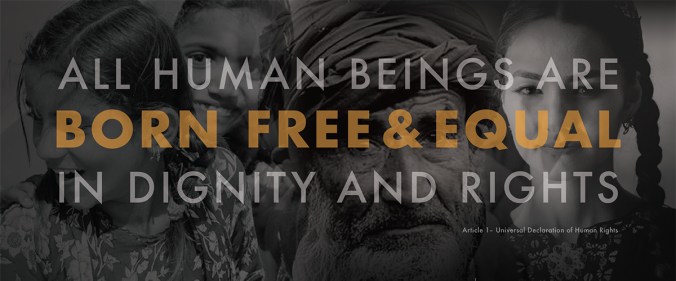
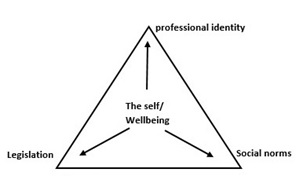
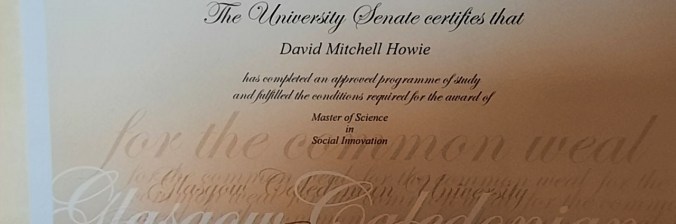
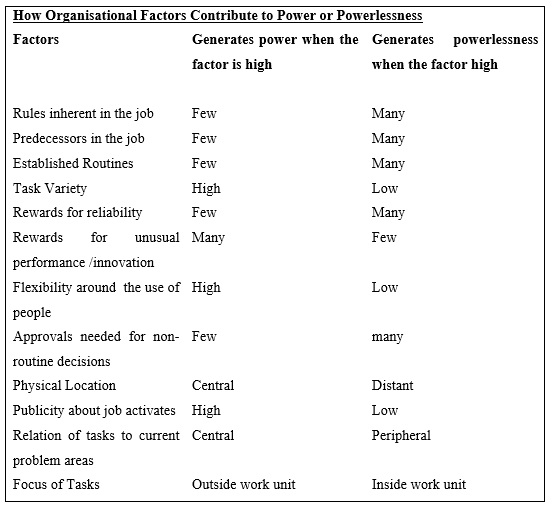
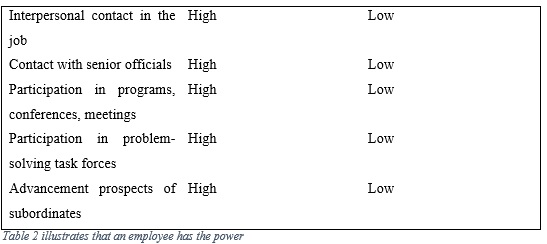



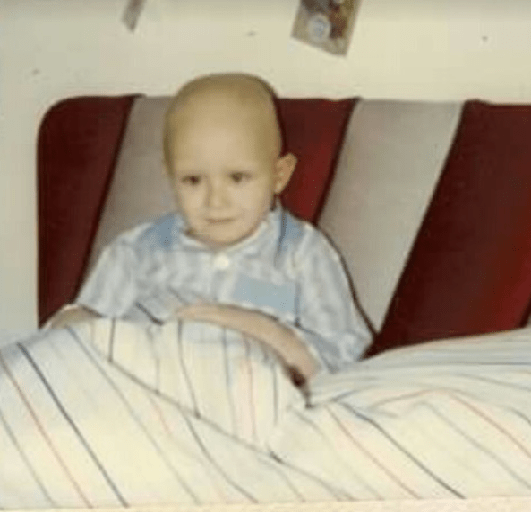
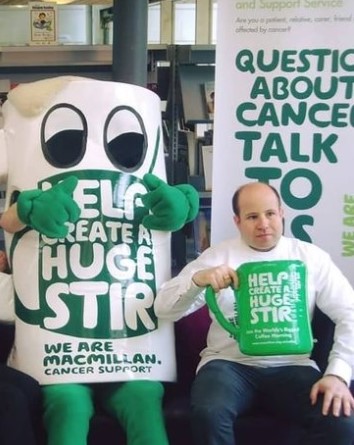


 David M Howie