My Medical History

What makes a person the same person over time? A British philosopher, Nigel Warburton, introduced me to personal identity via the “Ship of Theseus” thought experiment.

Now, let’s embark on a journey of contemplation. Imagine Theseus’s ship, lost at sea; its hull is the only remnant. A new vessel is painstakingly crafted from the salvaged wood, bearing the same name as the original. But is this new ship truly the same as the old one? I invite you to delve into this question, explore how you perceive personal identity in this context, and consider whether you can draw any parallels to your life experiences.

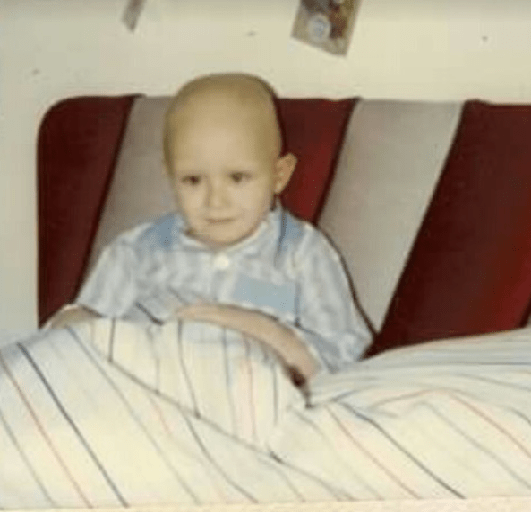
As we grapple with the ship’s enigma, let’s delve into a more profound question: Can a person remain the same over time? This is not just an abstract philosophical puzzle; it’s a question that each of us, in our unique ways, has to confront. Reflecting on my journey, I arrive at a resolute conclusion: I am the same person today as the four-year-old child who courageously faced a Medulloblastoma, a brain tumour. This personal insight, born from the depths of my experiences, underscores the profound depth and complexity of individual identity.

In philosophy, ‘personal identity’ refers to what makes a person the same person over time. It’s important to note that ‘personal identity’ is distinct from political ‘identity’ (which encompasses cultural and ethnic origins, sexual preferences, and so on). In my writing, I use ‘personal identity’ and ‘professional identity’ interchangeably in chapter five-Social Enterprise. Both these aspects, my personal and professional identity, contribute to defining the person I am, including the child diagnosed with Medulloblastoma in 1987. 

I cannot say with certainty. Medical records were received after the time of writing. However, a small percentage of medulloblastomas related to gene changes can be passed down through families (Cancer.gov). I am 90 per cent sure my medulloblastoma was genetic. The person I am today was preconditioned before birth.

Philosophy, however, is not written with childhood medulloblastoma survivors in mind. Therefore, when philosophers argue their conclusions supported by true premises, they do so based on undeniably correct objectivity. My argument here is subjective, remaining so until the completion of chapter six: Do I consider myself disabled today? In philosophical terminology, my conclusion, my subjective conclusion, is that I am the same person through time because of a traumatic event—a childhood medulloblastoma diagnosis.    

Hopefully, the reader is beginning to grasp who I am. Ponder this question: Can the person I am today with, 36 years of navigating a society, a society based on institutional objectivity, have subjective happiness/ well-being? Shawn Achor, writing in The Happiness Advantage, points out that ‘the most enjoyable part of an activity is the anticipation’. What if the anticipation of a career change, system change, or recognition never comes? How is happiness/well-being affected?      

The remainder of this chapter focuses on my childhood medulloblastoma diagnosis and the side effects of chemotherapy, radiotherapy, and stroke. As mentioned above, I have not received my medical records at the time of writing. I write this chapter from memory using published documentation to provide legitimacy to my degrading memory. 

In the UK, 52 children are diagnosed with medulloblastoma each year. In 1987, I was unlucky enough to be one of the 52. Medulloblastoma is the most common childhood malignant (high-grade) children’s brain tumour.  Malignant means the tumour is cancerous. A high-grade malignant medulloblastoma means it is a miracle I am here to write this book 36 years after the diagnosis.

On social media, I was asked what type and sub-type of medulloblastoma I had. Honestly, that information evades me. Once I receive my medical history, I shall insert that information into the chapter notes.

As a child, my favourite cartoon was ‘He-Man and the Masters of the Universe’. I had all of the figures, including Orko. Orko is the comedic character who comes across as a clumsy oaf. The silly little sorcerer provided many laugh-out-loud moments for the three-year-old I was. On reflection, when my parents started to call me Orko. Alarm bells should have gone off. No parent wants to call their child a clumsy oaf. No parent wants to find out their child has a medulloblastoma. The reality is that children who become clumsy oafs over a short period could have a brain tumour. If you see this change in your child, I urge readers to go to the doctor and demand a referral for a scan.

Cancer Research UK lists the following as symptoms of a medulloblastoma: headaches, sickness, double vision, standing or sitting unsupported, loss of appetite, and behavioural changes.

Double vision and standing or sitting unsupported. I dub this Orko syndrome. If your child has Orko Syndrome, get to the doctor for a referral for a scan, and don’t take no for an answer. I don’t think I ever lost my appetite. My issue was that I could not keep any food down concerning the behavioural changes. I spent most of my pre-diagnosis days in a dark room to stop the headaches. That is a massive behavioural change for a child who just turned four.    

Above, I mentioned that only 52 children in the UK will be diagnosed with a medulloblastoma each year. Therefore, at least today, I hold no animosity towards the general practitioners (GPs) who misdiagnosed my condition as jealousy of my younger brother and play-acting. Fiercely, I condemn the GPs, who in their right mind think a four-year-old is voluntarily making himself vomit to the point of death out of jealousy of a younger sibling? The thought alone is outrageous. Outrageous, disgraceful, bordering on eccentric.

Eccentricity is supported by objectivity. Society supports institutional objectivity, and social norms reinforce it. Therefore, I cannot condemn GPs because they are part of a system of governance built on institutional objectivity. As a social science graduate, I am tasked with understanding society, not asking for a system change. Sorry, I cannot do that. At this point, the readers should understand I am the same person today, not because of the medulloblastoma. I am the same person today because of society’s inability to support adults who had brain tumours as children.  

Cognitive awareness of the months/years directly following my medulloblastoma diagnosis is absent. Perhaps it is for the best, as it allowed me to move past that experience quickly. By the time I was eighteen, I wanted nothing to do with my medulloblastoma diagnosis. That is getting ahead of the story. Not having my medical records on hand prevents me from providing you, the reader, with the technical details of my brain tumour. A friend on social media had a non-malignant brain tumour the size of a cream egg. Sorry, @Tumourkilller, my malignant brain tumour dwarfed your non-malignant brain tumour. I am a survivor. I have bragging rights. I am attempting to tell the reader that not having my medical records on hand is a blessing, making writing this chapter more authentic. I hope the authenticity I give the reader will be returned with legitimacy. 

Objectively, surviving a high-grade malignant medulloblastoma is more impressive than surviving a non-malignant brain tumour the size of a cream egg. That’s how an institutional system with objective evidence would view it. However, I am too altruistic and understand the importance of viewing the situation holistically to take that view. @Tumourkiller is authentically telling his story to empower himself and inform his viewers. Tumour killer (Ryan) deserves legitimacy. Legitimacy, I argue, provides the speaker with dignity.  What the GPs did, what society did, removed my parent’s dignity. Only 52 children are diagnosed with high-grade malignant medulloblastoma each year in the UK. I understand the objective view of the GP. I also understand that place and past dependency matter. The GP would have lacked the knowledge and understanding to diagnose a child with high-grade malignant medulloblastoma. Understand, yes; forgive, no. What the GP did was remove any legitimacy my parents had. Therefore removing their dignity. That objectively is a breach of human rights. My views on human rights in Scotland were covered in chapter one.

In 1987, I was diagnosed with high-grade malignant medulloblastoma—a childhood brain tumour.

“Medulloblastoma is likely to grow quickly and can spread to other areas of the brain and spinal cord. Around 30 out of 100 children (around 30%) have medulloblastoma that has spread when they are first diagnosed.”

(Cancer Research UK, n/a)

I was one of the 70 per cent of diagnoses where the cancer had not spread to other parts of my body—no secondary cancer – the name given to cancer that spreads. Additionally, to date no recurrence. I do not know the type of chemotherapy or dosages I received. I also don’t know anything about the radiotherapy I was given. I remember having to be held still in a mask attached to a table—readers who have watched The Man in the Iron Mask, like that, only shackled to a table with radiation being fired at me. Today, my spinal cord is shunted due to the radiotherapy. Though better to be a few inches shorter than biologically expected than dead.

I cannot be too sure about the side effects of the chemotherapy. Today, from what I know about neurodivergent individuals, I think my brain works similarly. However, that could be due to removing the tumour damaging surrounding parts of the brain, not the chemotherapy. I believe I had some form of learning disability in primary school caused by the chemotherapy. More realistically, however, is a sensory loss – hearing and sight were an issue as far back as the late 80s. I refused to acknowledge it. The education system, NHS, social workers, and even my parents failed to see it.

As far as the stroke is concerned, I have a slight speech impediment, cannot walk in a straight line, and have constant double vision. Today, I am considering asking for a symbol cane. To stop the double vision, I have to blind my left eye, and as I am sure you can imagine, walking with only one eye while not being able to walk in a straight line has its difficulties. A symbol cane would inform the public that I have sight issues.          

In the fictional case of Howie vs. Scotland, the judge had no choice but to find in my favour. Scotland failed Howie by not delivering on getting it right for every child (GIRFEC). Scotland could not protect my human rights—mainly rehabilitation and the right to live in the community. Scotland failed to transition Howie from GIRFEC to Getting It Right for Everyone (GIRFE).

My Book: Chapter One (re-writing)

Chapter One: Why I don’t have a personal and professional identity.

The video above explains why I am re-writing my book. However, before doing so, I wanted to allow you to read what was written as a first draft of the chapters. See below for Chapter One.


Politics engulfs the life of every citizen on planet Earth. However, most Scottish citizens need to learn the difference between social policies devolved to the Scottish Parliament and those reserved for Westminster. Furthermore, most citizens have yet to care or have given up hope in both parliaments.

17 April 2007—the year the journey started. I don’t regret joining the SNP in 2007. My second undergraduate degree, MSc, volunteering with Globel Vision International, and numerous memberships with third-sector organisations are directly inherent to my SNP membership. However, SNP membership is the primary reason I lack a professional identity. I joined the SNP because I believed in 2007, which I think is true now. Scotland should be an independent country. However, over the past seventeen years, I have realised that independence is for nothing if citizens are not empowered. If citizens lack hope, communities become nothing more than industrial, capitalist ghost towns with the sole purpose of serving only shareholders, with no regard for stakeholders. Then why rock the boat?

2014 was the year I decided to return to education and find employment in social policy (see chapters three and four, respectively). I have ten years of experience in social policy, but I need help finding paid employment, which lowers my professional identity. In any other field of employment, ten years would demand legitimacy and respect. However, citizens who are experts by experience, including myself, are provided legitimacy only when the Scottish government wants to bring forward a new act of parliament or strengthen an act that has become outdated.  This process is unacceptable, unsustainable, and intolerable. The process of lived experience boards is a two-tier system—citizens who contribute to growth in society and citizens who are supported by growth in society. Note the oxymoron. Growth in the UK/Scottish economy has stalled. Cuts to vital services give that perception. Objectively, GDP growth has been steady. Steady growth results in budget cuts. Illogical?  Undebatable, budget cuts lower capacity and resources. I argue, therefore, that citizens cannot be supported in improving their well-being because the state lacks the capacity and resources (see Chapter Seven).  

Chapter four, Employment, outlines my contributions to lived experience boards since 2014. The pivot here is on two expected acts of the Scottish Government.  The Human Rights Integration (Scotland) Act 2026 and the Learning Disability, Autism, Neurodiversity (LDAN) (Scotland) Act 2026. The latter I have little experience. However, the LDAN bill is essential on a personal level for two reasons. Reason one: I am altruistic, more so than most citizens. I care greatly about the well-being of all citizens and how social policy correlates with citizenship well-being. The essential point is that evidence highlights that autistic citizens are more caring than neurotypical citizens. Additionally, autistic citizens talk more in statements. I am not suggesting I am autistic. However, I was diagnosed with a medulloblastoma – a cancerous brain tumour – at the age of four. A reasonable conclusion is that my brain is not neurotypical. Take this book for example. I am conveying my reasons for lacking a subjective well-being premium – I feel underemployed, undervalued, and not given the legitimacy I deserve. I have, however, chosen to convey a personal grievance through societal content, social policy, and the well-being of others. Furthermore, Chapters one to six are written in statements. I write in statements – as if my subjective opinion is a fact.

My opinions are not facts. What is a point other than an opinion that has been given legitimacy via an act of parliament or agreed upon as a social norm? My second reason for having a vested interest in the LDAN Bill/Act is that the Scottish Government will legitimise both the Human Rights and LDAN Act by 2026. But is legitimacy not subjective? What if both Acts fail to secure dignity for rights holders? What then? Because rights holders in question are some of the most vulnerable citizens in society. I strongly suggest that despite the legal guarantees set out in the Human Rights Integration (Scotland) Act 2026, the most vulnerable citizens don’t have civil liberties or the resources or capacity to set up a civil disobedience movement to gain their civil rights, better known as dignity.       

Article 1 of the Universal Declaration of Human Rights says:

“All human beings are born free and equal in dignity and rights. They are endowed with reason and conscience and should act towards one another in a spirit of brotherhood.”

Admirable sentiment but a work of fiction. In 2024, human beings are not born free and equal in dignity or rights. The Universal Declaration of Human Rights is a work of fictional political philosophy. In philosophy terminology, the premise of Article 1 is false. Philosophical essays start with a conclusion and attempt to prove the conclusion by demonstrating that each premise is correct. For example:

Socrates has two eyes.

Humans have two eyes.

Socrates has two feet.

Humans have two feet.

Socrates has two hands.

Humans have two hands.

Socrates must be human.

There is no evidence to prove Socrates was anything more than writings in Plato’s journals. Perhaps that is why the Open University teaches it to undergraduates. The maxim, however, is a matter of place and path dependency.  In Socrates’ time, the premises may have held. In contemporary Scotland, the assumption is as false as Article 1.

Despite my lack of enthusiasm for lived experience boards, I contribute to them for three reasons: 1. It keeps my skills ticking over. 2. I am networking for a purpose. 3. Peer-to-peer knowledge exchange can be a source of empowerment. When provided with the opportunity of sitting on the Scottish government’s human rights Lived experience board in 2022/23, I had to accept. However, I accepted because I wanted to listen and learn. If COVID-19 provided any valuable insight, the state failed the vulnerable rights holders not because of COVID-19 but because of an institutional design flaw. Chapter Five on the Social Enterprise/framework, Chapter Seven, discourse: What Society Missed, discusses possible mitigation methods.

Lived experience boards are designed to promote and develop acts of parliament or improve learning outcomes/frameworks. There is no debate. They achieve their desired outcome. Citizens/rights holders will have a subjective well-being premium for the board’s life cycle. The main reason for this subjective well-being premium is a sense of diversity, inclusion and belonging within the board. Rightsholders are placed on a pedestal, empowered by the belief of contributing to the government’s social policy. Concluding the board’s life cycle, however, the sense of belonging and empowerment has evaporated. Hope is replaced with anxiety. Altruism is replaced with egotistical thoughts. Thoughts like, was board membership the best opportunity cost? Can the board experience be used to find paid employment? The feeling of being back at the day job. The sense of being under-employed, under-valued, and unable to find a professional identity to satisfy a subjective void – the feeling of having zero legacies.

I dislike and admire lived experience boards equally, perhaps because I have too many expectations regarding my possible career prospects. Possibly, lived experience boards are a tool for achieving an outcome. Furthermore, citizens who are experts by experience are probably discarded as an afterthought on completion of the board, as citizens with lived experience were never endogenous to a system designed to produce an outcome. What gets measured gets done – that’s what they say in business schools. Well, I guess the well-being of rights holders is not measured.    

Readers, please don’t get the wrong idea. This chapter is not about any objective grievance relating to lived experience boards. What I have said is entirely subjective. However, a colleague who sat on the People Powered Health and Well-being reference group echoes my opinions (see chapter four). There is also academic evidence provided by ‘Cool Music: A Bottom-up ‘Music Intervention for Hard-to-reach Young People in Scotland’, which shows short-term projects can result in well-being issues for staff and clients. To prevent misreading, I believe lived experience boards must be phased out and replaced by community councils and reference groups taking a more active role in community and citizen empowerment. My view that lived experience boards should be phased out is not a grievance. It is an opinion. It is far from a social norm. And my views were dismissed by the Scottish government’s social enterprise funding body.

What I write now will split readers’ opinions. However, it is too important an issue for it to go undocumented. Like rights holders—citizens of Scotland—who don’t have the resources and capacity to challenge the inequalities that prohibit dignity, the Scottish Government doesn’t have the resources or capacity to provide every citizen in Scotland with human rights/dignity.  The objective evidence is clear and covered in detail in chapter seven. Subjectively, since 2014, I have worked directly and indirectly with the Scottish Government in some capacity. For the seven years before 2014, I was an active foot soldier for the SNP. I even went to vetting for candidacy for MSP. I am an idle supporter today because I became burnt out attempting to challenge/change the top-down institutional system from within a political system, a cornerstone of the institutional system itself. The focus of any society is on GDP growth. Goal eight of the UN SDGs is Decent Work and Economic Growth. GDP growth is an international aspiration. So economic growth should be. However, as Chapter Four shows, my paid employment lowers my subjective well-being/ dignity because I am unhappy with my professional identity.   Membership of the SNP provided false hope. I believed my SNP colleagues and I could bring about a fairer, healthier Scotland. Perhaps evidence exists to show inequality has reduced in Scotland since 2007. However, it has not been reduced to the point where the most vulnerable rights holders feel empowered and have dignity. Do I think the Human Rights Integration (Scotland) Act 2026 will enable rights holders and provide dignity for every Scottish citizen?  NO. No, I do not.    


Thank you for reading and watching the video. If you have any questions, ask them in the comments box.

International Brain Tumour Awareness Week

International Brain Tumour Awareness Week will run from Saturday 29 October 2022 to Saturday 5 November. I want to thank Flora Csizmadia for bringing this to my attention.

Flora is a Glasgow Caledonian University Journalism student. Flora contacted me yesterday, asking for a few comments after reading about my childhood Medulloblastoma diagnosis (which was 34 years ago). As a Glasgow Caledonian University colleague, I helped Flora by providing a few inspirational words of wisdom.

Talking to Flora this morning got me thinking. I concluded in another blog: what makes me the same person I am today, as the four-year-old child I once was, is the long-term side effects caused by the brain tumour.

On reflection, I do not believe that provides the reader with the full picture. In this blog and others between now and 5 November, I will attempt to complete the canvas.

1988, the year I was diagnosed with a brain tumour. I was four. Just a child, without a care in the world, then like a lightning bolt. bang. My world is turned upside down. Hold on, I was four. My world was, whatever, a four-year-old’s world is. The truth is I cannot tell the reader what it is like to grow up with the side effects of a Medulloblastoma diagnosis. I faked it, till I was Thirty-nine. At Thirty-Nine, am now required to reflect on my life and what I do from this point on.

As I told Flora. I cannot really reflect on my life. I don’t remember much of it. That legacy, of childhood Medulloblastoma diagnosis, is one day you are four next you are Thirty-nine. It is not the time loss that is the problem. It is not even knowing that you see the world from different lenses than most people, that is the problem. The problem is society expects, that after trying to exclude you, for most of your childhood. that in adulthood you are expected to say thank you. Comply with social norms, become a mindless group-think zombie, and, say yes sir to neo-liberal free-market capitalism.

Before any reader gets the wrong idea, I am not suggesting childhood Medulloblastoma survivors don’t have to contribute to society. Like most disabled people I want to contribute to society. What I am saying to the reader is, due to the childhood Medulloblastoma diagnosis I am more altruistic than most people.

Am a Frontal lobe entrepreneur. Yes. that is a real thing. This is where I stop, reflect, and, ask why. Why am I a Frontal lobe entrepreneur? Here is my conclusion. I am a Frontal lobe entrepreneur because of the position of the Medulloblastoma brain tumour. The Cerebellum (part of the brain) is damaged beyond repair. Am not a neuro scientist. Am a social scientist. I could be completely wrong as to why I am a Frontal lobe entrepreneur. Perhaps I just am. Anyone that knows me, will know I don’t jump to conclusions without deeply thinking about the premise(s). I have thirty-five years of lived experience with the side effects of a childhood Medulloblastoma diagnosis. I have studied the philosophy of “The Self”. I have also had the opportunity to read the “Synaptic Self” by Joseph LeDoux. I conclude am a Frontal lobe entrepreneur because my Cerebellum is damaged. Any neuroscientist that wishes to provide additional data for or against my conclusion I’II hear you out.

This week

This week is International Brain Tumour Awareness Week, running from 29 October- 5 November. My plan, if I get the time, is to publish a number of blog posts on the subject. This is the first of at least three posts. The one that follows will focus on why setting up a social enterprise is the correct choice for me. that is not to say setting up a social enterprise is correct for every brain tumour survivor.

The Scottish Government take a very interesting view on social enterprise and disability. In the publication A Fairer Scotland For Disabled People. In the 2016 publication, it is said

[The Scottish Government] will publish a 10-year social enterprise strategy…stimulate per-start activity, increasing the number of disabled social entrepreneurs.

A Fairer Scotland For Disabled People

If am correct and I want a career as a social entrepreneur because of injury to my Cerebellum, is there any real evidence to suggest disabled people want to be social entrepreneurs?

Thank you for reading. To find out more about International Brain Tumour Awareness Week click here. Flora Csizmad can be found on Linkedin.

please comment. Are my views correct? Do you have different views?

Why identity matters.

A day after this website went live (second time) I had a meeting with my colleague to discuss the next stages for A-LEAF. This website/blog(s) is the launching site for A-LEAF- as well as my personal blog site. My colleague’s reaction was:

I like the website/blog, however, I did not get the ‘person’ vs human, philosophy on the landing page (paraphrased).

Matheson, 2022

After considering my colleague’s intervention I have concluded that there is a requirement for additional clarification on “person” vs human. Homing in on how I see ‘person’ as my identity and human as the physical body. Is any of this making sense? No? okay, let us try a different approach.

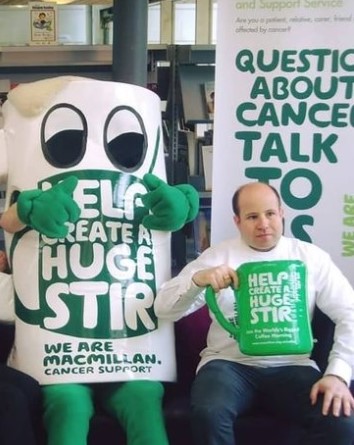
Objectively- what can be proven without a doubt. I am the child (human) that was diagnosed with a Medulloblastoma aged four. However, my lived experiences of growing up with the long-term side effects and the barriers to society the Medulloblastoma caused has shaped the ‘person’ I am today. To be clear what am saying is if it was not for the Medulloblastoma I would not have volunteered with Macmillan Glasgow Libraries in 2010.

This was where the journey started with the third sector in 2010. Never did I think in 2022 I would be weeks off registering my own company after completing my MSc in Social Innovation.   

I never would become involved with Cancer Support Scotland‘s child charity Youth Cancer Forum Scotland, I never would have taken an interest in charity law. More importantly, I never would have become a member of Health & Social care Alliance Scotland, Inclusion Scotland, Glasgow Disability Alliance, however, the utmost important connection to the Medulloblastoma childhood diagnosis which lead to volunteering with MacMillian; I would not have completed my MSc in social innovation and I would not be in a position to start a social enterprise today.

so let us consider the question again.

what makes a person the same person despite changes over time?

WARBURTON, 2011

A Medulloblastoma childhood diagnosis makes me the same person over time. I never did get that. I have Dr. Anne Smith for the enlightenment. I thanked Anne for providing me with this insight in my acknowledgments to my dissertation. My thanks are, now on record for the world to see.

Now I know I am the same ‘person’ today. As I was when I was four. The question remains if it was not for social norms and medical models. would I be the same ‘person’ today as I was when I was four? After all, no one in Locke’s time was living thirty-four years after a Medulloblastoma childhood diagnosis.

One last thought. A Ph.D. student once asked me:

“Does studying Social Innovation make you want to start a social enterprise”

Ph.D student, 2020

No, it is not the MSc in Social innovation that makes me want to start A-LEAF. it is the answer to the question:

would removing the inequalities social norms and medical models, result in me becoming a different person from the four-year-old me?

No, It is too late for me! The four-year-old I was in 1987 is the same ‘person’ I am today. The question remains if it was not for social norms and medical models. would I be the same ‘person’ today as I was when I was four?

The answer to this question is important for all childhood cancer patients today.