Physical vs Mental disabilities

Lost Identity
M.Howie, David

In the book ‘Lost Identity: The Search for Well-Being I talk about neurodiversity. I have come to the conclusion- after watching people talk about their neurodivergent minds – that I don’t understand neurodiversity- not even a little, not even at all.

If I don’t understand neurodiversity, when I self-diagnose as neurodivergent, post-childhood medulloblastoma, how can anyone who is neurotypical? I suppose they can’t, and I suppose they never will. That is, unless society starts to have a conversation about mental health.

As I say in the book, I have decent well-being; for the most part, I am happy with life. Of course, in an ideal world, I would be working in a profession focused on social policy and research, one that encompasses every citizen and fosters community development. Earth, however, is not a utopia. Earth is the island of necessity. On the island of necessity, no one gets what they want, and even fewer get what they require to live well.

For people who are neurodivergent, the WHO organisation suggests that it could be as high as 40%. We mask in plain sight. Not hiding, but also not having the strength to be ourselves.

I must admit, I find myself in a very unsettling situation. I thought that when I published the book, one of two things would happen. One. It would be the end of the project, and a new one would begin. Two. I would have achieved enough to move on with my life, so that I could perhaps now pursue a career on the neurotypical island of necessity. Something, though, is pulling me back. There are more chapters to be written. I alone can write them. I cannot explain it. There are many better writers than I. Why then must I be the writer of the next chapter? The only explanation available is that the book/project is not yet complete.

Someone on TikTok describes 24 hours in their life as a routine that they cannot complete, a never-ending cycle that never seems to end. Groundhog Day. Or a time loop, if you are a Sci-Fi fan. Lucky for me, my mind is not stuck in a time loop or doomed to repeat the same day over and over, like Bill Murray in Groundhog Day.

I don’t know how far down the rabbit hole the far end of the neurodivergent mind goes. From what I understand- from watching TikTok videos- it is disabling. What I do know is that I feel compelled to follow the white rabbit. Compelled. Yes. But in my own time. I am not free yet to leave the island of necessity and join the island of utopia.

I am not that far down the rabbit hole to qualify for free money from the state to do whatever I like all day. Not that that is what neurodivergent citizens at the dark end of the spectrum are doing. Remember, neurodivergent citizens are not a homogeneous group; it is not logical. It is more like a prison for the mind. I have a front row seat to the prison. Or at the movie theatre, if you prefer. The difference is I can leave and return. So many citizens don’t.

Physically disabled citizens

Subjectively, physically disabled people do not see the world in the same way as a neurotypical citizen. I don’t like the word damaged. That would be a neurotypical perspective. Without the lived experiences of a neurodegenerative citizen, it is impossible to understand how the neurotypical mind works.

That is why a one-size-fits-all approach to the integration of physically and neurotypical disabled citizens will not work.

What is next?

I start working on the second book: The Search for Well-being: Never Ends. It is a working title. It has no chapters, paragraphs, or words. The shape the next book will take shall depend a lot on what happens in 2026, after the Scottish parlament election. More importantly, though, the next book will depend on my subjective understanding of where my mind lies on the neurodivergent spectrum.

This blog post serves as a brief introduction to the steps that follow. As a neurodivergent person, self-diagnosed, my steps can change daily. What would it be like to live if your daily steps just repeated?

Emplyment: paid and unpaid

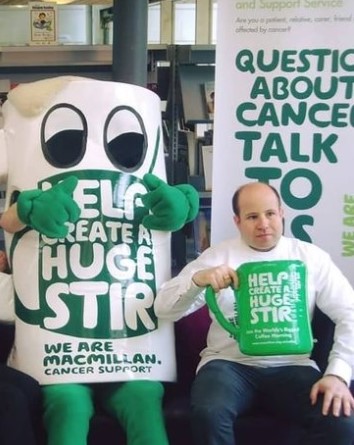
The definition of employment I am applying in this chapter is any work-related activity requested on behalf of an organisation. For example, I am including paid employment – Woolworths PLC and Sainsbury’s PLC. I also include unpaid employment – Macmillan Cancer Support, support worker, People Powered Health and Wellbeing reference group member and board, Scottish Government community eye care review, and the Scottish Government Human Rights lived experience board.

I commenced employment at seventeen while still attending Whitehill Secondary School. I have a confession: I initially worked for Big W – a retail chain owned by King Fisher Group. Multiple years after King-Fisher was liquidated, I wrote a paper on how dysfunctional King-Fisher’s board was. The paper was written for ‘Ethics, Governance, and Responsible Leadership – a module required for my MSc. Knowing in 2024 what I know about the King Fisher board, my only surprise is that my employment lasted nine years, not nine days.   

For readers unaware, Big W retail stores were the idea that customers could purchase products ranging from pick-n-mix to alcohol and from DVDs/ CDs to 40-inch LCD TVs. As a concept, Big W was an exciting idea. In the early 2000s, before video on demand – Amazon Prime, Netflix, and others- the idea of purchasing your weekend movie entertainment, alcoholic beverages, and perhaps even an LCD TV, even today, sounded convenient. The business idea for Big W, even today, sounds viable. Tesco, Sainsbury’s, and Walmart-Asda still apply framework variations in 2024. Big W’s problem was not that it was ahead of its time. Big W’s problem was that no one had ever completed a risk assessment. Or perhaps the risk assessment completed by Big W’s board put profit before people and the planet. In this case, liquidation should have been foreseen.  

The locality of the Big W store I had paid employment in was Glasgow Forge Retail Park. Glasgow Forge Retail Park and my birth area of Haghill have something in common. They both have public and private transport access routes. However, more worrying, according to the Scottish Index of Multiple Deprivation, Camlachie – an area of Glasgow in Scotland located in the East End of the city, between Dennistoun to the north and Bridgeton to the south – and Haghill are deprived of health, education, employment, and housing. Readers should not be surprised that Multiple Deprivation equals high crime. Here is why I believe no risk assessment was ever completed- the geographical size of Big W was too large, and the security personnel too slim to prevent mass shrinkage. For unaware readers, shrinkage is the loss of units/products via shoplifting internally or by the general public. The second reason I believe there was never a risk assessment completed was that most employees – at least weekends and evenings were directly hired from Whitehill and Bannerman High Schools. The UK army cannot recruit in Schools. Why could the Kingfisher Group? Even the recruitment process sounds unethical. My point, however, is this. School, college, and university students are not the correct employees to prevent mass shrinkage. Even a UK army regiment could not have prevented shrinkage in Big W.  

The collapse of Big W and, eventually, Woolworths was, in hindsight, foreseen.  From an egotistical – selfish viewpoint, I am glad the store remained operating until I completed my BSc in Multimedia. This chapter is titled employment: paid and unpaid. Therefore, the remainder of the chapter focuses on how employment affects my professional identity. Professional identity, or the lack of one, affects my well-being. If the reader thinks about it, I am sure it is the same for every reader. However, before getting to professional identity, I have to say something about personal identity. After completing my BSc in multimedia, two colleagues from Woolworths asked if I could help promote their band promotion company, GnG Promotions.

GnG Promotion was shorthand for Grant and Garry Promotions – much thought went into the name. Garry dropped from the promotion early on. Grant and I did go on to promote some successful nights in the Soundhaus, 13th Note, and Classic Grand in Glasgow. As part of GnG promotions, I worked alongside bands such as the Black Arrows, The Toi, and Day Break, to name a few. A memorable time was had thanks to Woolworths. Thank you for that. The good times did roll in those short three years. I want to thank all the bands and venues I had the opportunity to work with. Band promoting for me was a hobby – an expensive one at that. My personal identity and social capital were increased due to it. However, I never saw it as anything more.  Therefore, I could let it go without any loss of well-being.        

I was employed with Big W – Woolworths between 28 September 2000 and 9 Jan 2009. I received the equivalent of a year’s wages when Woolworths closed. Therefore, I was happy to be sent from position to position by the job centre-plus, as   I was using my existing skills and learning new skills.

Subjectively, the UK HM Revenue and Customs (HMRC) has its priorities discombobulated. Twelve months after no paid employment, I had two unpaid employments, one with Macmillan Cancer Support and another as an administrative assistant at Cross-Reach. Despite my economic contributions – travelling and saving Cross-Reach capital, I worked for free. Remploy, in 2010, partnered with Job Centre Plus, took the decision that I was required to contribute to the gross domestic product by paying taxes. Objectively, I understand – what gets measured gets done. Despite having a BSc in multimedia and working as an events coordinator for three years. Paid employment with Sainsbury’s loomed. In 2010, I had no intention of remaining in paid employment with Sainsbury’s longer than necessary. Somehow, the necessity has developed into thirteen years.      

I have the same employment in 2024 as in 2000—twenty-four years serving the public, replenishing shelves, and operating hot food counters. The repetitiveness itself lowers well-being.

Removing myself from the shackles of the repetitiveness after four years, without a doubt, prevented a mental breakdown. In 2014, returning to higher education to study politics, philosophy, and economics was my best move and simultaneously the worst. As the reader knows, I received my BA (Hons) PPE in 2019. My lack of personal and professional identity has nothing and everything to do with that degree. All be it, indirectly.

What has transpired between 2014 and 2024 has my well-being swinging on a pendulum.  2014, I joined The Health and Social Care Alliance Scotland (The Alliance). Knowing that I required lived experience – work experience and academic experience – to find paid work after completing my BA (Hons) membership at The Alliance was the logical choice. Membership of The Alliance as someone with long-term conditions costs me nothing but opportunity cost – time. Could my time have been better spent? Today, would my well-being be greater without The Alliance membership?

If you work hard, you will become successful, and once you become successful, you’ll be happy – Says Shawn Achor in The Happiness Advantage. I have worked hard for ten years but have not felt successful. I feel unpropitious. Unpropitious or perhaps Inauspicious: I believe society prevents my happiness/well-being by refusing to accept the system change required for a well-being/ circular economy. The social norms of society are not designed with childhood medulloblastoma survivors with a BA (Hons) and MSc in mind.

Childhood medulloblastoma survivors with a BA (Hons) and MSc are not supposed to have an interest in social policy. Challenging the top-down approach to governance is forbidding. Ironically, without membership in The Alliance, I wouldn’t feel so strongly that a system change is required.  

I interviewed numerous Alliance staff members for my MSc dissertation. A staff member who now works for the Scottish Government told me The Alliance’s remit is to strengthen the Scottish Government’s social policy, not contest the social policy. What is ironic is that by default, The Alliance is part of the system of governance, and The Alliance staff are civil servants by proxy.   

My first unpaid role with The Alliance was on the People Power Health and Well-being reference group. The Alliance set up the reference group. However, the reference group was funded directly by the Scottish Government. The remit of the reference group was to advise on the framework for the Public Bodies (Joint Working) (Scotland) Act 2014. My role as a person with lived experience or a person with long-term conditions was to attend meetings and provide professionals with insight into the daily lives of someone with lived experience.

As part of The People Powered Health and Well-being reference group, I did my first non-academic research, asking: Does engagement and inclusion promote well-being and recovery, and if so, how? The rousing thing was that that research was not part of the original plan. The original plan was for professionals to observe the reference group members and produce a subjective qualitative report. I could not be prouder that The People Powered Health and Well-being reference group members rejected that idea outright.

People with long-term conditions can do research, too. The reference group showed it. Now, society needs to acknowledge it.

Thank you to Lisa Curtice, the project lead on the People Power Health and Well-being project. I am not sure that without Lisa’s contacts at Strathclyde University, I would have had the opportunity to complete my first non-academic research. Readers can still watch the People Power Health and Well-being project’s Vimeo videos. Vimeo.com/pphw.

Interestingly, while I was in the process of being guided in research methodology by Dr Ailsa Stewart, a lecturer in social work and social policy at Strathclyde University, my Open University tutor worked in the same department. I cannot remember the name of the tutor I had for ‘Introducing the Social Sciences’. I cross-referenced Dr Ailsa Stewart’s published papers to see if I recognised any co-authors.  The name of the tutor still evades me. However, I recognised one name. Gillian Macintyre – Gillian also added to guide my knowledge of research methodology. It is fitting Gillian also receives a mention.   

I only mention my Open University tutor because, by the time I was given the opportunity to collaborate with the Scottish Government again, I was either studying DD203 Power, Dissent, and Equality or A222 Exploring Philosophy. The project I had the opportunity to be part of was the Scottish Government’s community eye care review. I have a mention in the Annex A of the community eye service review report. To date, that mention is my claim to fame.

As for my role, my fellow stakeholders and I met monthly to discuss current services and hear from various partners on potential developments in the community eye care services.

In 2017, my well-being was at a high point. I studied topics I enjoyed and collaborated with fellow stakeholders on social policy. However, I have not replicated the feelings of personal and professional identity that I had in 2017. I was a PPE student working in collaboration with fellow stakeholders. A career in research and policy is still my preferred area of employment today.  Given that my job in 2024 is so divergent from my personal and professional life in 2017, my well-being is low.

My final Open University module was DD313, International Relations: Continuity and Change in Global Politics. The module is not so important; what is essential is the date—2019. I did not mention my four weeks volunteering with Global Vision International in Cape Town, South Africa when I commenced this chapter. South Africa was a personal development, not a professional development. Also, I don’t see my time in Cape Town as unpaid employment in the same way as I view the People Powered Health and Well-being reference group or the community eye care review. My time in Cape Town shaped me and profoundly affected my vision, values, and principles; more on that in the next chapter – Social Enterprises: A-LEAF.

To finish this chapter, I must finish at a low point. As of March 2024, my well-being is low; I am frustrated and annoyed that I spent a year between 2022 and 2023 doing unpaid work on the Scottish Government’s Human Rights lived experience board. My well-being is at the time of writing low because I don’t have the professional identity I had in 2017. The launch of the social enterprise – A-LEAF and a grounded understanding of Human Rights issues in Scotland was intended to recreate the subjective well-being that my perceived personal and professional identity provided me in 2017.

2014, I gave up my full-time position with Sainsbury’s because my well-being was low. I needed something more than a job in retail. Everything I did between 2014 and 2024 was designed to improve myself and the community. The outcome was not what I envisioned. Despite my frustration and annoyance, I don’t regret the past ten years. However, I am low on hope for a better tomorrow for myself and the wider community.                   
Why identity matters.

A day after this website went live (second time) I had a meeting with my colleague to discuss the next stages for A-LEAF. This website/blog(s) is the launching site for A-LEAF- as well as my personal blog site. My colleague’s reaction was:

I like the website/blog, however, I did not get the ‘person’ vs human, philosophy on the landing page (paraphrased).

Matheson, 2022

After considering my colleague’s intervention I have concluded that there is a requirement for additional clarification on “person” vs human. Homing in on how I see ‘person’ as my identity and human as the physical body. Is any of this making sense? No? okay, let us try a different approach.

Objectively- what can be proven without a doubt. I am the child (human) that was diagnosed with a Medulloblastoma aged four. However, my lived experiences of growing up with the long-term side effects and the barriers to society the Medulloblastoma caused has shaped the ‘person’ I am today. To be clear what am saying is if it was not for the Medulloblastoma I would not have volunteered with Macmillan Glasgow Libraries in 2010.

This was where the journey started with the third sector in 2010. Never did I think in 2022 I would be weeks off registering my own company after completing my MSc in Social Innovation.   

I never would become involved with Cancer Support Scotland‘s child charity Youth Cancer Forum Scotland, I never would have taken an interest in charity law. More importantly, I never would have become a member of Health & Social care Alliance Scotland, Inclusion Scotland, Glasgow Disability Alliance, however, the utmost important connection to the Medulloblastoma childhood diagnosis which lead to volunteering with MacMillian; I would not have completed my MSc in social innovation and I would not be in a position to start a social enterprise today.

so let us consider the question again.

what makes a person the same person despite changes over time?

WARBURTON, 2011

A Medulloblastoma childhood diagnosis makes me the same person over time. I never did get that. I have Dr. Anne Smith for the enlightenment. I thanked Anne for providing me with this insight in my acknowledgments to my dissertation. My thanks are, now on record for the world to see.

Now I know I am the same ‘person’ today. As I was when I was four. The question remains if it was not for social norms and medical models. would I be the same ‘person’ today as I was when I was four? After all, no one in Locke’s time was living thirty-four years after a Medulloblastoma childhood diagnosis.

One last thought. A Ph.D. student once asked me:

“Does studying Social Innovation make you want to start a social enterprise”

Ph.D student, 2020

No, it is not the MSc in Social innovation that makes me want to start A-LEAF. it is the answer to the question:

would removing the inequalities social norms and medical models, result in me becoming a different person from the four-year-old me?

No, It is too late for me! The four-year-old I was in 1987 is the same ‘person’ I am today. The question remains if it was not for social norms and medical models. would I be the same ‘person’ today as I was when I was four?

The answer to this question is important for all childhood cancer patients today.

Why incorporate the UN Human Rights into Scots Law?

As of 14:58 on Tuesday, February 15 I have been confirmed as a member of the Human Rights Bill Lived Experience Board. Fantastic, now what? Why incorporate the UN Human Rights conventions into Scots law at all? It is to protect the rights of Scottish citizens, is it not? Okay, but is that not what the Equality act 2010 is for? More importantly, has not the UK ratified the UN conventions on Human Rights? Well yes, the UN Rights of persons with disability was ratified in 2009. Many UN conventions preceded.

Take a step back, think about that for a few seconds, it is 2022. The UK ratified the UN CRPD in 2009. I guess the reason for incorporating the UN CRPD into Scots law is ratification alone is not enough. Okay, fair point. However, has Scotland got the resources to deal with the backlog of Human rights violations that are coming down the road? Possibly not. Ethically though Scotland has an obligation to tackle the Human Rights problems on her doorstep. Incorporating Human Rights into Scots law shall help identify Human Rights violations. Perhaps,… Perhaps bureaucracy is the word of the day. To date, I have still to be sold on the bill.

let us rewind. Why would an MSc Social Innovation graduate that has studied Human Rights recently not support a Human Rights bill? Hold up. I support the bill, … well in principle.

Principles. Perhaps I have my principles for wanting to sit on this board all wrong. You see I have a secondary agenda. That agenda is to network and promote my Social enterprise. Do not miss quote me. My commitment is to the board and to the Health and Social Care Alliance Scotland who nominated my inclusion on the board. In doing so, sitting on the board, I can further my secondary agenda. Can I not?

Before the First board meeting on Monday, February 21 I wanted to be transparent on where I stand with regards to the bill. And also my reasons for wanting to sit on the board.

I do believe I have been transparent in setting out my position. However, if there are any questions comment below and I shall do my best to answer them.

Additionally, I wanted to write this short blog post to reach out to anyone that has any Human Rights infringement stories. If you wish to comment below please do so. Or if you want to send me a message directly my email is on my contact page.

Hello WordPress

My first post written for WordPress


Have you stumbled on my website or blog for the first time? Have you found my landing page by mistake? If so, you presently could be a little bewildered. You could and should be asking questions. The foremost question on your mind should be why? Not necessary why you have never questioned your “personal identity” before. The why question you should be asking is why it is important to ask how “personal identity” is shaped via geographic locations and lived experiences.   

Hello WordPress, I am David M Howie. Fasten your seatbelts. You are about to go on a rollercoaster ride. This rollercoaster will make you feel happy, sad, upset and even a little angry. Predominantly, though this rollercoaster will leave you asking what. What was society thinking? What was my role in all of this?

Mark Athinson chief executive of the disability charity Scope told the Huffington post there are almost 14 million people in the UK living with a disability. To put that in perspective the population of Scotland is 5.47 Million. The population of Wales is 3.25 Million and the population of Northern Ireland is 1.9 million. If like me you identify as disabled, you are probably hitting a downwards dip on the rollercoaster, you may even feel a little sick. If you do not identify as disabled. If this is all new to you. Tighten your seatbelt. The rollercoaster is about to go down the rabbit hole.

As a four-year-old child, I was diagnosed with a Medulloblastoma. As a result of the Medulloblastoma, I have grown up with long term conditions which include but are not limited to visual and hearing issues. Are my readers in the know about the social model of disability? If not see the definition provided by Scope here. Why is the social model of disability important to me? As I said above I have sight issues caused by the Medulloblastoma. This statement is not one hundred per cent correct. It is correct to say I have sight issues – constant double vision. Wearing glasses that prevents vision in my right eye (any eye) removes my double vision. Personally, the opportunity cost of buying glasses that limits my vision to one eye is better than not been able to see an LCD computer screen at all. I say LCD computer screen because while completing my first undergraduate degree back in 2001-2005 using Cathode-ray tube (CRT) monitors I had no issues seeing the monitors at all. My story is just one example of how society has disabled an individual. There are another 14 million stories in society. So why is it important for me to have the reader understand the social model? I have to buy glasses- not covered by the NHS- so I can be part of the community. So I can go to work. So I can go to University and so I can start my social enterprise. In a sense, I am lucky, I can pay to disable myself to fit in with the social norms of society. Go me – joking! How many of the 14 million disabled people in the UK cannot?   

On the off chance, you missed my camouflaged attempt at humour, I choose to disable myself not because of my childhood Medulloblastoma but because society has made technological advances. Here is where it gets more ironic, whilst completing my MSc I used Grammarly to aid with grammar and spelling. Capitalism 101. Society disables citizens because the policy used to measure how well a society is performing is based on GDP growth, not citizen well-being. Let me untangle my thinking and prevent any confusion.

21-year-old me graduates university, ready to take on the world. One problem the world is not a nice place. To quote Rocky Balboa

“It will, beat you to your knees and keep you there if you let it…nobody will hit as hard as life” 

Balboa, 2006

The rollercoaster is about to do a 360. You may virtually want to find something to break.  

I have been involved in the Scottish third sector for over ten years. In these ten years, I have tried to improve my life and the lives of the other 14 million disabled people in society. Here is the problem. Society does not want citizens with high subjective well-being. If citizens are happy, citizens are not spending. Think about it. The reason you buy a product or purchase a good is to solve a problem. I have a problem in that I cannot see the new computer monitors. Therefore, I have to become a consumer of glasses that allow me to see LCD and other new computer monitors. Additionally, due to problems retaining information in early education, I am now required to use Grammarly and read aloud word functions at additional personal cost. Like the rollercoaster, my academic career is almost at the tipping point. I have my MSc and I have no plans to pursue a PhD. Therefore I need to get a paid career and make my way in society. Like the rollercoaster the final destination is clear. What is not clear is will the outcome follow incremental milestone achievements or be a steep drop off the Clift.  

The end will come

Life, like the rollercoaster, will end. In life as in the ride, the final destination is unavoidable. Unlike the rollercoaster which is fixed as it is- if not replaced. In life, human well-being can be shaped by policy. A policy implemented that is designed to include all (as many) citizens, is in the best interest of society overall.  Perhaps am been egotistical here, I do not care. I have been living with the side effects of Medulloblastoma since the age of four- I believe rather well. I have two undergraduate degrees (paid for by the Scottish government) and an MSc in social innovation. I have achieved this despite typing this with only sight in one eye- because the technology behind my laptop, prevents me from seeing the laptop screen. Additionally, I purchased private hearing aids- I don’t hear high pitched sounds. There is that “why” question again. Why did I purchase private hearing aids? Because it is simpler to receive good customer service at Specsavers than it is to receive an appointment with the NHS.    

And there you have it. “What” disables citizens? Money! You are having the privilege of reading this blog post because I had savings and could pay for glasses that blind me in one eye. I had £4k+ to pay for my MSc. I had £1k to pay for private hearing aids and I had £24 a month (something like that) to pay for Grammarly. You are at the end. Not of the journey, that is just starting. You have reached the end of seeing disabled people as others but only if you take off your blinders. Unfortunately, I cannot.  

If you like this post give it a thumbs up