Physical vs Mental disabilities

Lost Identity
M.Howie, David

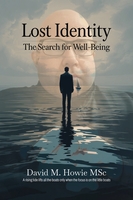
In the book ‘Lost Identity: The Search for Well-Being I talk about neurodiversity. I have come to the conclusion- after watching people talk about their neurodivergent minds – that I don’t understand neurodiversity- not even a little, not even at all.

If I don’t understand neurodiversity, when I self-diagnose as neurodivergent, post-childhood medulloblastoma, how can anyone who is neurotypical? I suppose they can’t, and I suppose they never will. That is, unless society starts to have a conversation about mental health.

As I say in the book, I have decent well-being; for the most part, I am happy with life. Of course, in an ideal world, I would be working in a profession focused on social policy and research, one that encompasses every citizen and fosters community development. Earth, however, is not a utopia. Earth is the island of necessity. On the island of necessity, no one gets what they want, and even fewer get what they require to live well.

For people who are neurodivergent, the WHO organisation suggests that it could be as high as 40%. We mask in plain sight. Not hiding, but also not having the strength to be ourselves.

I must admit, I find myself in a very unsettling situation. I thought that when I published the book, one of two things would happen. One. It would be the end of the project, and a new one would begin. Two. I would have achieved enough to move on with my life, so that I could perhaps now pursue a career on the neurotypical island of necessity. Something, though, is pulling me back. There are more chapters to be written. I alone can write them. I cannot explain it. There are many better writers than I. Why then must I be the writer of the next chapter? The only explanation available is that the book/project is not yet complete.

Someone on TikTok describes 24 hours in their life as a routine that they cannot complete, a never-ending cycle that never seems to end. Groundhog Day. Or a time loop, if you are a Sci-Fi fan. Lucky for me, my mind is not stuck in a time loop or doomed to repeat the same day over and over, like Bill Murray in Groundhog Day.

I don’t know how far down the rabbit hole the far end of the neurodivergent mind goes. From what I understand- from watching TikTok videos- it is disabling. What I do know is that I feel compelled to follow the white rabbit. Compelled. Yes. But in my own time. I am not free yet to leave the island of necessity and join the island of utopia.

I am not that far down the rabbit hole to qualify for free money from the state to do whatever I like all day. Not that that is what neurodivergent citizens at the dark end of the spectrum are doing. Remember, neurodivergent citizens are not a homogeneous group; it is not logical. It is more like a prison for the mind. I have a front row seat to the prison. Or at the movie theatre, if you prefer. The difference is I can leave and return. So many citizens don’t.

Physically disabled citizens

Subjectively, physically disabled people do not see the world in the same way as a neurotypical citizen. I don’t like the word damaged. That would be a neurotypical perspective. Without the lived experiences of a neurodegenerative citizen, it is impossible to understand how the neurotypical mind works.

That is why a one-size-fits-all approach to the integration of physically and neurotypical disabled citizens will not work.

What is next?

I start working on the second book: The Search for Well-being: Never Ends. It is a working title. It has no chapters, paragraphs, or words. The shape the next book will take shall depend a lot on what happens in 2026, after the Scottish parlament election. More importantly, though, the next book will depend on my subjective understanding of where my mind lies on the neurodivergent spectrum.

This blog post serves as a brief introduction to the steps that follow. As a neurodivergent person, self-diagnosed, my steps can change daily. What would it be like to live if your daily steps just repeated?
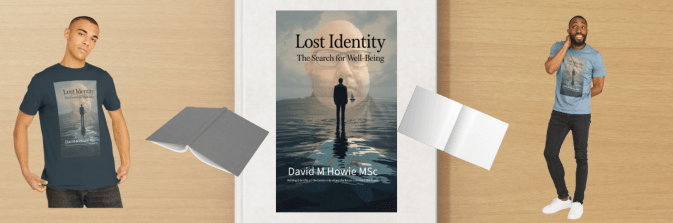
Lost Identity: The Search For Well-being

On June 18, I published the book Lost Identity: The Search for Well-Being. Since doing so, everyone and their grandmother has been lining up to tell me how to promote the book. Apparently, I require a cinematic trailer. Apparently, I need a social media manager. Apparently, I need to be more ruthless- put profiteering first. They say.

I fundamentally disagree. I wrote the book in the hope that it will empower others. I wrote it because I wanted to empower communities. I believe it is having that impact. People whom I have known for years are saying to me:

I did not know that was how your brain worked. That link with ADHD is so interesting

My book. On my desk at home

I have been living with the side effects of a childhood Medulloblastoma for thirthy-seven year, I have a unique view. However, I have to ask how did you think the brain was going to develop? Apart of it was cut out. Radiation was fired at at it. Chemotheropy resulted in Chemo-brain.

There is no objective evidence to say I have ADHD or ADHD like symptoms. However, a little common sense suggests my brain is not neurotypical. Perhaps that is why I put people and the planet before profit. Don’t get me wrong, I would love to make a living from writing books, telling my story, doing podcasts, radio, and TV interviews. Not though to make a profit. Just to live, just to enjoy what I do.

I hear you. Why should I get to enjoy what I do to generate an income? Not many people are happy in their jobs. Perhaps for the first time in my life, I am thinking of myself. I was dealt a S### hand. I turned it around. Why shouldn’t I make a little money from it?

Lost Identity
M.Howie, David

Yes. It is okay if I profit a little from the book. It is okay if I enjoy making social media content to support the book. I am allowed to write blogs to promote the book. I worked hard to get my MSc. I should use it to financially support myself. Shouldn’t I? At least if I make a small profit, I am doing so by empowering others.

Empowerment via storytelling

That is what I want to do. I wish to tell you my story. If you don’t like my story, fine. If you think I am ungrateful, I don’t really care. If you think I should get on with my life. IT has been over thirty-seven years. I can tell you that is precisely what I am doing. Every post, every TikTok, every blog. I am moving forward. I am getting up and I am showing up.

Do I use social marketing? Do I write and talk like I have a chip on my shoulder? Of course I do. The NHS didn’t rehabilitate me back in 1987. Why should they? They almost let me die. Then they gave me five years to live. After twenty years, they showed me the door. They gave me a phone number and told me to call if I ever need anything.

I need to know why they did not tell me about the long-term side effects. I need to understand why they did not tell me that I would be required to pay a personal trainer for rehabilitation, because the NHS doesn’t have the resources or the capacity.

I need to know why the NHS didn’t tell me that I would never belong. That my life would become a constant search to find myself. They did not KNOW! That is no excuse. Society talks about a cancer journey. When does that journey end? At the end of formal education? When I buy a house? When I say I do? I know it’s not when I buy a car, have children, or walk in a straight line. So when is it?

The truth is the journey never ends. “We exist here”, is a line from Star Trek: Deep Space Nine. Medulloblastoma don’t “exist here”. We exist wherever in time, the brain tumour and cancer injured the mind. The mind of a Medulloblastoma is not neurotypical. That is why, when organisations tell me that I should be profiting from a book written to empower others (and myself), I am hesitant to comply.

Lost Identity: The Search for Well-Being is my story. It’s raw, it is emotional, it is empowering, it’s me. I am so glad I got to write it. I am so happy that I get to tell my story to the world. My number one hope is that when you read it, you are empowered.

Life is not easy. Anything worthwhile having in life is worth working hard for.

What is next

I wish I knew. What I do know is I need a holiday. Has anyone got any suggestions?

Where are my Human Rights?

All human beings are born free and equal in dignity and rights. They are endowed with reason and conscience and should act towards one another in aspirit of [personhood}

artical one UN Convention on Human Right

The problem is, the United Nations soft law is no more use than the bible when it comes to providing citizens with dignity and rights. There have been more add-ons to the Universal Declaration of Human Rights. Then acknowledgements from the UK Government that trickle-down economics just does not work. Where are my Human Rights? Perhaps the title of this blog could have been “[did] the free market revolution” (Benerria, 2003, p.3) steel my Human rights? As Richard Wilkinson and Kate Pickett (2009, p.262) point out “… profit would still lead companies to act in anti-social ways”. While anti-social is in opposition to social enterprise. It is not a breach of Human Rights. Since February 2022 I have been a member of the Scottish Government’s Human rights bill lived experience board. Why? Why am I a board member of the Scottish Government’s Human rights bill lived experience board? Noted above, I make it clear, that the free market is not the cause of Human Rights violations. If I am not a board member of the Scottish Government’s Human rights bill lived experience board to correct the wrongs of the free market. Then I must be on the Scottish Government’s Human rights bill lived experience board to correct the failures of the public sector. There is an add-on question that is outwith the scope of this blog. Is it not the job of the third sector to look after the failures of the public sector?

In 1973 the world economy had become reliant on oil and was facing raw material shortages that were pushing up prices (Banerjee & Duflo 2010, p.146). Not too much has changed. Has it? At this time I what the reader to think about economic and social rights.

The rights to & the rights from

If unpaid activities were valued [1995 prices] at prevailing wages, they would [have] amounted to $16 trillion or about 70 per cent of total world output (Beneria, 2003 p.74)

Gender, Development and Globazation

What sex in society is likely to do unpaid activities? Women. Think about that, not only is the contemporary cost of living crisis an infringement on economic and social rights. It is also an infringement on gender development. At today’s meeting on Disabled people and unpaid carers with third-sector colleagues’, there was a consensus that the cost of living was in breach of economic and social rights. I add here that due to the majority of unpaid carers having xx chromosomes. Women more than men are likely to be hit harder and are more likely to have their human rights violated due to the cost of living crises.

There was also an agreement that the support offered by governments, is not enough to cover the cost of living rises. The view that government support lacks the requirements to mitigate the cost of living crises is supported by The Health and Social Care Alliance Scotland. Who recommended the Scottish Government increase payments to Scottish citizens receving benefits. Health and Social Care Alliance Scotland note there are groups in society, which their recommendations will not help.

As I pointed out in the afternoon’s meeting, additional payments to disabled people and unpaid carers’ is the ethical thing to do.

All I have known is crises

As one of my co-workers said at today’s meeting ” [citizens’]’ health is affected [by this cost of living increase]. However, as pointed out in yesterday’s Human Rights meeting by John (not real name) “as someone born in 2002, all I’ve known is crises. If this is how our young people are feeling. Society has a mental health pandemic coming.

I started this section with the heading the rights to and the rights from. As a citizen of Scotland, you have the right to a fair trial. the right to housing, the right to live in the community, and, the right to food. this post would be longer than my dissertation if I was to go over all the rights.

Scottish Human Rights bill: when?

the short answer. By the end of the parliamentary session. Why not sooner? Well… the Scottish Government are trying to incorporate four international treaties into Scot law. The Government needs to get the bill/act correct, let us give them some time to do just that. As the Scottish government’s civil servant said yesterday

the delay gives more time to get the bill correct

Scottish Government Civil Servant

Conclusion

I have notes for three meetings. I could have written a PhD paper with the quotes I wrote down. However, I want to get this blog published tonight- October 06. I also know that The Scottish Human Rights Commission. The Health and Social care Alliance Scotland. And many other third-sector partners shall publish better blogs and posts than I could write in a few hours. Saving me time, and providing me more sleeping time.

Am going to do something you should never do. Am going to introduce a new topic in the conclusion. What is next for the Scottish Human Rights bill? I have it on good authority the next meeting will be on monitoring. How will we know if the Human Rights Bill is working?

I have a few ideas, however, I would like to hear the reader’s thoughts in the comments.