Society is structured to grow the gross domestic product (GDP). However, allocating available resources to grow GPD results in the most vulnerable citizens becoming an afterthought. The social enterprise/ framework Iain and I designed after completing our MSc in social innovation empowers citizens and communities by focusing on the diversity, inclusion, and belonging model.
It is of utmost urgency that we address the critical issue of empowering disadvantaged citizens in Scotland. The evidence is stark: Disabled individuals confront substantial inequalities and are at a higher risk of living in poverty. This is a policy concern and a societal crisis that demands immediate action. I am deeply concerned that the Scottish Government may lack the capacity and resources to enact the required changes. The time for action is now.
While I acknowledge that the A-LEAF framework may not be a panacea for all the Scottish government’s challenges, I am confident it could be a significant step towards a more inclusive and equitable society for disabled people. This is not just a proposal. It’s a beacon of hope, a potential catalyst for positive change. Given the opportunity, this framework could not only enhance the well-being of countless disabled citizens in Scotland, but it could also transform their lives, offering them a brighter future. Let’s unite to envision this potential, understanding the profound impact it could have on the lives of our fellow citizens.
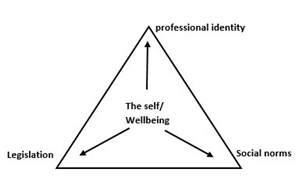
The A-LEAF framework I propose is more than just an abstract idea. It is a practical solution rooted in my personal experiences and the expertise of my graduate colleague, Iain. With over thirty years of collective experience, A-LEAF is based on the belief that citizens’ well-being is enhanced when they have a personal and professional identity, when social policy supports their right to live in the community, and when social norms allow them to do so. This is not just a theoretical concept but a tangible framework that can be implemented to bring about real change, instilling confidence in its practicality and effectiveness.
The A-LEAF framework is essentially the Iron Triangle on Sustainable Steroids. It aligns seamlessly with the Scottish Government’s well-being/ circular economy policy and advocates for a new fourth social enterprise sector. This framework is designed to bolster green growth and foster co-production in the three existing sectors – third, private, and public. Its implementation could significantly enhance the Scottish Government’s initiatives and policies, leading to a more inclusive and equitable society.
Network theory is the idea that organisations within society collaborate to make society function. Each node does its job or the job it has a competitive advantage in—it can complete the job better and generate more profit than any other node/organisation. The A-LEAF framework enhances the network for the common good by placing it in a strategic action field. Every action field network node works towards the well-being/circular economy.
In academic social enterprise theory, there are three typologies of social entrepreneurship. Schumpeter inspires social engineering thinkers to believe that a newer, more effective social system is designed to replace existing systems when systems are ill-suited to address significant social needs. As a social innovation graduate, a citizen of Scotland and someone disabled by the medical model, I have sympathy for this thought pattern. However, such political philosophy/ social enterprise typology needs to be revised. Such philosophy has no place in contemporary society.
The typology operating in society presently is social bricoleur. Social bricoleurs perceive and act upon opportunities to address local social needs. They are motivated by lived experiences and know how to address social problems. However, while Social bricoleurs have the lived experiences and knowledge to address social issues, the barriers consist of capacity and resources. Social bricoleurs are typically charities requiring financial capital and rely on top-down government support. Providing resources and capacity exists in the state. I have zero quarrels about this social policy/typology. Fundamentally, the resources and capacity do not exist. Levels of poverty and SCOPE’s call to action show evidence enough. Additionally, I would suggest two things. One. The current political framework of the Scottish political system is based on the Social bricoleur typology. Therefore, funding is allocated to charities/social enterprises that can mitigate social problems over the short term—providing the Scottish government with outcomes that support the national performance framework. Two. Social bricoleur thinking resulted in A-LEAF not receiving funding from the Scottish government’s social enterprise funding body. The Scottish Government’s refusal to fund A-LEAF lowers my subjective well-being as funding refusal has resulted in my continuing quest for a professional identity.
For readers unaware, the Scottish national performance framework is effectively the United Nations sustainable development goals (UN SDGs) as applied to Scotland. The nugatory differentials between the UN SDGs and the Scottish national performance framework are significant enough to propel A-LEAF into the typology of social constructionists – social constructionists build and operate alternative structures to provide goods and services addressing social needs that governments, agencies, and businesses cannot.
Iain and I had not advocated for a dramatic system change with the A-LEAF framework. Our request was merely to empower citizens and support the Scottish government’s social policy. The chapter has attempted to inform the readers of my subjective understanding of the operation of the Scottish political system, how the political system results in disabled people facing vast inequalities, and how Social bricoleur thinking provides possible barriers to necessary required system changes. The remainder of the chapter will spotlight the A-LEAF framework.
The fundamental theory of the A-LEAF framework is that a community’s collective well-being is empowered when citizens have a personal and professional identity that provides subjective well-being and simultaneously provides the person/self with good mental health. However, there is a direct correlation between personal and professional identity, social policy, and social norms. The workplace, the community, and government policy act as a tripod that supports citizens’ subjective well-being and provides good mental health. Absences of employment, paid or unpaid, reduces subjective well-being. Prohibition of the right to live in the community lowers subjective well-being. The perception that the government is not listening reduces citizens’ hope. As a society, we must ensure that citizens in our communities are provided opportunities to live well.
In the third sector, there is a focus on ‘self-management’. Self-management is an elongation that prolongs the required change. It is a mitigation method used to mitigate the effects of an ill-run society. I recognise that communities within communities can also empower citizens and foster the idea of citizenship. The problem, however, is that “a rising tide lifts all the boats” only when the focus is on the little boats.
Part one of the A-LEAF framework shows that citizens’ well-being correlates with each side of the tripod. The second part discusses what unites every citizen: waste. Rich, poor, disabled, and non-disabled, every citizen, every household, every institution, and every state produces waste. How do you turn waste into a monetisation opportunity which empowers citizens? Run the four Rs of the circular economy in reverse. Instead of reducing, reuse, recycle, and remove. Society should focus on recycling, reusing, reducing, and removing. Waste has a value that can be monetised. Plastic, glass, metals, and fabrics can all be recycled. The fantastic part of recycling is that a community recycling project has the potential to unite and empower every citizen. Within every action field/network within a society, an organisation will have a competitive advantage in recycling. Providing people and the planet are prioritised over profits. The organisation offers the strategic action field/community with a common good.
Part one: step two envisioned the possible collaboration opportunities that could empower citizens with subjective well-being. To prevent repetition, I will forgo the literary details. The graphic is provided in the chapter notes.
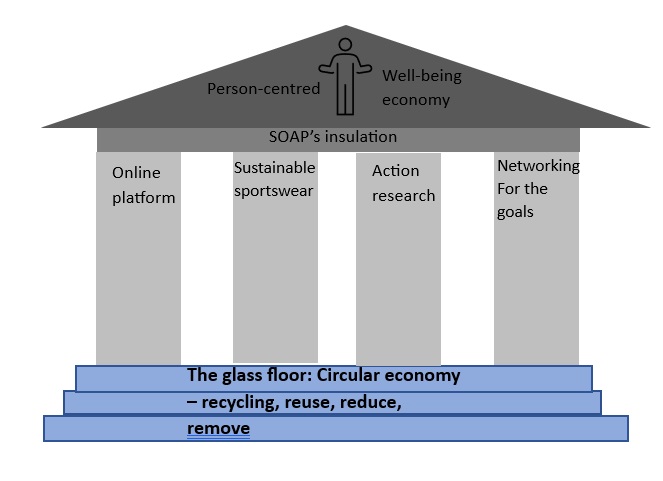
The final framework Iain and I designed before dropping the idea of A-LEAF as a social enterprise in 2023 was the House of Well-being. The House of Well-being is based on the Health and Social Care Alliance Scotland’s House of Care. The graphic I used, however, looks more like the US House of Representatives. That was either due to studying American-Russian international relations or watching too many American political TV shows. The House of Well-being/ A-LEAF framework for the well-being circular economy is as follows: The stairs metaphorically represent the circular economy but in reverse. The framework focuses on recycling as a monetary policy for community wealth building. From left to right, the four pillars are: (1) Build an online platform for keeping goods in the community longer, preventing goods within their life cycle from ending in landfills. (2) Within the community, there should be a focus on reducing polyester clothing for gym wear. Polyester, when washed, produces microplastics. The effects microplastics have on the environment are well known. The impact of microplastics on human life requires further investigation. (3) The action field/network should prioritise action research with all stakeholders in the field/community. This would reduce the requirement for lived experience boards, which, from my experience, reduces well-being. (4) Network for the UN SDGs goals. Every node/organisation with a network operating within the field should focus on achieving one or more of the seventeen sustainable development goals. The field the framework proposes is more robust than anything currently in place in Scotland. The nodes within the fields work towards the same strategy on a page (SOAP). Each field, of which there could be numerous in a geographical location, could adapt its SOAP to achieve the outcome of the field while working towards meeting the UN SDGs. The SOAP’s key performance and business growth indicators, designed to achieve the SDGs, can then be linked to the National Performance Framework. Directly connecting the strategic action fields back to the Scottish Government’s social policy agenda and simultaneously creating a database of community assets. Implementing the A-LEAF framework would create a person-centred well-being economy.
societal triangle
A-LEAF started with the idea that citizenship well-being is dependent on three areas. 1. Professional identity—without a sense of belonging and meaningful employment, well-being will remain low. 2. legislation. Government policy must support citizens in working on their own well-being. 3. Social norms of the community must support collaboration between citizens to develop a strong community.
Well-being circular economy.
To achieve the societal triangle, it was clear that the projects’ funding must be commercial. Removing community waste, upscaling, reusing, or recycling the community would generate a community wealth fund. Other commercial social enterprises could use the funds to develop projects that would empower citizen in their local community.
The circular image of well-being represents what Ian and I thought provided the best opportunities. Other projects are encouraged.
House of well-being
The House of Well-being was our last attempt to convince the funding bodies that A-LEAF, along with our Scottish government colleagues, had a solid plan for developing a well-being circular economy.
The definition of employment I am applying in this chapter is any work-related activity requested on behalf of an organisation. For example, I am including paid employment – Woolworths PLC and Sainsbury’s PLC. I also include unpaid employment – Macmillan Cancer Support, support worker, People Powered Health and Wellbeing reference group member and board, Scottish Government community eye care review, and the Scottish Government Human Rights lived experience board.
I commenced employment at seventeen while still attending Whitehill Secondary School. I have a confession: I initially worked for Big W – a retail chain owned by King Fisher Group. Multiple years after King-Fisher was liquidated, I wrote a paper on how dysfunctional King-Fisher’s board was. The paper was written for ‘Ethics, Governance, and Responsible Leadership – a module required for my MSc. Knowing in 2024 what I know about the King Fisher board, my only surprise is that my employment lasted nine years, not nine days.
For readers unaware, Big W retail stores were the idea that customers could purchase products ranging from pick-n-mix to alcohol and from DVDs/ CDs to 40-inch LCD TVs. As a concept, Big W was an exciting idea. In the early 2000s, before video on demand – Amazon Prime, Netflix, and others- the idea of purchasing your weekend movie entertainment, alcoholic beverages, and perhaps even an LCD TV, even today, sounded convenient. The business idea for Big W, even today, sounds viable. Tesco, Sainsbury’s, and Walmart-Asda still apply framework variations in 2024. Big W’s problem was not that it was ahead of its time. Big W’s problem was that no one had ever completed a risk assessment. Or perhaps the risk assessment completed by Big W’s board put profit before people and the planet. In this case, liquidation should have been foreseen.
The locality of the Big W store I had paid employment in was Glasgow Forge Retail Park. Glasgow Forge Retail Park and my birth area of Haghill have something in common. They both have public and private transport access routes. However, more worrying, according to the Scottish Index of Multiple Deprivation, Camlachie – an area of Glasgow in Scotland located in the East End of the city, between Dennistoun to the north and Bridgeton to the south – and Haghill are deprived of health, education, employment, and housing. Readers should not be surprised that Multiple Deprivation equals high crime. Here is why I believe no risk assessment was ever completed- the geographical size of Big W was too large, and the security personnel too slim to prevent mass shrinkage. For unaware readers, shrinkage is the loss of units/products via shoplifting internally or by the general public. The second reason I believe there was never a risk assessment completed was that most employees – at least weekends and evenings were directly hired from Whitehill and Bannerman High Schools. The UK army cannot recruit in Schools. Why could the Kingfisher Group? Even the recruitment process sounds unethical. My point, however, is this. School, college, and university students are not the correct employees to prevent mass shrinkage. Even a UK army regiment could not have prevented shrinkage in Big W.
The collapse of Big W and, eventually, Woolworths was, in hindsight, foreseen. From an egotistical – selfish viewpoint, I am glad the store remained operating until I completed my BSc in Multimedia. This chapter is titled employment: paid and unpaid. Therefore, the remainder of the chapter focuses on how employment affects my professional identity. Professional identity, or the lack of one, affects my well-being. If the reader thinks about it, I am sure it is the same for every reader. However, before getting to professional identity, I have to say something about personal identity. After completing my BSc in multimedia, two colleagues from Woolworths asked if I could help promote their band promotion company, GnG Promotions.
GnG Promotion was shorthand for Grant and Garry Promotions – much thought went into the name. Garry dropped from the promotion early on. Grant and I did go on to promote some successful nights in the Soundhaus, 13th Note, and Classic Grand in Glasgow. As part of GnG promotions, I worked alongside bands such as the Black Arrows, The Toi, and Day Break, to name a few. A memorable time was had thanks to Woolworths. Thank you for that. The good times did roll in those short three years. I want to thank all the bands and venues I had the opportunity to work with. Band promoting for me was a hobby – an expensive one at that. My personal identity and social capital were increased due to it. However, I never saw it as anything more. Therefore, I could let it go without any loss of well-being.
I was employed with Big W – Woolworths between 28 September 2000 and 9 Jan 2009. I received the equivalent of a year’s wages when Woolworths closed. Therefore, I was happy to be sent from position to position by the job centre-plus, as I was using my existing skills and learning new skills.
Subjectively, the UK HM Revenue and Customs (HMRC) has its priorities discombobulated. Twelve months after no paid employment, I had two unpaid employments, one with Macmillan Cancer Support and another as an administrative assistant at Cross-Reach. Despite my economic contributions – travelling and saving Cross-Reach capital, I worked for free. Remploy, in 2010, partnered with Job Centre Plus, took the decision that I was required to contribute to the gross domestic product by paying taxes. Objectively, I understand – what gets measured gets done. Despite having a BSc in multimedia and working as an events coordinator for three years. Paid employment with Sainsbury’s loomed. In 2010, I had no intention of remaining in paid employment with Sainsbury’s longer than necessary. Somehow, the necessity has developed into thirteen years.
I have the same employment in 2024 as in 2000—twenty-four years serving the public, replenishing shelves, and operating hot food counters. The repetitiveness itself lowers well-being.
Removing myself from the shackles of the repetitiveness after four years, without a doubt, prevented a mental breakdown. In 2014, returning to higher education to study politics, philosophy, and economics was my best move and simultaneously the worst. As the reader knows, I received my BA (Hons) PPE in 2019. My lack of personal and professional identity has nothing and everything to do with that degree. All be it, indirectly.
What has transpired between 2014 and 2024 has my well-being swinging on a pendulum. 2014, I joined The Health and Social Care Alliance Scotland (The Alliance). Knowing that I required lived experience – work experience and academic experience – to find paid work after completing my BA (Hons) membership at The Alliance was the logical choice. Membership of The Alliance as someone with long-term conditions costs me nothing but opportunity cost – time. Could my time have been better spent? Today, would my well-being be greater without The Alliance membership?
If you work hard, you will become successful, and once you become successful, you’ll be happy – Says Shawn Achor in The Happiness Advantage. I have worked hard for ten years but have not felt successful. I feel unpropitious. Unpropitious or perhaps Inauspicious: I believe society prevents my happiness/well-being by refusing to accept the system change required for a well-being/ circular economy. The social norms of society are not designed with childhood medulloblastoma survivors with a BA (Hons) and MSc in mind.
Childhood medulloblastoma survivors with a BA (Hons) and MSc are not supposed to have an interest in social policy. Challenging the top-down approach to governance is forbidding. Ironically, without membership in The Alliance, I wouldn’t feel so strongly that a system change is required.
I interviewed numerous Alliance staff members for my MSc dissertation. A staff member who now works for the Scottish Government told me The Alliance’s remit is to strengthen the Scottish Government’s social policy, not contest the social policy. What is ironic is that by default, The Alliance is part of the system of governance, and The Alliance staff are civil servants by proxy.
My first unpaid role with The Alliance was on the People Power Health and Well-being reference group. The Alliance set up the reference group. However, the reference group was funded directly by the Scottish Government. The remit of the reference group was to advise on the framework for the Public Bodies (Joint Working) (Scotland) Act 2014. My role as a person with lived experience or a person with long-term conditions was to attend meetings and provide professionals with insight into the daily lives of someone with lived experience.
As part of The People Powered Health and Well-being reference group, I did my first non-academic research, asking: Does engagement and inclusion promote well-being and recovery, and if so, how? The rousing thing was that that research was not part of the original plan. The original plan was for professionals to observe the reference group members and produce a subjective qualitative report. I could not be prouder that The People Powered Health and Well-being reference group members rejected that idea outright.
People with long-term conditions can do research, too. The reference group showed it. Now, society needs to acknowledge it.
Thank you to Lisa Curtice, the project lead on the People Power Health and Well-being project. I am not sure that without Lisa’s contacts at Strathclyde University, I would have had the opportunity to complete my first non-academic research. Readers can still watch the People Power Health and Well-being project’s Vimeo videos. Vimeo.com/pphw.
Interestingly, while I was in the process of being guided in research methodology by Dr Ailsa Stewart, a lecturer in social work and social policy at Strathclyde University, my Open University tutor worked in the same department. I cannot remember the name of the tutor I had for ‘Introducing the Social Sciences’. I cross-referenced Dr Ailsa Stewart’s published papers to see if I recognised any co-authors. The name of the tutor still evades me. However, I recognised one name. Gillian Macintyre – Gillian also added to guide my knowledge of research methodology. It is fitting Gillian also receives a mention.
I only mention my Open University tutor because, by the time I was given the opportunity to collaborate with the Scottish Government again, I was either studying DD203 Power, Dissent, and Equality or A222 Exploring Philosophy. The project I had the opportunity to be part of was the Scottish Government’s community eye care review. I have a mention in the Annex A of the community eye service review report. To date, that mention is my claim to fame.
As for my role, my fellow stakeholders and I met monthly to discuss current services and hear from various partners on potential developments in the community eye care services.
In 2017, my well-being was at a high point. I studied topics I enjoyed and collaborated with fellow stakeholders on social policy. However, I have not replicated the feelings of personal and professional identity that I had in 2017. I was a PPE student working in collaboration with fellow stakeholders. A career in research and policy is still my preferred area of employment today. Given that my job in 2024 is so divergent from my personal and professional life in 2017, my well-being is low.
My final Open University module was DD313, International Relations: Continuity and Change in Global Politics. The module is not so important; what is essential is the date—2019. I did not mention my four weeks volunteering with Global Vision International in Cape Town, South Africa when I commenced this chapter. South Africa was a personal development, not a professional development. Also, I don’t see my time in Cape Town as unpaid employment in the same way as I view the People Powered Health and Well-being reference group or the community eye care review. My time in Cape Town shaped me and profoundly affected my vision, values, and principles; more on that in the next chapter – Social Enterprises: A-LEAF.
To finish this chapter, I must finish at a low point. As of March 2024, my well-being is low; I am frustrated and annoyed that I spent a year between 2022 and 2023 doing unpaid work on the Scottish Government’s Human Rights lived experience board. My well-being is at the time of writing low because I don’t have the professional identity I had in 2017. The launch of the social enterprise – A-LEAF and a grounded understanding of Human Rights issues in Scotland was intended to recreate the subjective well-being that my perceived personal and professional identity provided me in 2017.
2014, I gave up my full-time position with Sainsbury’s because my well-being was low. I needed something more than a job in retail. Everything I did between 2014 and 2024 was designed to improve myself and the community. The outcome was not what I envisioned. Despite my frustration and annoyance, I don’t regret the past ten years. However, I am low on hope for a better tomorrow for myself and the wider community.
Sunshine and rainbows, life is not. I was diagnosed with medulloblastoma at age four and live with the long-term condition resulting from the brain tumour- sight and hearing limitations, balance problems, and dyslexia-like issues as a child. Sunshine and rainbows are more challenging to find. Difficulties multiplied by the medical model, which said I had five years to live. The medical model said I was dead at ten. As of May 7th, I am forty years old. According to the medical model, I should not have attended high school. I have two undergraduate degrees and a master’s in social innovation and have worked since I was seventeen. I have volunteered in the Scottish third sector for ten years and have been a member of a UK political party since 2007—the relevance of my lived experience.
Health is a state of complete physical, mental, and social well-being and not merely the absence of disease or infirmity.
(World Health Organisation Constitution)
The absence of disease or infirmity does not necessarily result in complete physical, mental, and social well-being. Replacing the medical model with the social model of disability via Human Rights (integration) (Scotland) Act 2026 would go some way toward achieving the World Health Organisation’s constitution in Scotland.
The Scottish National Action Plan for Advancing Human Rights II (SANP2) is the most recent publication available in the public domain. This article is a loose response to SNAP2 and recommendations for advancing human rights in Scotland.
The article is structured as follows. In the subjectivity section, I provided my opinion on SNAP2’s timeliness. In 2022 The Scottish Government had three boards- lived experience- advisory- executive providing evidence on human rights issues in Scotland. The board(s) evidence was not included in the SANP2 document. In the objectivity section, I take a more evidence-based approach to evaluate SNAP2- the evidence I use was sourced from online accessible websites and open-source research where possible. In the discussion section, I discuss human rights in Scotland, attempting to bring the subjective and objective areas together. Finally, in the recommendations section, I provide three recommendations which I see as a priority for advancing human rights in Scotland.
Subjectively, SNAP2 needs work.
Subjectively, the Scottish National Action Plan for Advancing Human Rights II (SANP2) is a missed opportunity. Equivalent to a tick-box bureaucratic institutional framework. Far from the radical reform, its pre-publication hype advocated. Disclosure. As a Social Innovation MSc graduate with over ten years of knowledge of the third sector and fifteen years of knowledge of political institutions in Scotland, I subjectively claim, after a second reading of SANP2, that SANP2 is a significant missed opportunity. I swear two things by subjectively applying lived experience to my initial review. One SANP2 is a bureaucratic document designed to give people with lived experience a perceived voice. Two SANP2 is the Scottish Government box ticking to confirm which previous records have been previously established.
Subjectively SANP2 needs to live up to the expectation of the pedestal on which it was placed. It is not easy to be objective when lived experience requires subjectivity. However, the next section will objectively cross-examine my subjectivity for this review’s legitimacy. What, though, are the bases of my subjectivity?
Webster (2022, p. 3) accurately points out.
“The 2021 report of the National Taskforce for Human Rights Leadership recommended a new legal framework that will bring into [Scots Law] a range of internationally recognised Human Rights.”
We know that the Scottish Government plans to incorporate the UN Human Rights conventions into Scots Law by the end of the parliamentary session. Therefore, an objective revaluation of my subjective conclusion shall be on that cornerstone. Subjectivity based on lived experience, however, is not void of objectivity. Objectivity is subjectivity with a past dependency and place matters lens- see conversation section.
Dr Elaine Webster’s research paper’s theory/research is that communication around Human Rights can be given legitimacy by the bottom-up- rights holders when communication focuses on Human Dignity, not human rights.
To test Dr Elaine Webster’s theory, it is critical to identify the number of times the word ‘dignity’ is used in the SNAP2 document. And in which contents.
Three. Three times. The word “DIGNITY” was directly used three times in the SNAP2 document.
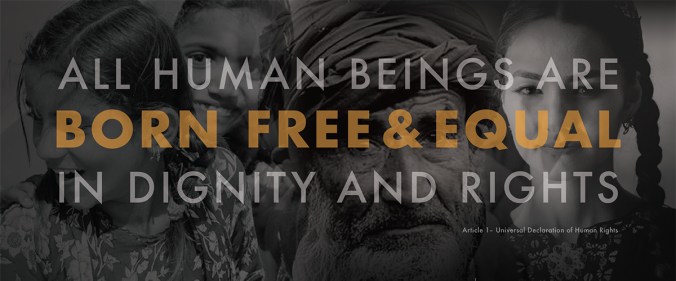
One direct reference to dignity is a quote from acritical 1 of the UN conventions “All Human beings are born free and equal in dignity and rights” (SANP, p.16).
All Human beings are free and equal in dignity and rights? Debatable. What is not debatable is that not all human beings remain free and equal in dignity and rights.
“In France, 57% of [woman’s] work is unpaid compared to 38% of men’s… all this extra work is affecting women’s health” (Perez, loc. 1461).
Where is dignity for women?
The fact is that the Universal Declaration of Human Rights dates to 1948. It is outdated. Article 16.1 reads.
Men and Women of full age, without any limitation due to race, nationality or religion, have the right to marry and have a family. They are entitled to equal rights as to marriage, during and at its dissolution”.
As Caroline Perez points out in the book Invisible Women. Women and men do not have the same right in marriage. The fact is that women and men do not have the same rights in society.
Not only is incorporating the Universal Declaration of Human Rights into Scots law, without a contemporary analysis of the wording, a direct violation of human dignity and added cost to the NHS. It is a violation of ethics.
Since graduating with an MSc in Social Innovation from Glasgow Caledonian University, I have been in the process of setting up a community empowerment-action research network- A-LEAF Community Empowerment LTD. Figure 1 is my subjective interpretation of an objective fact.
Figure 1: Societal Triangle.
In project management, time, cost, and quality directly affect the project’s scope. My subjective view is that societal institutions can manage the health/well-being of individuals/ communities.
SNAP2 focuses on legislation exclusively, failing to consider how the perception of ones standing in society can affect health, well-being, and mental health. Moreover, as Perez points out, social norms-past dependency can hurt individuals and communities.
SNAP2 an objective view
The section on subjectivity shows how lived experience can influence an outcome. This section looks objectively at what SANP2 looks to achieve. Moreover, is the desired result attainable?
SNAP2: Scotland’s Second National Human Rights Action Plan. The key word is National. If the Human Rights Integration (Scotland) Act 2026 is to be implemented within all thirty-two local authority areas, with a minimum standard, then there should be an act of parliament. Moreover, the unofficial second chamber, the third sector interface, should support parliament. Given that SNAP2 was written by employees working in the third sector and supported by the general public. I can see no objective argument against SNAP2 as the most efficient, timely option for producing an open-source document to inform the people on the developments of their rights as rights holders.
Furthermore, SANP2’s principles, advancing human dignity, comply with Article 1 of the UN Convention on Human Rights. It also follows the Scottish Government’s communication about Health, Social Care, and other areas where duty-bearers have a particular obligation or responsibility to respect, promote and realise human rights. Moreover, SANP2 also interlinks with academic thinking. Therefore, there are no grounds for an objective point of reference.
Integration of the UN Convention on Human Rights comes in two parts. Part one: International Covenant on Civil and Political Rights (ICCPR). Part two: International Covenant on Economic, Social and Cultural Rights (ICESCR).
This review shall focus predominantly on ICESCR. World Health Organisation (WHO) Constitution states
“Health is a state of complete physical, mental, and social well-being and not merely the absence of disease or infirmity.”
As ICESCR covers conditions at work, poverty, housing, social care, access to healthcare, and cultural life, the infringement of one or multiple of these areas would result in the mitigation of WHO’s constitution and border on a breach of Human Rights.
SNAP2’s purpose is in three parts:
Carry out coordinated human rights activity by public bodies, civil society and rights holders.
Promote greater awareness of human rights.
Advance the realisation of human rights.
Objectively does SNAP2 do enough to identify and develop human rights in Scotland? Let us first consider what ICESCR requires—starting with work—decent work [is paramount] in realising the 17 Sustainable Development Goals. (Yunus Centre, 2023)
Workers’ rights are reserved for Westminster. Therefore, it would make little sense for public bodies or civil society to carry out coordinated human rights activity into workers’ rights.
In the discussion section, I discuss promoting and advancing human rights around worker rights.
24 per cent of children in Scotland are living in poverty.
69 per cent of children living in poverty in Scotland are in households where someone works.
38 per cent of children in lone-parent households live in poverty.
29 per cent of children with a disabled family member are in poverty.
(Child poverty action group, 2023)
Public bodies, civil society and rights holders must collaborate to identify where a child is living in poverty, identify the cause, and, where possible, mitigate the causes. Worker’s rights and gender pay gaps are reserved matters. However, evidence would support the need to push for human rights intervention regarding poverty.
Work and poverty (somewhat) are reserved for Westminster. As such, any attempt by the devolved public bodies or civil society to introduce a human rights approach could be limited. See the discussion section.
Housing, social care, access to healthcare, and cultural life are all devolved matters. Financial capital is the only obstacle to achieving a human rights-based approach in these four areas.
The Scottish budget is constrained via the devolved settlement. On this ground, SNAP2 can be objectively criticised as being a missed opportunity.
The Homelessness in Scotland 2021-2022 report highlights that 27,571 families were homeless; these households contained 42,149 people, 30,345 adults and 11,804 children. (Scot Gov, 2021). Additionally, the BBC puts the number of displaced people cases in Scotland at 28,944 in September 2022 (Clements, 2023).
These figures are alarming. What is more problematic, though, is that in 2022, the cost estimation for a house is anywhere between £1,750 and £3,000 per m2 (Bahar, 2023). The average new three-bedroom home in the UK is 88 m2 (Joyce, 2011). The Scottish government must therefore find £7,641,216,000; £3000 x 88m2 x 28,944 cases. Supposing it aims to avoid legal issues. See the discussion section.
Quantifying a reasonable estimate of the cost required to build 28,944 homes in Scotland is possible. Quantifying the cost of raising social care to a human rights standard is more complex. Care Information Scotland (2022) states that councils will pay £832.10 per nursing per resident in respect—or £719.50 for residents in residential care. Public Health Scotland (2022) says there are estimated to be 33,352 Scots over 18 living in care homes. Based on the lower £719.50 figure, the Scottish Government is paying a minimum of £23,996,764 per year in social care costs.
Pause. The figures quoted above are an estimate. They are intended to provide an objective validation to the argument that SNAP2 could have offered additional recommendations on how a human rights-based approach to housing and social care could be achieved.
The Public Bodies (joint working) (Scotland) Act 2014 was intended to integrate the NHS and Social Care nationally. Colleagues at the Alliance shall remember a year of work which provided the people-powered health and well-being reference group on objective reflection- all of whom had long-term conditions or were unpaid carers with a little well-being/ confidence boost. However, as Millar et al. (2020) point out:
“…for those participants with conditions that require consistency and stability. The short-term and transitory nature of the project also creates difficulties in assessing [lived experienced programmes] effectiveness over time – a challenge shared by those working on music and well-being projects in non-formal settings more generally.”
The people-powered health and well-being reference group was not a music well-being project. The point I am arguing is the short-term and transitory nature of lived experience boards. As Millar et al. (2020) say.
“We question, therefore, what happens with project participants, including beneficiaries and those running a project, when ‘the light goes off’, and the task terminates.”
Burnout is not only a problem for project participants, including beneficiaries and those running a project. Burnout is a significant issue for the NHS. As Nicholson (2023) states, the current state of the HNS is a ‘Ticking Time Bomb’. Stress, anxiety and burnout are pushing employees out of the health service. The media blames COVID-19 for this. The fact is that this is a gender data gap problem.
“A 2011 analysis of the data collected on British civil servants between 1997 and 2004 found that working more than fifty-five hours per week significantly increased women’s risk of developing depression and anxiety- but did not have a statistically significant impact on men”.
(Perez, 2019, loc. 8961)
As Caroline Criado Perez says in her book invisible women, “A husband creates an extra seven hours of housework a week for women… regardless of their employment status” (Perez, 2019, loc. 8961)
Any Scottish Government budget after 2026 must have a gendered lens to achieve a human rights-based approach.
This section has provided objective-quantitative evidence that supports the initial argument- SNAP2 is a missed opportunity. However, as said in the subjective segment, objectivity is not straightforward when lived experience enforces subjectivity.
As a member of the Alliance, Inclusion Scotland, and Glasgow Disability Alliance- a holder of an undergraduate degree in politics, philosophy, and economics- and an MSc in Social Innovation, SNAP2 is a subjective missed opportunity- the objective evidence confirms why I am frustrated with the SANP2 document. However, rights holders all have personal viewpoints- If SANP2 archives the objective of a human rights social marketing campaign, then I will accept that my original argument was too harsh.
Discussion
Article 27 of the UN Universal decoration of human rights says.
Everyone has the right to freely participate in the community’s cultural life, enjoy the arts and share in scientific advancement and its benefits.
Everyone has the right to protect the moral and material interests resulting from any scientific, literary or artistic production of which he is the author.
Cultural rights should have been included in the objective evidence section- I, however, needed more objective and subjective knowledge in this area. SNAP2 asks for the realisation of a human rights culture. What, though, does that imply?
Point 2 is not relevant; intellectual property rights are covered in UK law.
The key word in point one is “community”. More research into the diversity, inclusion, and belonging model is required to achieve the desired outcome. Scottish communities are diverse. However, is there a sense of inclusion and belonging? More academic and action research is needed in this area.
Focusing research on poverty and employment rights as it relates to cultural rights could enhance the sense of belonging for citizens living in Scotland.
The working of people-powered health and well-being reference groups could be used as a framework for civil society to carry out action research.
The overall question could be: Does working locally benefit people, the planet and the community? While at the same time contributing to a subjective well-being premium?
Academically that question could be adapted to fit numerous social science studies. Looking back on Article 27, a collaborative action research project supports scientific advancement and its benefits for the community. Scotland, in this case.
Past dependency and place matters. An academic phrase meaning contemporary life today is shaped by past policy decisions. Integration of the UN conventions on human rights is about the culture and legacy this generation passes to the next. A heritage that is constrained by the devolution settlement. The Human Rights (integration) (Scotland) Act 2026 is possible with devolution. However, poverty could be mitigated more effectively with the full powers of an independent state. Montgomery and Baglioni published the report The Gig Economy and its Implications for Social Dialogue and Workers’ Protection in 2020. This report targets the UK, as employment law is a reserved matter. Reserved, devolved issues will impact the wording of The Human Rights (integration) (Scotland) Act 2026. The reason for including accumulated devolved problems in a review of SNAP2 is that it is misleading not to address this issue before The Human Rights (integration) (Scotland) goes to the public conversation stage.
SNAP2 is not The Human Rights (integration) (Scotland) bill; perhaps the criticism is too harsh. SNAP2 is the last document before the public conversation, highlighting the problems of devolution and human rights that are paramount, dissevering more than a footnote.
The topic of Housing and Social Care is devolved. Furthermore, they are topical. Moreover, therefore, likely to dominate the public conversation on human rights. My calculations estimate that the Scottish government will be required to find £7,641,216,000 to build 28,944 new homes between now and 2026. 28,944 are the number of cases of homelessness in Scotland (Clements, 2023). However, it is not as simple as building 28,944 new homes at the cost of £7,641,216,00. Remember, WHO’s constitution states.
Health is a state of complete physical, mental, and social well-being and not merely the absence of disease or infirmity.
Therefore, building 28,944 new homes would require other community actors, schools/nurseries, sports clubs, shops, accessible transport, pubs/ social activities—and work. Forty-two thousand one hundred forty-nine people, 30,345 adults and 11,804 children (Scot Gov, 2021), are homeless in Scotland. To prevent repeating the mistakes of the past- housing estates. Integration of the UN Convention on Human Rights must consider the discourse of equal opportunities. The argument for consideration to the Human Rights (integration) (Scotland) bill writing team is that a gender budgeting approach would go some way to addressing barriers to opportunities for other groups in society too.
The purpose of the discussion section was to engage the reader in a thought-provoking extension of the subjective and objective areas. My conclusion was that SNAP2 was a missed opportunity. I base that premise on lived experience- as pointed out in the subjective section. My premise in the objective section is that the objective quantitative data confirms the subjective belief.
Conclusion- premise. The bases of a philosophical argument.
Socrates has two legs.
The man has two legs.
Socrates, therefore, is a man.
My political philosophy is that society needs a large enough state to provide citizens with a quality of life that is equal to WHO’s constitution. That said, with the limited powers of the Scottish parliament, Scotland needs an intelligent state, not just a large state.
Recommendations
Inspiration for this paper is the lack of actionable items that can be actioned now to advance human rights in Scotland. In this section, I provide three things that could be written into Scots law today. The first should come as no surprise. Insert into the Human Rights (integration) (Scotland) Act 2026:
The social model of disability should replace the medical model.
the social model of disability is required to achieve human dignity for all citizens.
Human dignity is required to achieve a human rights-based approach. Furthermore, dignity is required to align the Scottish NHS with the World Health Organisation’s constitution.
The second recommendation should come as no surprise either. In 2019 male drivers in England outnumbered female drivers by 9 per cent (Statista, n/d). However, 82.2% of employees [in the care sector] were women, and only 17.8% were men [2018] (Shepherd, 2018).
Transport in Scotland should be designed with a gendered lens.
2.1 the lack of timely, accessible transport prevents care workers from promptly coming to clients’ homes.
2.2 Further research is required to identify if the lack of timely accessible transport prevents care paid or unpaid from timely transport, adding additional working hours to their day, which adds to health issues.
The last recommendation focuses on the role of social enterprises in Scotland. Human rights are for all citizens living in Scotland (and internationally). To achieve a human rights-based approach in Scotland, a top-down approach to human rights is required. However, a bottom-up approach can identify and mitigate local issues quicker than a top-down approach. Therefore, the Human Rights (integration) (Scotland) Act 2026 should insert.
The role of social enterprise is essential in securing a human rights approach in Scotland.
3.1 The Scottish Parliament will oversee the setting up a Scottish Social Enterprise mark.
3.2 Social Enterprises in Scotland will report directly via a Scottish Parliamentary committee.
3.2.1 Reports to the parliamentary committee will include business growth indicators and key performance indicators- directly linked to UN Sustainable Development Goals.
3.3 The role of the national and regional social enterprise networks shall continue to provide support to social enterprises.
Social Enterprise (SE) is a new concept for most- as SE has no set definition, it isn’t easy to understand. In Scotland, the Scottish Government has set the framework for SE to mirror the charitable- third sector- this framework is too limited and reinforces the top-down governmental approach. Nor is SE the fourth sector- the third sector plus is the best way I would frame a definition of SE in Scotland. As Ehrlichman (2021, p. 18) states
“Society can[not] let networks form according to existing social, political, and economic patterns, which will likely leave us with more of the same inequities and destructive behaviours”.
SE offers an opportunity to deliberately and strategically catalyse new networks to transform the systems we live and work in. What does SNAP2 ask the Scottish Government to do?
Carry out coordinated human rights activity by public bodies, civil society and rights holders.
Promote greater awareness of human rights.
Advance the realisation of human rights.
A system change via active action networks (research) provides that opportunity.
Conclusion
The Human Rights (integration) (Scotland) Act 2026 and the support documents available to the public as of summer 2023 provide an opportunity for a national conversation on human rights in Scotland and internationally. The purpose of this article is threefold. This article indirectly addresses the Sottish National Action Plan on Human Rights document. However, this article does more than address SNAP2. This article provides a personal evaluation of why SNAP2 is a missed opportunity. However, subjectivity is not absent from objectivity—every unique viewpoint this article claims is supported with objective evidence.
SNAP2 is a missed opportunity. My subjective lived experience is the ground for that thinking. However, I have never, to this date, let my childhood medulloblastoma or long-term conditions define me. I have no intention of starting now. As I said in the objective section, the SANP2 document provides a timely transition towards the upcoming Human Rights (integration) (Scotland) Bill.
The second reason for writing this paper, my time on the Scottish Government’s lived experience human rights board was insightful. I have taken many of the points to heart and shall embed them into A-LEAF moving forward. However, this article is the written evidence I could not say to fellow board members.
The final reason for writing this paper is to use my lived experience, my academic experience and my human capital experience of the third sector in Scotland to add additional information to the human rights conversation in Scotland. I hope I have achieved that outcome. My last thought is that many social enterprises are doing exciting things in Scotland. The Scottish Government and third-sector interfaces should include social enterprise experience moving forward.
Millar, SR, Steiner, A, Caló, F & Teasdale, S 2020, ‘COOL Music: a ‘bottom-up’ music intervention for hard-to-reach young people in Scotland’, British Journal of Music Education, vol. 37, no. 1, pp. 87-98. https://doi.org/10.1017/S0265051719000226

 David M Howie